A new packaging technology designed to keep produce fresher for longer and reduce food waste has been adopted by a major exporter to address a significant challenge in transporting fruit around the world. Cape Dried Fruit Packers (Capedry), South Africa’s second-largest exporter of dried fruits, has deployed OSY Group’s coating technology on its corrugated cardboard export boxes to combat mould formation during refrigerated transit.
The company ships 1,000 tons of dried fruit each year, including apricots, pears, peaches, prunes, nectarines, raisins, mangos and plums, to markets in Australia, Europe and the Americas. Capedry turned to UK-headquartered OSY Group after mould-related packaging failures in refrigerated containers led to shipment rejections and associated product losses.
Since introducing the technology in its export packaging for consignments shipped to Australia, Capedry reports it has received no mould-related complaints. The coating works by forming a covalent bond with the packaging substrate, inhibiting the ability of microbes to bind and proliferate on the surface, providing protection against spoilage.
 © Osy Group
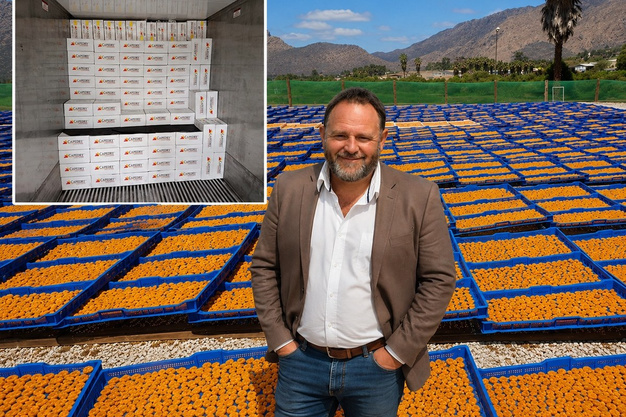
Burger Conradie
Burger Conradie, Operations Director of Capedry, says: “We’ve seen a 100 per cent reduction in complaints about mould on our packaging for shipments of dried fruit to Australian customers. Previously, packaging issues led to product losses. This technology has raised the bar in terms of quality standards, strengthening our position with key overseas customers. It’s been a significant differentiator for us.”
Capedry, which was established in 1991 and employs 200 staff, is a family-owned business based in Montagu in the Western Cape’s Little Karoo region. Australia accounts for around a third of its export volumes. Burger says: “With the success of the treated packaging, we are now exploring further applications, including on drying racks which stand out in the sun during the off-season.”
By its nature, dried fruit is a product that has had water removed to extend its shelf life and concentrate flavour. Yet the packaging that carries it on long international voyages faces the opposite problem – moisture. During container shipping, corrugated cardboard can be exposed to humidity fluctuations and condensation as temperatures shift between ports of origin and destination. This creates conditions for microbial growth that compromise the integrity of the packaging and, in extreme cases, lead to rejected consignments.
Capedry ships a third of South Africa’s national dried fruit production, and even a modest rejection rate can mean material financial exposure, as well as reputational risk with high-compliance retail buyers. Marc Braterman, chief executive of OSY Group, says: “Capedry’s deployment of our coating directly addresses this vulnerability in the supply chain. By protecting against microbial spoilage that humid and moist shipping conditions promote, and not just in pre-dispatch storage, it helps ensure products arrive in a condition that passes inspection and meets customer requirements.”
 © Osy Group
Marc Braterman
“We’re pleased that the outcome for Capedry has been such a measurable decline in rejection rates and associated costs. It’s led to a direct improvement in margins, customer confidence and the reliability of supply that major retail buyers demand.”
Braterman says the results highlight wider potential applications across other export categories. “Addressing packaging-related contamination risk can materially reduce rejections, waste and associated supply chain costs, and can have a beneficial commercial impact. The positive experience of Capedry has implications that reach far beyond dried fruit. Citrus, stone fruit, soft fruits and other agricultural exports all face similar moisture challenges during container shipping. We are now taking the learnings from our partnership to help others tackle these challenges on an industry-wide scale across the Agri sector.”
OSY Group is continuing to expand its global footprint through partnerships with packaging manufacturers in the UK, EU, southern Africa, Asia-Pacific and Australian fresh produce markets. One of these is with Mpact Corrugated, which supplies corrugated cardboard packaging to Capedry. Mpact Corrugated is a division of Mpact Group, the largest paper and plastics packaging and recycling company in southern Africa.
Globally, it is estimated that there is $2.6 trillion of food waste every year, with nearly 25 per cent of all fruit and vegetables lost worldwide in this way. For supermarkets, even a one-day extension of shelf life can reduce waste by up to 50 per cent.
For food producers, the solution improves product quality and consistency, reduces losses from spoilage and increases sales. For consumers, the outcome is fresher, consistent-quality produce that lasts longer at home. The growing commercial adoption of OSY’s coating follows years of testing and validation across a range of product types. The technology complies with international food contact material regulations.
Braterman adds: “The simplicity of our coating means it can be integrated into existing production lines for most packaging types, including lidding films, trays and flow wraps, as well as corrugated boards and paper-based formats, without the need to invest in new machinery or alter the packing process.”
“Exporters face mounting pressure to reduce waste, improve consistency and meet retailer standards. Solutions that perform throughout the supply chain are becoming essential, and Capedry’s experience demonstrates there can be immediate, measurable returns when investing in the right technology,” Braterman concludes.
For more information:
OSY Group
[email protected]
www.osy-group.com
Source: The Plantations International Agroforestry Group of Companies