Vietnam’s passion fruit industry is entering a period of expanding supply after strong prices and growing demand from Chinese processing factories encouraged farmers to plant more, says Henry Le of Funi Farm Import Export Co. Ltd. For exporters, however, the next challenge is ensuring that this growth is matched by consistent quality and access to new markets.
“Last year, passion fruit prices reached relatively high levels, exceeding USD 0.76 per kg for ungraded produce, while export-standard fruit fetched prices two to three times higher, encouraging farmers to expand their cultivation areas. At the same time, rising demand from processing plants in China also drove farmers to plant more of this crop,” Henry explains.
 © Funi Farm Import Export Co. Ltd.
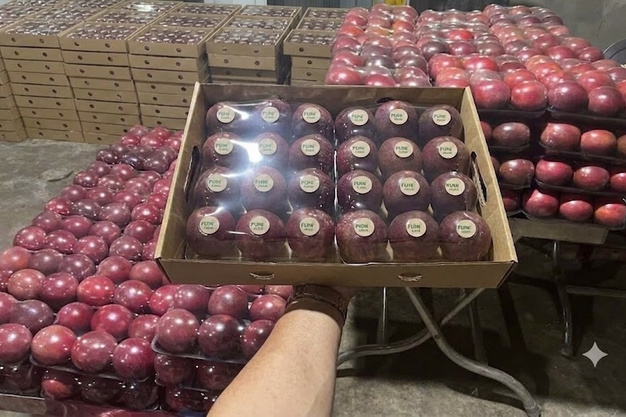
Production has subsequently increased across the Central Highlands, particularly in Gia Lai, Dak Lak, Lam Dong and Dak Nong. “Intercropping passion fruit with other crops has also become more common, while some farmers have shifted towards dedicated cultivation. Purple passion fruit remains the main commercial variety, with yellow passion fruit produced for specific markets and processing.”
Export-grade availability is currently good, Henry says, although quality varies between growing regions and farms, with irregular rainfall and temperature fluctuations affecting fruit size, skin quality and shelf life. He notes that the biggest challenge lies in maintaining consistent export quality, especially concerning fruit size, maturity, appearance and residue compliance.
While China remains an important destination for Vietnamese passion fruit, particularly for processing, exporters are increasingly looking towards Europe and high-value Asian markets such as Japan and South Korea.
 © Funi Farm Import Export Co. Ltd.
“We see further potential in the EU, US and Northeast Asia, although meeting stricter food safety and phytosanitary requirements will be essential,” Henry says. “As demand from these markets remains strong, exporters are increasingly focusing on traceability, planting-area codes, packing-house standards and compliance with importing countries’ phytosanitary requirements.”
The wider export environment is also supportive. “In the first five months of 2026, Vietnam’s fruit and vegetable exports exceeded USD 2.67 billion, up 16% year on year.”
Higher supply is also creating greater differentiation between premium and standard fruit. Premium passion fruit meeting European export standards has maintained relatively stable pricing, while standard grades are facing greater pressure as supply increases.
For the remainder of the season, Henry expects prices to remain relatively stable for premium-quality fruit, while prices for standard grades may continue to fluctuate depending on supply and market demand.
 © Funi Farm Import Export Co. Ltd.
Vietnam competes with Colombia, Ecuador, Peru and Kenya, among others. Competitive production costs, year-round availability and relatively short logistics routes to Asian markets are key advantages, while the ability to supply both fresh and processed fruit gives exporters flexibility.
Henry sees processed products as another growth opportunity, helping extend shelf life and reduce dependence on fresh-fruit markets. However, he cautions that continued acreage expansion needs to remain aligned with market demand rather than leading to uncontrolled growth.
“Looking ahead, we expect to see greater use of improved varieties and planting material, increased investment in irrigation and farm management, and wider adoption of planting-area codes and traceability systems. These developments will help the industry become more professional and better positioned to serve demanding international markets,” he concludes.
For more information:
Henry Le
Funi Farm Import Export Co. Ltd.
Tel: +84 702539668
Email: [email protected]
Source: The Plantations International Agroforestry Group of Companies