For almost 20 years, Kika Holland, based in Cuijk, has specialised in exporting fruit and vegetables to the Balkan countries. In its early years, the company also imported large volumes of stone fruit from the Balkans into the Netherlands. Still, it soon shifted its focus to supplying the Balkans directly with bananas and overseas citrus fruit. “Sometimes you have to make choices, and bananas and citrus require enough focus and energy on their own. We’d rather excel in one or two segments than fall just short across ten,” says Milovan Milošević.
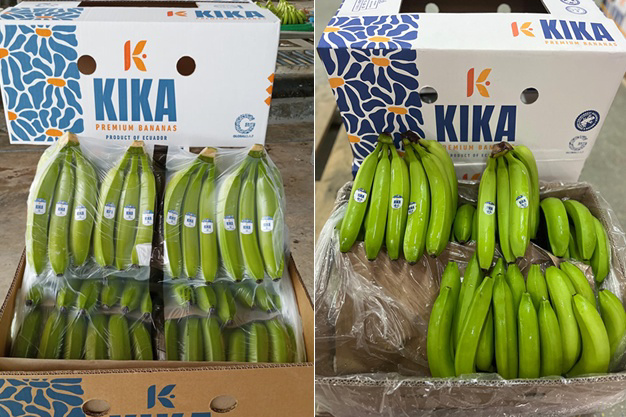 © Kika Holland
He has seen the market change considerably over the past two decades. “For example, the number of container services to the Balkans has increased significantly. That has greatly expanded export opportunities.” He has also seen the export markets become increasingly integrated with Europe. “Croatia has already joined the EU, and Montenegro is expected to follow in 2027 or 2028, with the other Balkan countries likely to follow in the longer term. That opens up a whole new perspective for this business.”
Serbia, Bosnia, Macedonia, Croatia, and Montenegro are Kika Holland’s main export markets, with bananas as its core product. “Three years ago, we launched our own banana brand, Kika. It has since become a recognised brand in the Balkans, and we are now among the top five importers of green bananas,” says Milovan. The market for other products is also developing rapidly. “Twenty years ago, there was only limited demand for Greenskin avocados, and none at all for Hass or ready-to-eat varieties. That has now completely changed.”
According to the fruit trader, however, the banana market is considerably smaller than it was last year. “Last year was exceptionally good, whereas this year has been a bit slower. During the summer we always face competition from locally grown summer fruit, but this year local fruit harvests have been exceptionally large. In addition, banana production in Ecuador has expanded further, leading to periods of oversupply.”
“We’re also feeling the effects of the war in the Middle East, but that doesn’t just apply to bananas. For example, we’re seeing large surpluses of lemons and grapefruit from Argentina and South Africa on the European market. Because of the situation in the Middle East, much more produce is ending up in Europe. As a result, prices have fallen to historically low levels, while sea freight costs have only increased,” says Milovan.
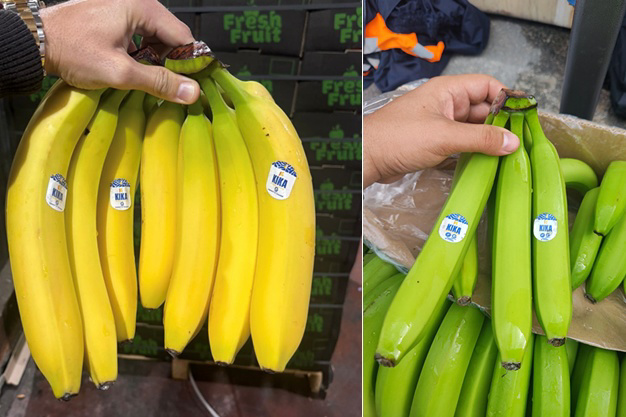 © Kika Holland
Argentinian lemons with black spot bound for Albania
Another issue troubling the fruit trader is what he sees as unfair competition in the lemon import market. “The Balkan countries have the same phytosanitary requirements as the EU. Albania is the exception, where those standards do not apply. Argentina is facing significant problems with black spot this year, and large volumes of these lemons are being shipped to the port of Durrës in Albania, where there are virtually no inspections. However, those lemons ultimately end up in other Balkan countries such as Serbia, Bosnia, and Macedonia as well.”
Milovan is confident about the future of Kika Holland. “Thanks to my extensive network of customers and suppliers in the Balkans, we’ve built a strong market position. We’re also supplying more and more mixed loads from the Netherlands. Because I speak the language, I often have an advantage over other companies. My son studied Logistics Management and is now working in the business as well. The next generation brings fresh ideas, and together with my experience, that gives us confidence for the future. Perhaps importing fruit from the Balkans will become an attractive opportunity again in the future. Serbia, in particular, is developing rapidly and is now among the top 10 apple producers in Europe.”
 © Kika HollandFor further information:
Milovan Milošević
Kika Holland
Wegedoorn 20
5432 EA Cuijk
Tel: +31 (0) 485 313 810
[email protected]
www.kikaholland.nl
Source: The Plantations International Agroforestry Group of Companies