The Italian table grape sector is currently in a state of profound transition, caught between the need for varietal innovation and the pressures of international competition. These grapes are not just an agricultural commodity anymore; they are a strategic asset for our trade balance and a pillar of regional rebranding. The municipality of Noicattaro in Puglia, acting as the logistical and decision-making hub of the ‘Le Terre dell’Uva’ network, is focusing on operational transparency in order to change how the product is perceived.
 © Maria Luigia Brusco | FreshPlaza.com
The fourth edition of Regina di Puglia, the event dedicated to Apulian table grapes which combines regional promotional activities with opportunities for commercial and technical discussions amongst industry professionals, is running until Saturday 25 July 2026. A delegation of buyers and importers from nine countries is in attendance: Estonia, Germany, Italy, Latvia, the Netherlands, Poland, Spain, Sweden and the United Arab Emirates.
The first day began with field visits and tours of packing centres.
Click here to view the photo report
The value of hands-on experience in the field
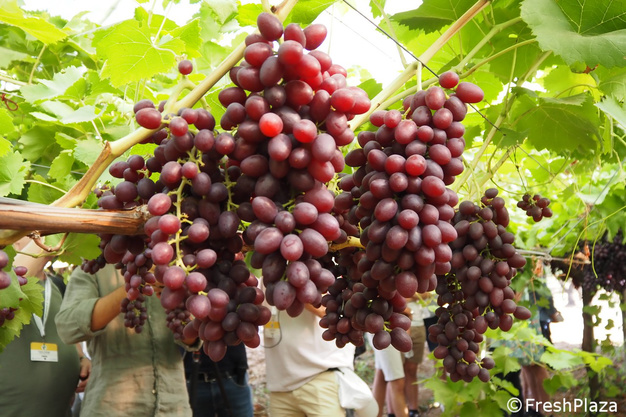
The first stop was a vineyard owned by Franco Pignataro Srl. The focus was on the Sugrafiftythree variety, which is commercially known as RUBY RUSH and is a key asset for the Apulian market. This early-ripening, seedless red grape is highly prized for its pronounced sweetness and ability to be brought to market early in the seasonal sales window.
 © Maria Luigia Brusco | FreshPlaza.com
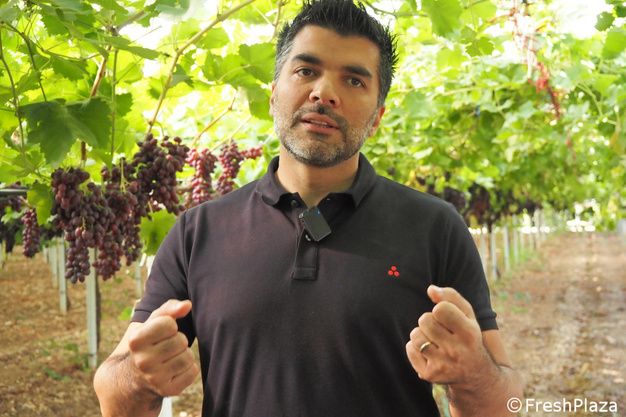
“This year’s harvest has been affected by extremely high temperatures, which have sped up phenological processes and ripening. While the heat has tested the resilience of the crops, it has also encouraged an exceptional accumulation of sugars in the grapes. The result is a product with a very high Brix degree, which translates as an unusually high ‘glycaemic potential’ for the consumer. The region’s range of grape varieties is further enriched by notable cultivars such as Maula, Arra and Superior Seedless, also known as Sugraone, ensuring a diverse supply all year round,” said Vito Fraschini (pictured above), Councillor for Agriculture for the municipality of Noicattaro.
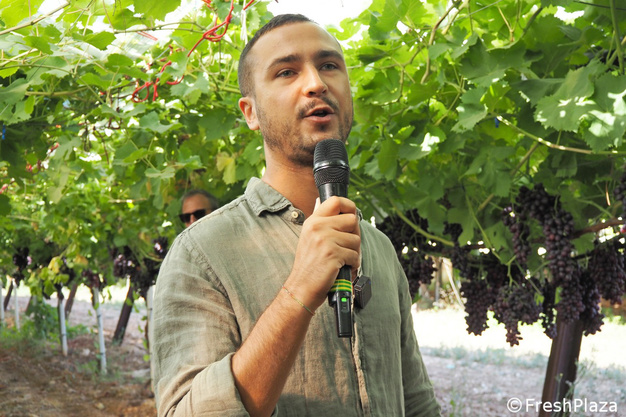
Mario Stelluti (pictured below), BASF’s digital agriculture expert for Southern Italy, spoke about the Agrigenius system. This is a DSS (Decision Support System) platform which uses weather stations in fields and satellite weather data to collect environmental and complex data. It then converts this into straightforward alerts and practical advice. The system cross-references real-time measurements with validated forecast models, correlating the development of fungal diseases and insect pests with the various stages of the plant’s phenology, from vegetative growth to harvest maturity.
 © Maria Luigia Brusco | FreshPlaza.com
“The move to data-driven pest management enables precise irrigation and pest control management, moving beyond rigid traditional schedules,” explained Stelluti. “Interventions become targeted and are only carried out when the models indicate a genuine risk.” This precision in timing is now absolutely necessary: the gradual reduction in the range of available plant protection products requires greater technical expertise and surgical precision in application to ensure the treatments are effective. The aim is to practise agriculture in a way that achieves environmental and economic sustainability through the optimisation of pest management, water management, and all aspects of agronomic management, thanks to cutting-edge technological tools.”
Since 2023, data-driven management has evolved from an optional extra to a strategic necessity in the face of extreme climate variability. Data show that growing seasons are no longer comparable with historical averages, characterised as they are by unpredictable temperature fluctuations and anomalous rainfall patterns. Constant monitoring is the only way to provide real-time adaptive agronomic responses,” remarked Stelluti.
 © Maria Luigia Brusco | FreshPlaza.com
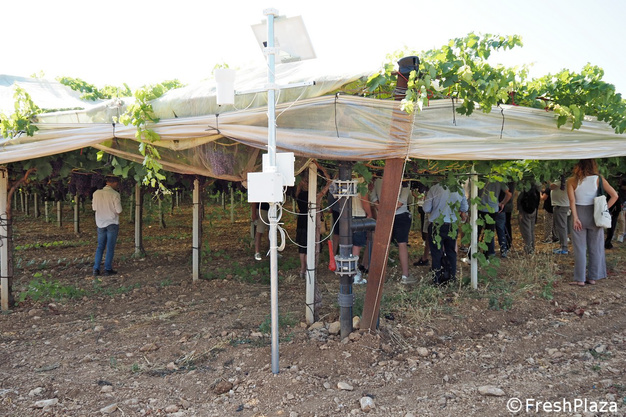
The Noicattaro monitoring network comprises three weather stations that are strategically positioned to reflect the areàs specific microclimatic characteristics. The stations cover the early-season, intermediate and late-season zones (towards the hinterland). This configuration enables data representative of the entire municipal agricultural area to be collected. The monitoring results are shared via public plant health bulletins.
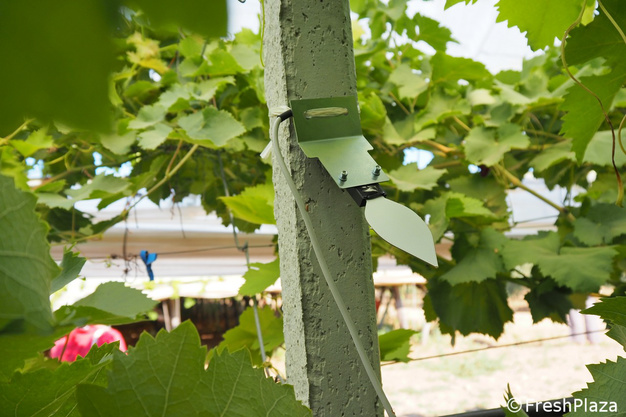
Each station is equipped with precision sensors, including a rain gauge situated at the entrance to the vineyards to record rainfall quantities, a thermo-hygrometer positioned inside the canopy structure and shielded by vegetation to measure temperature and relative humidity within the plant’s microclimate, and an electronic leaf sensor (pictured below) that simulates the morphology and surface tension of real vegetation. By monitoring wetting time and drying rates, the sensor immediately alerts the system when conditions favourable to the development of pathogens are detected.
 © Maria Luigia Brusco | FreshPlaza.com
The second visit took place in Mola di Bari at a plot of Victoria grapes owned by Vandelia, a company founded by Francesco Maldera in 2011. Vandelia ensures its operations run smoothly through a dual-track approach: while grapes dominate the summer season, the company plans its vegetable cycles for the winter period with the same rigour. This guarantees consistent logistical and commercial capacity throughout the year. The geographical distribution of the table grape plots, stretching from the south-east of the Bari area (Mola) to the north (Barletta), enables a staggered harvest schedule. This is essential for managing the flow of produce to the central warehouse in Trani and on to European markets.
 © Maria Luigia Brusco | FreshPlaza.com
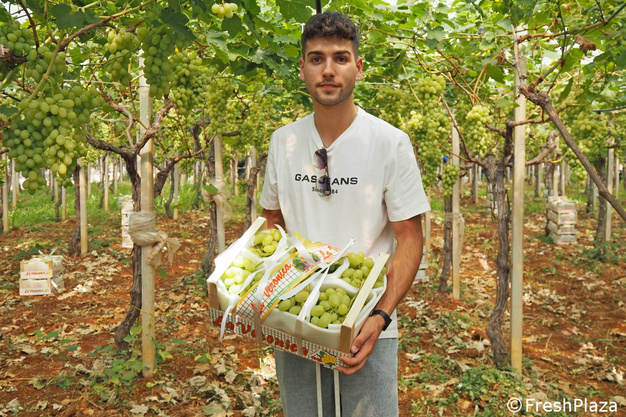
“The company’s identity is inherent in its name: a tribute to an evergreen climbing plant, which is a symbol of enduring vitality, and a reference to the ‘Cross of Christ’ symbolism.” This philosophy of resilience is reflected in the company’s solid continuity today, thanks in part to the generational handover,” explained Giuseppe Maldera (pictured above), Francesco’s son. ‘We process a product from the supply chain by carrying out various selections. The first selection is usually the top grade, intended for long-standing customers and markets that demand the very best in terms of aesthetics and organoleptic quality.”
 © Maria Luigia Brusco | FreshPlaza.com
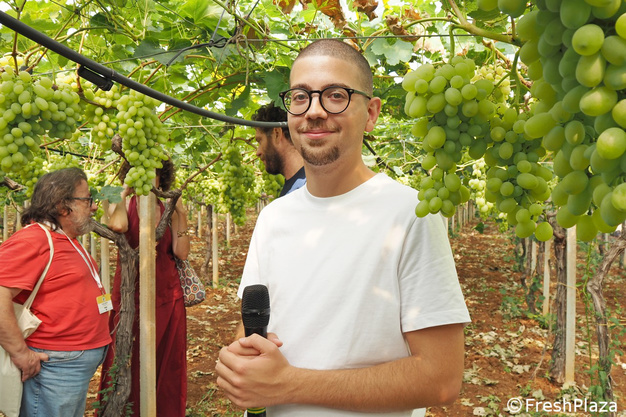
Tommaso Lauciello (pictured above), from the sales department at Vandelia, added: “The company operates with a 35/65 split between domestic and foreign turnover. Its key markets are Central, Northern and Eastern Europe. The company supplies major retail chains and general markets. Our new strategic frontier lies in expanding beyond Europe. We are liaising with shipping companies to implement long-haul cold-chain logistics. I would also like to emphasise that the owner places great importance on recruiting young people, and this generational renewal is a valuable asset that is not very common in our region.”
 © Maria Luigia Brusco | FreshPlaza.com
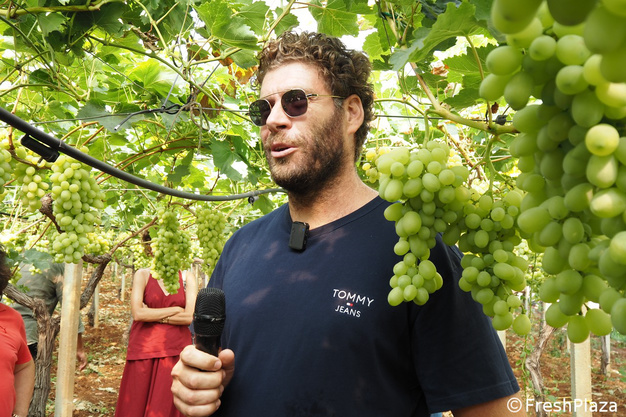
Overseen by agronomist Domenico Di Gennaro (pictured above), the technical management transforms vineyard management into a precise industrial process. The ‘closed system’, ensured by full-coverage shelters, isolates the crop from pathogens and excess moisture. This was crucial in 2026, when open-field crops were extensively damaged by adverse weather conditions. “Monitoring is not just seasonal, but weekly,” said Di Gennaro. ‘Each site visit serves to fine-tune the nutritional and irrigation programmes, supported by advanced sensor technology, thereby reducing waste and maximising sustainability.’ Pre-harvest operations such as manual leaf removal are designed to optimise airflow and light exposure for the bunches, which are essential technical steps for achieving the colour parameters required by premium markets. This agronomic rigour is the main selling point for large-scale international retail chains, who view constant monitoring as a guarantee of food safety.
The crucial stages of packaging
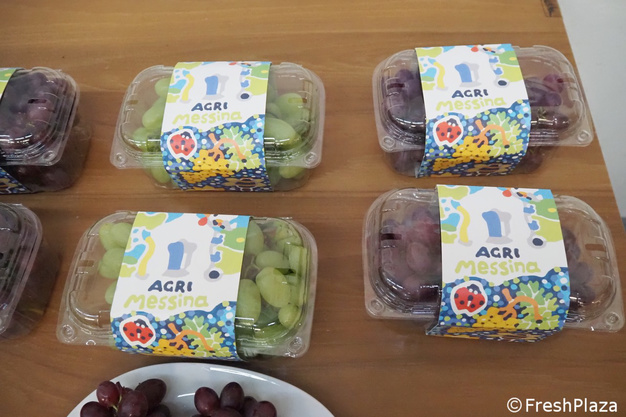
The third stage involved a family-run business that had successfully completed a generational handover, with the third generation now in charge: Agrimessina was founded in the 1960s.
 © Maria Luigia Brusco | FreshPlaza.com
Under its current leadership, Agrimessina has clearly shifted towards high-value market segments. For around twenty years, the company has centred its core business on seedless varieties. This strategic decision coincided with a process of generational modernisation and responds to growing demand from international retailers, particularly in Germany and the United Kingdom, and to changing global consumer tastes. The harvest began around 15 days ago. Arra 30 is currently being processed and stands out as a prime example of excellence, demonstrating the company’s ongoing commitment to selecting products with outstanding organoleptic and commercial qualities.
 © Maria Luigia Brusco | FreshPlaza.com
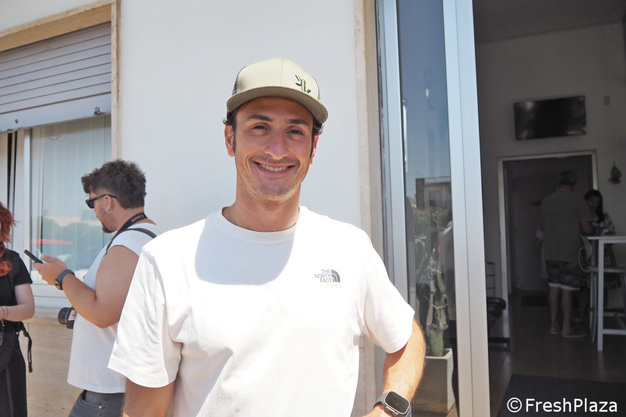
“Our operational efficiency is ensured by an integrated workflow that drastically reduces transit times between harvesting and distribution,” said Francesco Messina, sales manager (pictured above). “The proximity of the production sites to the packing plant enables us to preserve the organoleptic qualities of the freshly harvested produce. The plant operates with simultaneous packaging lines, enabling immediate diversification of packaging in response to the specific requirements of large-scale retailers and end customers.” Agrimessina offers grapes in 20 different types of packaging.
 © Maria Luigia Brusco | FreshPlaza.com
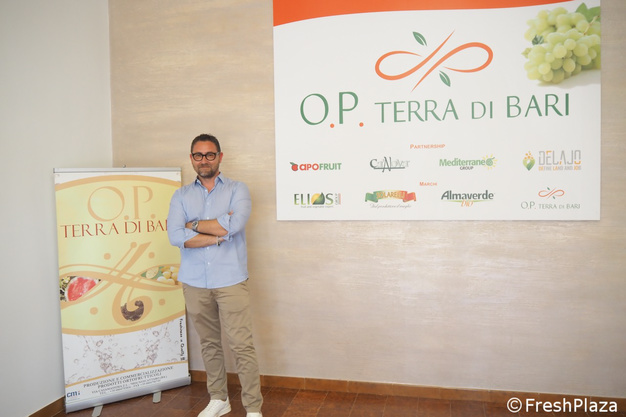
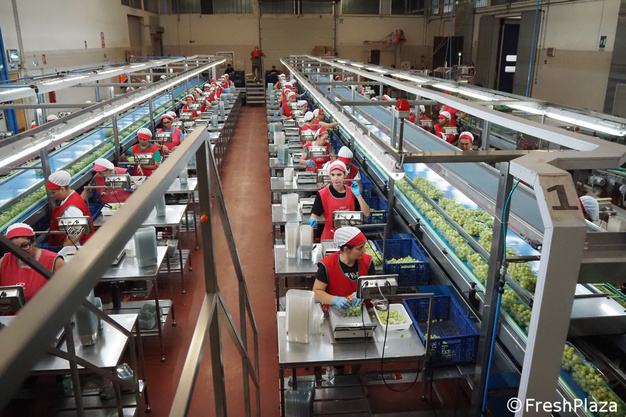
The last visit was to OP Terra di Bari, an organisation of Apulian producers that specialises in exporting table grapes. It is led by a new generation of managers who are committed to a far-reaching modernisation process. The company manages the entire supply chain, from agronomic monitoring in the field to logistics, with a strong focus on varietal innovation and environmental sustainability through the use of renewable energy. Since its foundation as a cooperative in 2005, OP Terra di Bari has brought together 34 producers across more than 200 hectares, achieving an annual production of around 5,200 tonnes of table grapes. The company’s strategy is based on varietal conversion to seedless grapes, energy self-sufficiency, a strong work ethic, and the advanced digitalisation of the supply chain.
In fact, the producer organisation has developed its own software that enables it to monitor the entire production process, from the field to the warehouse. It also provides a single set of agronomic guidelines to all producers, ensuring consistent quality, and prevents plant health problems through constant, real-time monitoring.
 © Maria Luigia Brusco | FreshPlaza.com
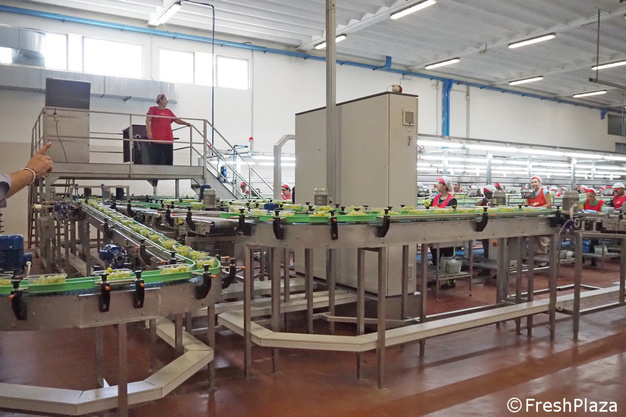
The organisation has its roots in a historic site which, as early as 1975, became the first in Puglia to export table grapes. During our tour, we were guided by the general director, Francesco Ciavarella, who explained: “The operational site has undergone significant investment and now comprises two air-conditioned processing halls totalling 3,000 square metres, 2,000 square metres of cold storage and state-of-the-art machinery for packaging and logistics. Thanks to a strategic partnership with the Apofruit group, we have acquired licences for the most competitive seedless varieties on the market, with production set to begin in July. Around 20 per cent of total production is certified organic, offering organic versions of many of the varieties grown.”
Despite the challenges posed by globalisation and international competition, particularly from Egypt, the company has a daily processing capacity of up to 70 tonnes and is committed to a work culture deeply rooted in the local community, with a strong focus on empowering female and local staff. Looking ahead, an infrastructure expansion of a further 1,000 square metres is already underway.
 © Maria Luigia Brusco | FreshPlaza.com
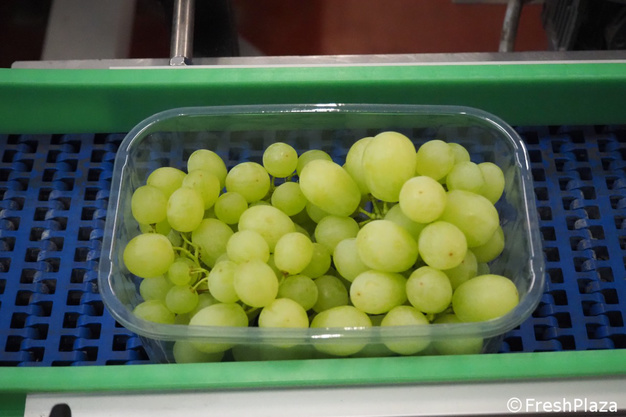
One new development presented during the visit was a system based on QR codes applied to packaging. This system is ready but has not yet been launched. It is designed to add value to the supply chain and provide transparency for the end consumer. “This code provides precise geolocation of the production batch in Puglia, information on the farm and its certifications, information on the producer organisation’s activities, and the option to integrate loyalty schemes (points or discounts) by simply scanning the code,” explained Ciavarella. The entire process can be certified via a blockchain network, which guarantees the immutability of supply chain data.”
 © Maria Luigia Brusco | FreshPlaza.com
The Regina di Puglia 2026 event continues today with B2B meetings between Apulian companies and Italian and foreign distributors and importers who are attending the event. In the evening, there will be a traditional dinner in the vineyard.
On Saturday 25 July, the final day of the event, Piazza Concordia will host a wine variety exhibition and a conference dedicated to promoting the region, its geographical indications and sustainability from 7 pm onwards.
Click here to view the photo report
Source: The Plantations International Agroforestry Group of Companies