The stone fruit harvest at Riverbend Orchard started around 22 October, which is fairly normal timing for the region. The company grows premium peaches and nectarines across 460 acres in Wood Wood, Victoria. According to Director Marianne De Maio, this was a welcome change from last season, when they were approximately two weeks behind schedule.
Fruit set and crop volumes
“The lack of winter chill has certainly had an impact on this season’s production.
Historically, our region would receive around 700–900 winter chill hours. This year, however, we recorded approximately 440 hours, which is a significant reduction and has had a noticeable impact on fruit set across different varieties.
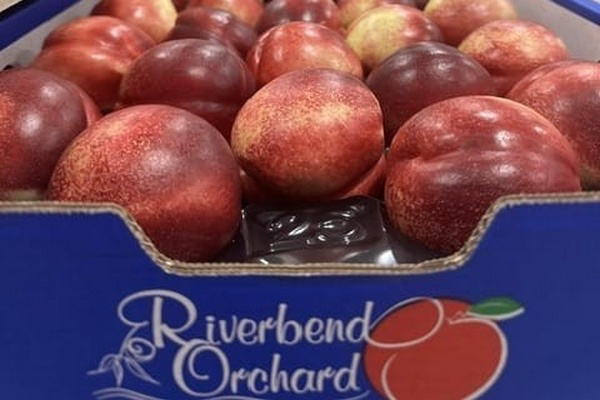
“Our very early varieties, which have lower chill requirements, have generally achieved quite a reasonable fruit set. However, as we move into the later November and early December varieties, crop volumes become much more variable. Some varieties are carrying around 70–75% of their normal crop, while others are down to just 50–60%.
“We expect the impact to become even more noticeable as we move further into the season, particularly with our higher-chill varieties.”
 © Riverbend Orchard
Fruit quality and eating experience
Overall, Marianne said they are very happy with the quality of the fruit this year.
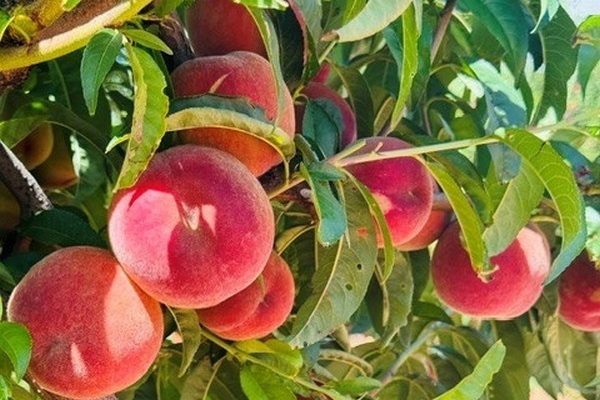
“We’ve only harvested around four to five varieties so far, but what we’re seeing is very encouraging. Fruit sizing has been good, firmness is excellent, and the overall appearance of the fruit is lovely. Sugar levels remain a challenge, although Brix readings are better than at the same time last year.
“Most importantly, the eating quality has improved significantly compared with last season. The fruit is eating exceptionally well, and we’re very pleased with the quality coming off the trees.”
 © Riverbend Orchard
Weather conditions
“The weather has certainly presented some challenges, particularly with storms and unsettled conditions during harvest.
“However, as farmers, we’re accustomed to dealing with unpredictable weather. It’s part of the industry, and we simply adapt our harvesting and packing operations to suit the conditions.”
Fruit sizing
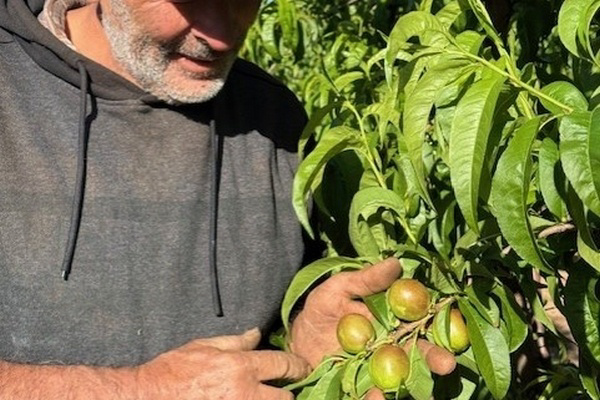
One of the real positives this season has been fruit sizing, commented Marianne.
“In our earlier varieties, we’re consistently seeing fruit at least one size larger than normal, and in some cases, two sizes larger. This has been particularly encouraging, and we’re very pleased with the results so far.”
 © Riverbend Orchard
Australian domestic market
“Domestic demand has been stronger than normal this season, which has been very encouraging. Prices have remained quite strong and are still at very reasonable levels.
While it’s difficult to predict how the market will perform throughout the remainder of November, we’re optimistic that pricing will remain reasonably strong over the next few weeks.
“At this stage, we’re happy with both demand and market returns.”
Export markets
Export demand has also been stronger than last season.
“We’re still assessing how much fruit we’ll allocate to export markets this year, particularly given the reduced production expected in some of our later varieties.
“We’re seeing good opportunities in markets outside China and anticipate increasing our exports to those destinations. China, however, remains a concern. The current economic conditions and payment risks have made us more cautious about supplying that market.
At this stage, we would only consider exporting to China with payment secured upfront.
Our focus is on building reliable export relationships and ensuring sustainable returns for our fruit.”
Outlook for the remainder of the season
“We’re expecting November production to remain reasonably good, although crop volumes will vary considerably between varieties. As we move into December and January, the impact of the lack of winter chill will become much more evident. Some of our January varieties are expected to produce 40–50% less fruit than a normal season, which is a significant reduction.
“Despite these challenges, we’re encouraged by the quality, sizing, and strong market demand we’ve experienced so far.
“While we cannot control the weather or the seasonal conditions, we can continue to adapt and make the best decisions possible for our orchard. Farming always comes with its challenges, and every season is different. This year is certainly no exception.
“Overall, we’re pleased with how the season has started and remain cautiously optimistic about the months ahead.”
For more information:
Marianne De Maio
Riverbend Orchard
[email protected]
www.riverbendorchard.com.au/

Source: The Plantations International Agroforestry Group of Companies