Italian wholesale markets are wondering how to prepare for the future. While there are over a hundred such facilities located throughout the Italian peninsula, only a few dozen are of any significant size and organization. Some also have a strong focus on exports, especially those in the northeast, which export to Northern Europe.
Recently, several markets have initiated a debate on changing their operating hours, shifting from night to day shifts. A prime example is the Rome Agri-Food Center, which opens daily at 12 p.m. and closes at 6 p.m., while on Sundays it is open from 7 a.m. to 12 p.m. (closed on Saturdays).
 © Veronamercato
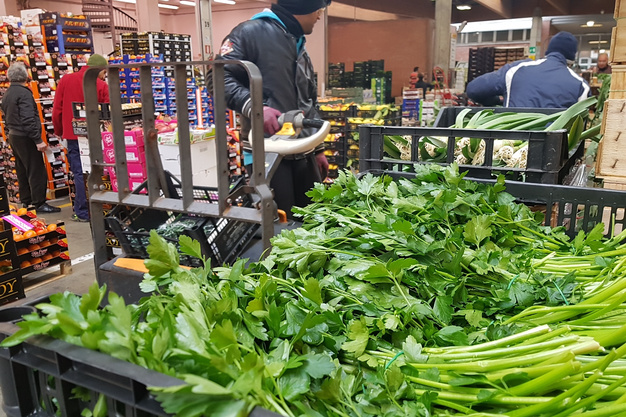
One facility that has chosen a middle ground is Veronamercato, in the city of Verona, in the Veneto region. “Trading hours are limited to the morning,” explains director Paolo Merci, “from 5 a.m. to 11 a.m. This schedule is appreciated by over 80% of customers and wholesalers. It’s impossible to please everyone, but this schedule is the result of extensive discussions and consensus. Transport vehicles can unload produce starting at 7 p.m.”
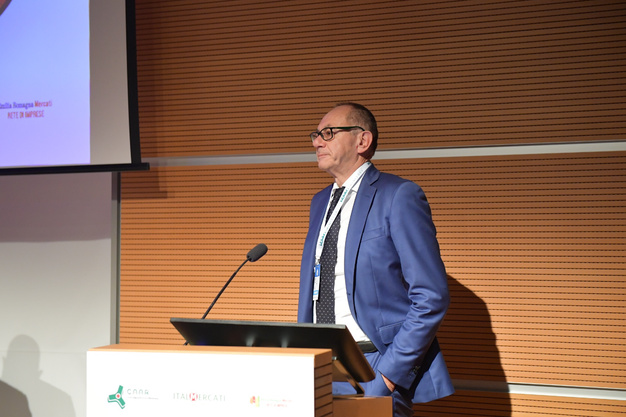
Paolo Merci is also vice president of Italmercati, the network of companies that brings together 22 markets handling over 7 million tons of goods sold each year. “Italy has very different situations from north to south,” continues Merci, “so it’s normal that there may be different needs. Each market adapts to its own territory and clientele. We made this choice, and it has proven successful. In the case of Verona, for example, the goods are mostly destined for Italy, with a share ranging between 10 and 20% going abroad. In addition, there is also the entire volume of produce that uses our platform as a cargo consolidation hub: products arriving from southern Italy are sorted and then shipped to the rest of Europe.”
 © Veronamercato
An average of 450,000 tons of fruits and vegetables pass through the Verona market each year, a volume that ranks it among the most important in Italy. “For weekly price surveys,” says the director, “we created an app, abandoning the old system. With the old price list, we would go out and interview merchants to ask for the daily price of the product. Today, however, the system is much more precise thanks to an algorithm. For example, we conduct targeted interviews based on the type of product. If a company specializes in potatoes, for instance, the price it reports will carry greater weight than the price reported by a company that handles potatoes only occasionally. This makes the price list much more reliable and closer to reality.”
A wind of change
For several years now, there has been discussion at the Turin market about changing the hours. Currently, the market is open from 3:30 to 10:30 in the morning. But the majority of operators are calling for a shift toward daytime hours. Vittorio Rovetta is the president of the Fedagro-Apgo association, which represents 57 of the market’s 70 wholesalers. “We’ve proposed a few options, and so far, the most popular one is for trading to take place from 8 a.m. to 3 p.m. In the coming months, we should begin a trial run along those lines.”
Given its geographical location, the Turin wholesale market (Caat) tends to export to France and Switzerland. “Nighttime hours, however, penalize us because French customers would have to leave the evening before to arrive at the market at 3 a.m. Instead, daytime hours would make things easier for them. With daytime hours, we’d be able to find staff more easily—a constant shortage—and we’d also save on costs since night shifts, understandably, must be paid more. Handling produce would also cost less during the day. The same goes for managing the entire Caat. I believe it is necessary to consider change; we cannot remain stuck in concepts that are decades old.
Consumption patterns are changing
Rovetta also reflects on consumption patterns: “Shopping habits have changed, with consumers increasingly turning to supermarkets at the expense of small shops, and this indirectly penalizes wholesale markets as well. But consumption patterns have changed too. A young person doesn’t buy the same fruits and vegetables their mother or grandmother used to buy. The younger generations cook less and seek products with added convenience. We must adapt to these changes, focusing more and more on fresh-cut produce and advanced fresh produce: sales may be lower, but profits can be higher if we offer additional services that simplify preparation and consumption.” To achieve all this, however, investments are needed not only in money but also in energy, planning, and a shift in mindset—and perhaps this last aspect is even harder to foster than securing funding.
Investments to keep up with the times
Thanks to substantial public funding—approximately 6 million euros—the Cesena Wholesale Market is nearing the completion of its renovation work. Alessandro Giunchi, the market’s administrator, states: “The renovation work is essential, but we are also considering changing the operating hours. We need to consider our customers’ needs with a view to the next 5–10 years, not just the past. We are considering trading hours from 10:30 a.m. to 3:00 p.m., so that farmers can also bring their morning harvest to the market. We must also consider the needs of restaurants and the entire hospitality sector. Let’s also not forget that produce from southern Italy often arrives at 6–7 a.m., so these products are penalized by the nighttime schedule. Our market has a strategic location, near major roadways such as the A14 highway and the E45 expressway, so it can serve as a distribution hub for produce from central and southern Italy destined for export.”
 © Cesena Wholesale Market
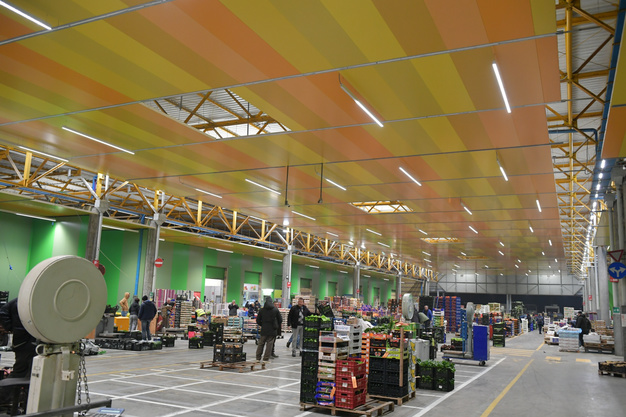
Within a few weeks, the market’s modernization work will be completed. The heart of the project is the comprehensive climate control of the market hall. The central aisle is being enclosed and insulated using prefabricated isothermal panels and rapid doors, with the installation of two rooftop heat pump systems equipped with heat recovery and a free-cooling system. The goal is clear: to eliminate temperature fluctuations that, in summer, promote condensation and the risk of mold, and in winter—on certain sub-zero mornings—compromise the shelf life of products. The new system will guarantee controlled temperatures and constant air renewal, ensuring more comfortable working conditions for operators and greater protection of the goods. Management will be fully digitized: PLCs, field transducers, and centralized supervision will enable continuous monitoring of climate parameters, with remote control via the web.
 © Cesena Wholesale Market
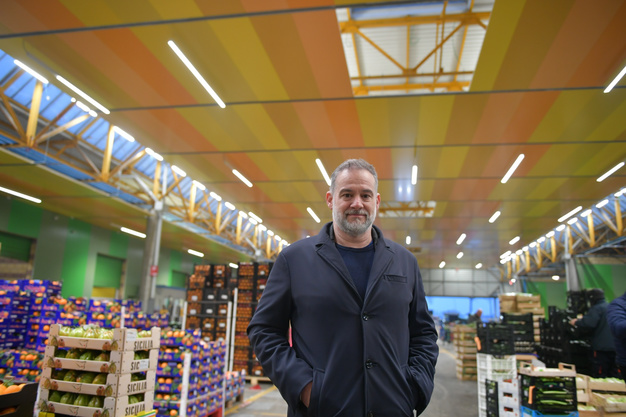
“Fruit and vegetable markets are increasingly facing new challenges in the face of a constantly evolving agri-food supply chain,” continues Giunchi. “In recent years, the fruit and vegetable trade has taken a sharp turn toward large-scale retail, putting other distribution channels in a difficult position. The renovations at the Cesena Fruit and Vegetable Market do not simply change the structure’s appearance, but make it more modern and competitive precisely to meet these new challenges. In this way, in particular, the Cesena Market will be ready to operate during daytime hours and will also be able to accommodate new operators in need of a modern logistics hub.”
For more information:
Veronamercato SpA
Via Sommacampagna, 63D/E
37137 Verona
Tel: +39 045 8632111
[email protected]
www.veronamercato.it

Source: The Plantations International Agroforestry Group of Companies