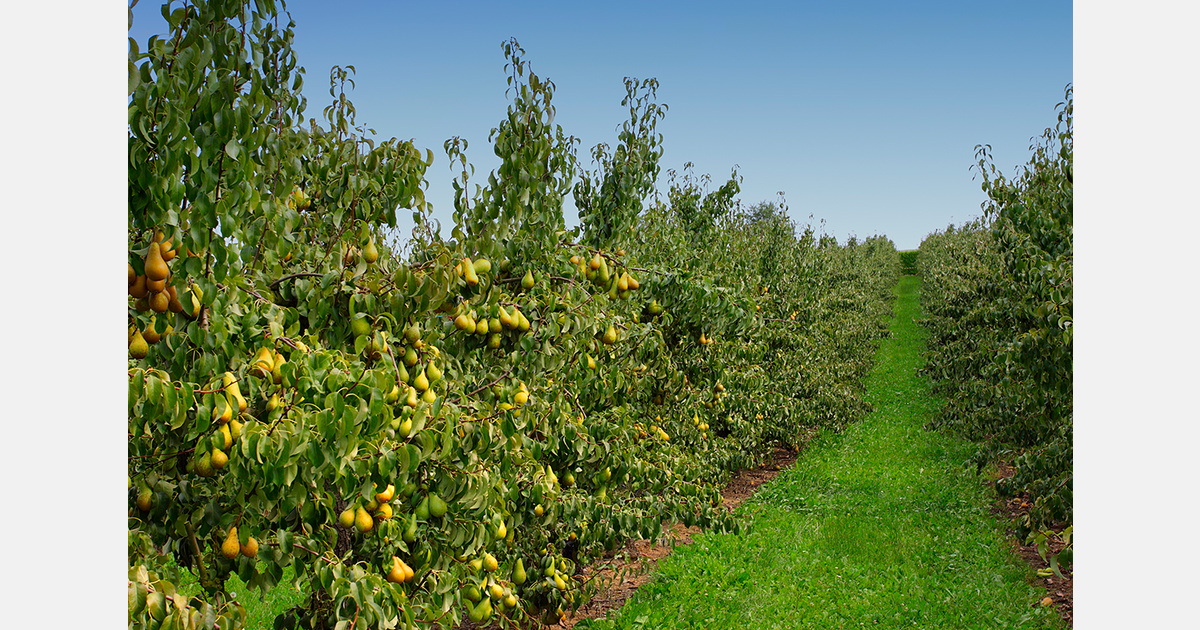
Pear exporters in Asan, South Korea, are targeting shipments of 2,000 tons this year, approximately 31% above the 1,529 tons exported last year.
The National Agricultural Cooperative Federation and Korea Pear Export Association have introduced standardized export packaging to distinguish Korean pears from Chinese fruit sold under Korean labeling. Design rights are being pursued in the United States and Taiwan.
Exporters face rising logistics costs and U.S. tariffs. According to Asan Horticultural NongHyup, container freight costs have increased from approximately US$2,000 to more than US$10,000.
Asan currently exports pears to the United States, Canada, Taiwan, and Vietnam, while exploring Middle Eastern markets through halal certification. Approximately 200 of the area’s 520 pear farms participate in exports.
Meanwhile, South Korea’s pear harvest is forecast at 180,000–190,000 tons, compared with an initial estimate of 220,000 tons. Summer heat and prolonged warm nights have caused fruit cracking.
Labor shortages during pollination and fruit thinning remain a concern. Asan Horticultural NongHyup supports growers through seedling subsidies, machinery inspections, and seasonal labor assistance.
Source: The Plantations International Agroforestry Group of Companies