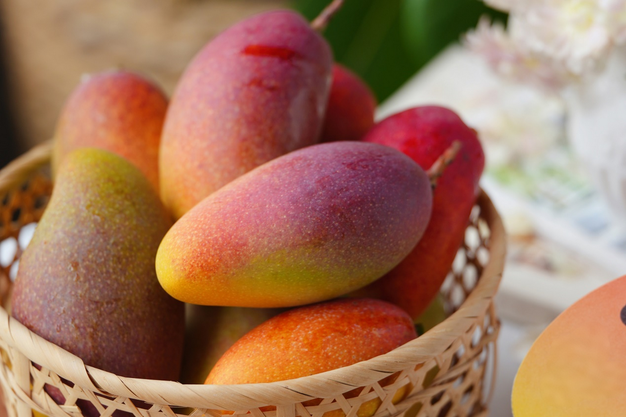
On September 1, Hainan Province, China, introduced a unified definition and specific criteria for “tree-ripened” Guifei mangoes.
“Hainan-grown tree-ripened Guifei mangoes are characterized by their vibrant red skin, a Brix level of up to 16°, a rich aroma, and a pleasant, lingering sweetness. They are gaining popularity in both domestic and international markets. Because they ripen naturally on the tree, they better meet consumer expectations for flavor and quality. However, the industry has long lacked a standardized definition of ‘tree-ripened’ fruit, as well as consistent production and harvesting protocols. Issues such as premature harvesting and the use of artificial ripening agents have occurred, making it difficult for consumers and distributors to distinguish genuinely tree-ripened mangoes. As a result, high-quality fruit has often struggled to command the premium prices it deserves,” explains Mr. Peng Shidun of Fufan Mango.
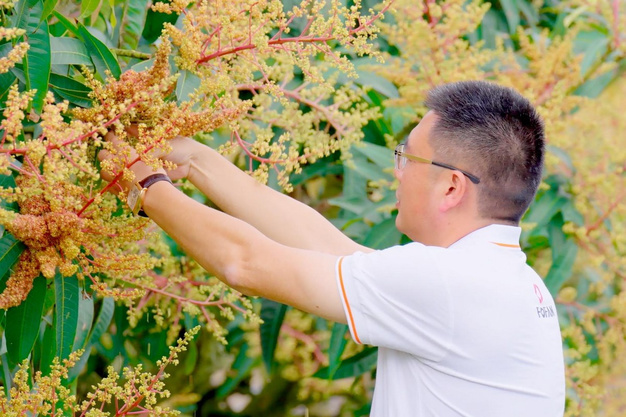
Mr Peng thinning flowers during the mango flowering season
“While the market for tree-ripened mangoes continues to expand, the lack of unified standards among growers could lead to inconsistent consumer experiences and potentially undermine market growth. To address this issue, leading companies in the mango industry, in collaboration with local experts and academic institutions, have developed and released a group standard titled ‘Technical Regulations for the Production of Tree-Ripened (Guifei) Mangoes in Hainan Province,’ which took effect on September 1.”
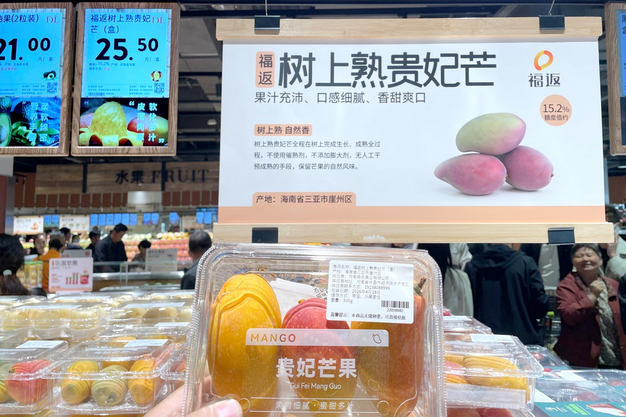
According to Mr. Peng, the standard provides a clear definition of tree-ripened Guifei mangoes. The fruit must not be treated with artificial ripening agents during the growing cycle; it must show signs of yellowing at the fruit end (the “tail”) at harvest; it must be capable of completing the ripening process naturally after picking; and both its external appearance and internal quality must meet the specific physical and chemical criteria set out in the regulations. The standard also establishes precise data and benchmarks for assessing maturity, defining physical and chemical quality indicators, and managing cold-chain logistics. Furthermore, the harvesting protocol requires each fruit to be picked only when it has reached full maturity. “Fufan Mango is a pioneer in the production of tree-ripened Guifei mangoes. With extensive experience in both cultivation and post-harvest handling, we played a key role in developing these industry standards.”
“Among mangoes exported to overseas markets, very few are genuinely tree-ripened, giving mangoes from Hainan a significant competitive advantage. We hope that, with the introduction of these standards, orchards, enterprises, and growers across Hainan will adopt them in their cultivation practices. This will help ensure that high-quality mangoes command premium prices, ultimately supporting the development of the entire industry chain.”
Regarding purchasing preferences in overseas markets, Mr. Peng noted that 1kg packages are the most popular format. “This size is well suited to households overseas and easy for supermarkets to stock. Two units can also be combined into a 2kg package, making it an ideal format for e-commerce sales and holiday gifting. This trend has become particularly pronounced over the past two years.”
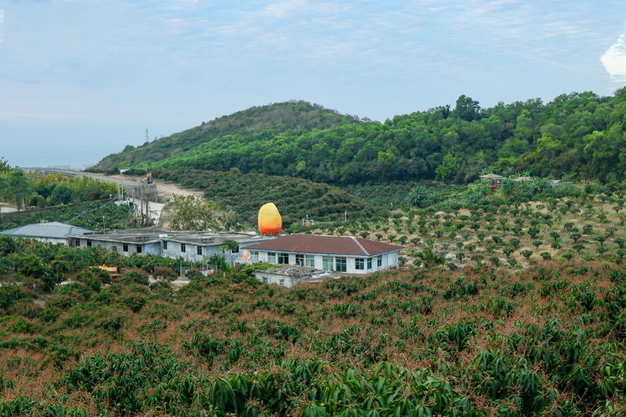
Fufan Mango Orchard
Fufan Mango is the company’s brand. The company manages approximately 333 hectares of mango orchards, with key export markets including Canada, Saudi Arabia, Singapore, and Hong Kong, China. “We use air freight for exports, ensuring that our mangoes reach overseas markets within 48 to 72 hours. Through rigorous quality control and participation in international trade exhibitions to expand our customer base, we have achieved steady growth in overseas sales. In addition to fresh mangoes, we are also exploring value-added processing as a new avenue for development.”

Source: The Plantations International Agroforestry Group of Companies