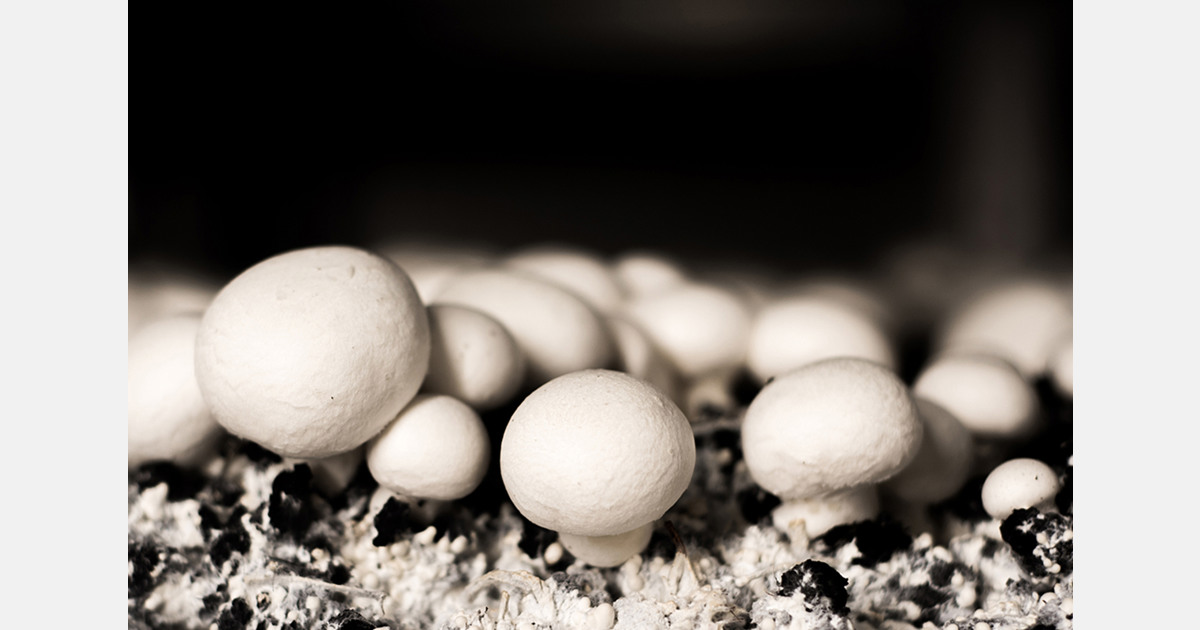
Syria’s mushroom sector is expanding beyond household cultivation, but high cultivation costs, marketing constraints, and the short shelf life of fresh mushrooms are limiting growth.
White mushroom cultivation requires growing rooms equipped with cooling and systems controlling temperature, humidity, and ventilation. Growers often use prepared compost inoculated with mushroom spawn. Incubation takes place at 22 to 24 degrees Celsius, followed by peat moss application, thermal shock, and ventilation to initiate fruiting.
Locally prepared compost costs between US$40 and US$50 per cubic meter. Under suitable conditions, yields can reach around 20 kilograms per square meter.
Oyster mushrooms can be cultivated in smaller spaces, including homes, with lower input requirements. However, fresh oyster mushrooms have a shelf life of no more than 24 hours, creating marketing and handling constraints.
Processing through drying, pickling, and freezing could extend shelf life and reduce losses while providing additional marketing channels.
White mushrooms, or Agaricus, account for most commercial activity due to consumer demand, despite requiring more infrastructure than oyster mushrooms.
Mushroom cultivation experiments in Syria began in 1976, when the Directorate of Agricultural Scientific Research imported mushroom spawn from France.
The Arab Agricultural Development Union established a mushroom farm near Kiswah in the Damascus countryside in 1981. Its first crop was harvested in June 1982, and the facility remains operational.
Sector specialists see opportunities to expand household mushroom cultivation into small businesses through technical support, marketing, preservation, and processing capacity.

Source: The Plantations International Agroforestry Group of Companies