Indian persimmon production is estimated to be 30–40% higher this season, with improved colour and sweetness supporting the fruit’s appeal. However, rising prices are now making buyers more cautious, slowing sales despite continued availability, says Razi Qureshi of wholesaler and exporter Al Quresh Fresh.
“When the fruit develops full colour and ripens properly, its sweetness improves, which is a big factor in consumer acceptance in India. But prices are going up day by day, so not everyone is purchasing the same quantities,” Qureshi explains.
He currently receives around 1,500–1,700 boxes a day for sale, compared with around 2,500 boxes earlier in the season. He stresses that this does not reflect a shortage of fruit. Rather, higher prices are affecting purchasing volumes.
A 6.5–7 kg single-layer box is currently selling for around ₹700–1,000 (US$ 7.5-10.7) for 33–40-count fruit, while larger 24–27-count fruit fetches ₹1,200–1,300 (US$ 12.8-13.9). Qureshi expects prices to continue rising towards December as the season progresses and quality remains good.
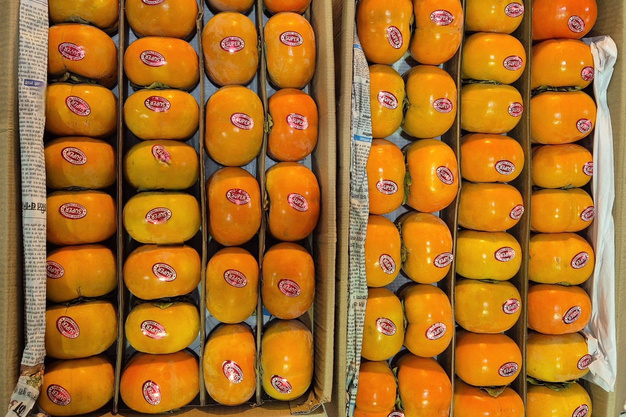 © Al Quresh Fresh
Both Fuyu and Jiro varieties are performing well, with buyers familiar with the distinction between them. Consumer awareness, however, is still developing. “Many end-consumers recognise persimmon as a healthy fruit but do not necessarily know the different varieties. Compared with last season, we do see a positive change in the market’s understanding of the fruit and its quality.”
The higher production estimate reflects growing interest among farmers after seeing better returns from the crop. Qureshi says more growers are producing persimmons this season, and he is receiving more boxes than he did a year ago. He does not have a precise breakdown of production by region, but says the additional supply is reaching the market.
Al Quresh Fresh supplies customers across India and has also served Gulf markets. This year, export opportunities have been constrained by the air-freight situation, with Qureshi unable to maintain his previous supply programme to Gulf markets and currently shipping only small quantities.
He believes the season could have offered a stronger export opportunity if freight conditions had remained closer to last year’s levels. He also sees potential for Indian persimmons to reach more distant markets by sea, but says regular full-container shipments have yet to become established. In his view, suppliers in countries such as China and Spain have more experience with the technologies and post-harvest treatments needed to maintain fruit quality during longer journeys.
The domestic persimmon season is followed by imported supplies. “Imports from Spain typically begin after the Indian season ends in December, followed by supplies from China. For the long run, we see considerable scope for Indian growers to develop the crop further as production increases and consumers become more familiar with the fruit,” Qureshi concludes.
For more information:
Razi Qureshi
Al Quresh Fresh
Tel: +91 90 04 892 218
Email: [email protected]

Source: The Plantations International Agroforestry Group of Companies