At the demo fields of breeding companies in the Netherlands, one question stood out during an extremely hot summer by Dutch standards: how did each variety cope with the heat? It quickly became clear that breeding companies have incorporated genetics from warmer regions into their varieties. At the Takii Seed demo field in Zwaagdijk-Oost, in the northwest of the country, Chris Matthijsse points out the red cabbage variety Kirmizi.
Kirmizi was developed for the Middle East, but after interest from Europe, the breeding company also planted it at the demo field.
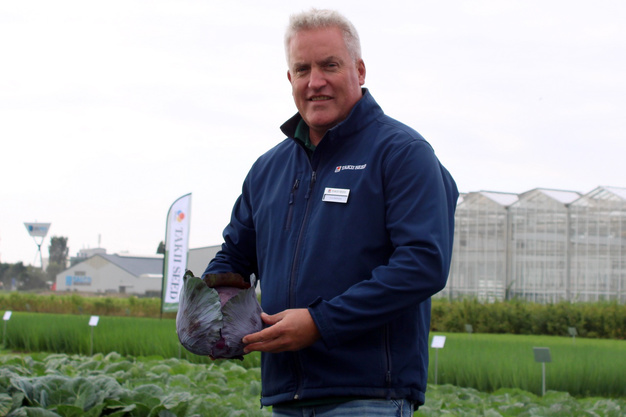 © Thijmen Tiersma | FreshPlaza.comChris with Kirmizi
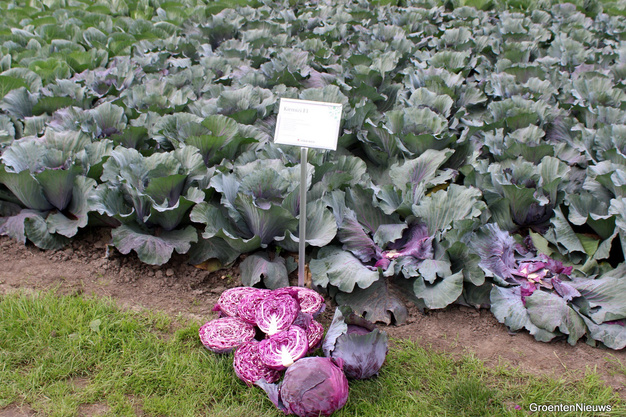
“The variety is heat tolerant, uniform, and can stand in the field for a long time,” says Chris. Kirmizi was first grown in Europe the previous season. Growers asked the breeding company if they could test it for early production, and the variety stands out for its speed of growth. “You need around 65 to 70 days for a good red cabbage. That’s fast for red cabbage.”
The variety also has a smaller core, which is an advantage for processing. A variety needs enough core to grow well, but not too much, as a larger core means more waste during processing.
 © Thijmen Tiersma | FreshPlaza.com
Seed shortage in red onions
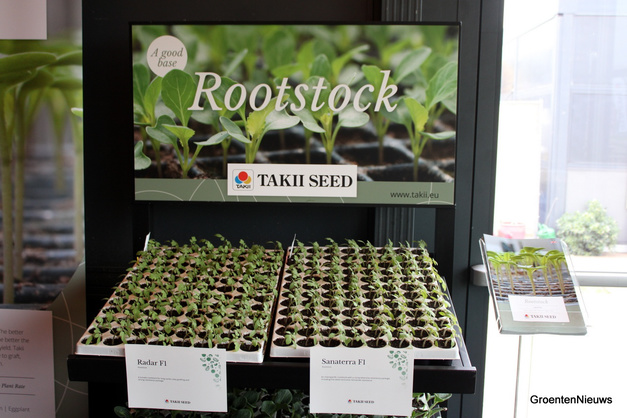
The heat was already a topic in the tent at Takii Seed, where a demo of tomato rootstocks is also on display. Red onion seed production proved challenging, and the entire market is facing seed shortages. All breeding companies are affected. Climate challenges and a shrinking range of approved crop protection products are putting pressure on seed production, and the extreme summer did not help.
 © Thijmen Tiersma | FreshPlaza.com
Demo setup with tomato rootstocks, very popular among organic growers.
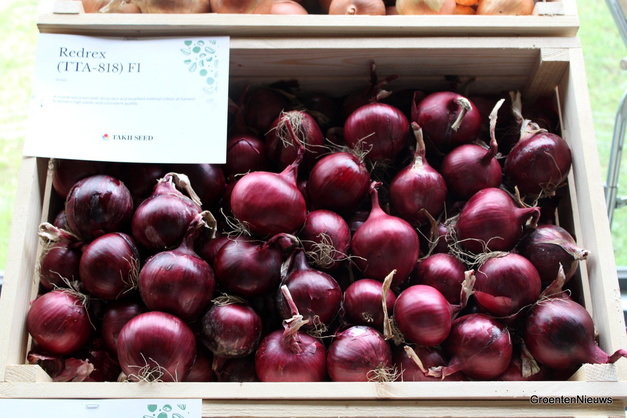
Some red onion varieties are simply unavailable because of the shortage. Takii Seed has a red onion, Redrex, for which seed is available, which makes it popular at the moment, says Chris. The Sales Manager for Northwest Europe explains that the variety has been tested in Germany, the Netherlands and the United Kingdom. “It’s a variety with Spanish influences. It’s highly productive, heat tolerant and suitable for storage until February.”
Redrex was originally developed for Central and Southern Europe, but because of climate change it now also performs well in Northwest Europe. Chris says it is not a problem that the variety is unsuited to very long storage. “By that time, you often see export markets closing again.” In other words, pressure builds on the market at that point, and growers in Northwest Europe prefer to have their red onions out of storage and sold by then.
Using Spanish genetics is a common approach in onion breeding at Takii Seed. “Years ago, when the Dutch summer was also this hot, one of our yellow Spanish varieties stood out enormously for its health and high yield.” Spanish genetics are also used in yellow onions, for example in the variety TTA729.
Besides heat tolerance, resistance to Fusarium is also desirable. Growers have fewer and fewer products available to control this fungus, among other problems. “Our yellow onion varieties generally have high resistance to Fusarium,” says Chris. “Especially the yellow ones.”
 © Thijmen Tiersma | FreshPlaza.com
Spring onions
The last stop on the demo field is the bunching onions, where Kyosen is the highlight. Takii Seed offers varieties with Japanese names for the different growing stages. Kishi is early, followed by Kyosen, then Estafette, and finally Baton for the fall crop.
Kyosen is a new variety in this range. Its genetics make it quick and easy to clean. Chris shows this on the spot and explains that the variety can be grown in both spring and fall, is tolerant to downy mildew, and is now in its second year on the market.
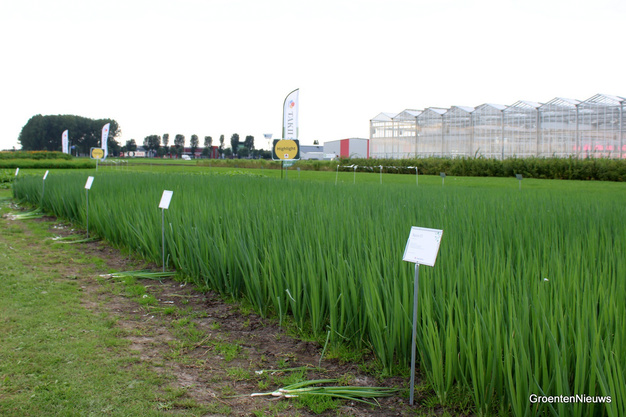 © Thijmen Tiersma | FreshPlaza.comSpring onions on the demo fields in Zwaagdijk-Oost
For more information:
Chris Matthijsse
Takii Seed
[email protected]
www.takii.eu

Source: The Plantations International Agroforestry Group of Companies