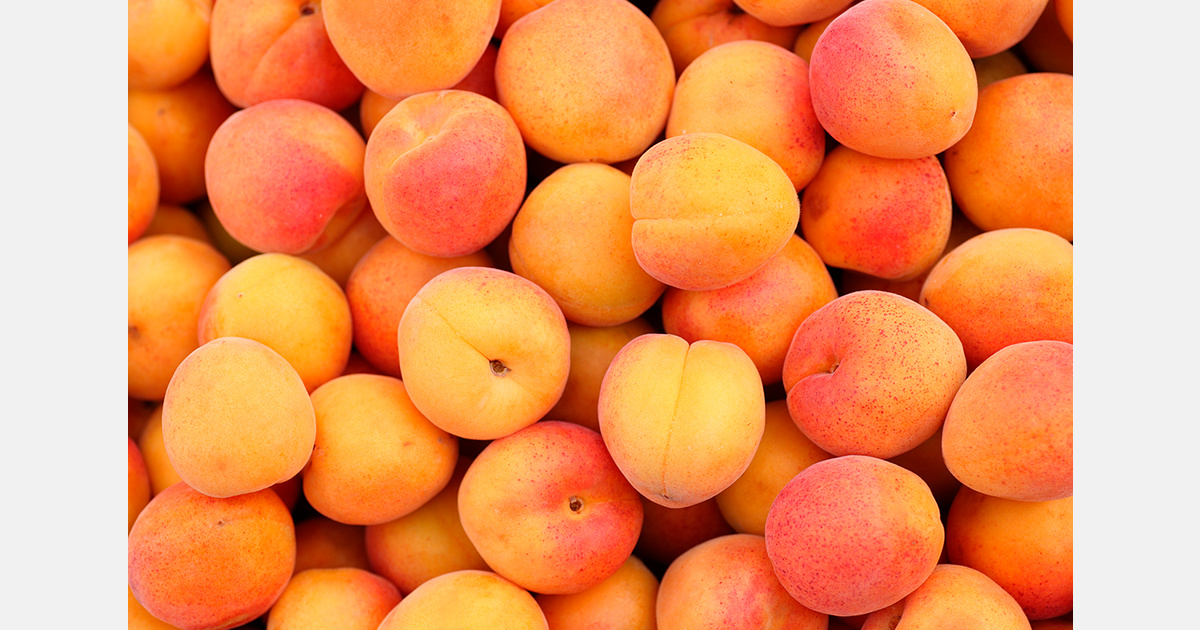
Moldova’s apricot harvest this season reaches an estimated 15,000 to 17,000 tons, a volume comparable to 2024 levels, according to data from the Moldova Fruct Association, with the crop meeting commercial standards suited for export.
The Moldova Fruct Association attributes the strong results to experience built up over recent seasons, which has led producers to invest in anti-frost technologies, anti-hail nets, irrigation systems and modern plant protection solutions. Those investments translate directly into fruit quality, with the crop graded into higher commercial categories based on size, color, firmness and sugar content.
Fruit sizing figures support that assessment. Kyoto variety apricots exceed 40 millimeters in diameter, while Lady Cot fruit reaches over 50 millimeters. Those results come from a combination of irrigation, fertilization, plant protection, fruit thinning and strict adherence to production protocols.
Post-harvest infrastructure spending has also increased in recent years. More companies are acquiring sorting lines, pre-cooling installations and refrigeration equipment, which allows them to preserve quality and assemble uniform lots that meet buyer specifications. The expansion of regional sorting centers also helps consolidate production from multiple smaller growers.
Certification uptake is growing alongside these investments. A rising number of companies now hold standards including IFS Food, GlobalG.A.P., GRASP and SMETA, covering logistics, food safety, traceability and working conditions, all of which support access to foreign markets.
In the previous season, Romania was the leading destination for Moldovan apricots, followed by Ukraine and Serbia. Deliveries also went to Germany, Poland, Slovakia, Latvia, Croatia and Hungary.

Source: The Plantations International Agroforestry Group of Companies