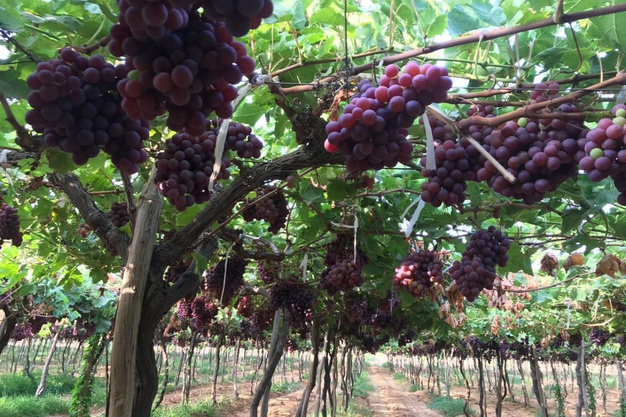
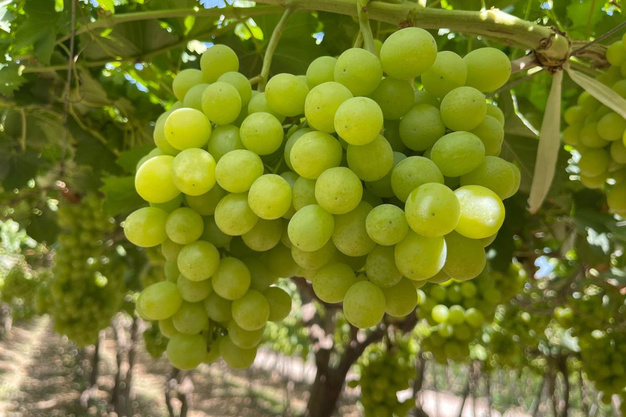
Egypt’s table grape season has just finished, and growers and exporters are taking stock of a season shaped as much by weather as by geopolitical factors. Seedless white varieties arrived more than a week earlier than last year, offering good size and firmness for buyers in the EU and the United Kingdom, although the first shipments suffered from low Brix levels. The situation was different for red varieties: they were 10 to 12 days behind the white grapes, and the “Red Flame Seedless” variety, in particular, suffered from extreme temperature fluctuations during the berry enlargement and coloring phases, a situation exacerbated by a one-week interruption in harvesting during the Eid holidays.
 © Egyptian Growers Organization
A delicate fruit and a sensitive industry
At the same time, the conflict in the Middle East has unexpectedly reshaped trade flows. Egyptian exporters have been reluctant to risk a 60-day transit time to Far Eastern markets, instead steering their shipments towards Europe and South Africa. The same instability context, however, also disrupted shipments of Indian grapes to the United Kingdom and Europe, providing an unusual boost to Egypt and briefly easing the pressure it typically faces between India’s late season and Spain’s early season.
To make sense of the current season and the prospects ahead, Louay Elkout of the Egyptian Growers Organization (EGO), a veteran of the Egyptian table grape export sector and one of its pioneers, shares his thoughts and reflects on the reasons behind Egypt’s rise in the international market, as well as the risk factors that could reshape Egypt’s position in the near future.
 © Egyptian Growers Organization
From a handful of players to 220,000 tonnes
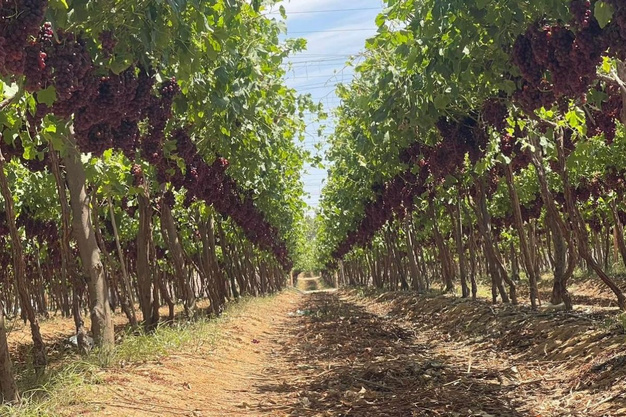
Elkout’s own path traces the sector’s growth step by step, as he began exporting in the early 2000s, when Egyptian grapes were an oddity on the international market. He recounts, “I started growing grapes for export in 2001, when there were only a handful of players; you could count them on one hand. It was necessary to build the industry from scratch, which was no easy task; grapes are among the most delicate and difficult crops to grow, handle, and market. We then saw the sector grow over the years. Today, we’re not among the major players in the sector, but we’re certainly among the longest-standing.”
 © Egyptian Growers OrganizationBack then, the landscape was completely different. “Production volumes were certainly significant, around 700,000 tonnes, but exports were very modest, at less than 2,000 tonnes. Since those humble beginnings, volumes have skyrocketed, and total production now stands at about 1.5 million tonnes, with exports reaching around 220,000 tonnes this season. To give credit where credit is due, Elkout attributes the subsidiary’s growth to the private sector players who believed in the industry, as well as to public agencies and organizations representing producers and exporters. “I would like to specifically mention private companies such as MAFA and Roda, the Horticultural Export Improvement Association (HEIA), and the Egyptian Agricultural Export Council. Without them, none of this would have been possible.”
Over the course of these 25 years of industry growth, certain key moments stand out to Elkout as true turning points. “Just before the COVID-19 pandemic, we began to see a sharp increase every year, not only in Europe but also in the Far East and Africa, and grapes suddenly became a very popular product. Then came the year 2024. It was a pivotal year due to the economic situation. The devaluation of the Egyptian pound triggered a tremendous increase in exports, including agricultural exports, as the country and private sector players needed foreign currency. This export boom was well received in the fresh produce markets, including table grapes.”
New varieties and faster logistics widen the window
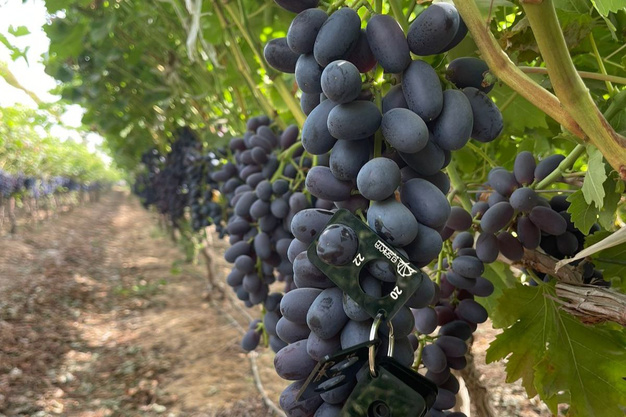
The favorable economic environment alone would not have been enough to propel the sector without a transformation in how Egypt grows and moves its grapes. Variety protection was a decisive step according to Elkout. “When Egypt joined UPOV (International Union for the Protection of New Varieties of Plants) to protect varieties in 2018, we saw a significant increase in new plantings, and breeders were encouraged to come to the country. This was crucial given Egypt’s tight growing season and the need for suitable varieties. Our season is very short, sandwiched between those of India and Spain or Italy. Performant and suitable varieties are paramount to access markets but also to expand the growing season, which now runs roughly from May to August.”
 © Egyptian Growers Organization
Improvements in logistics capabilities have been just as important, capitalizing on Egypt’s geographic location at the crossroads of continents. “The difference between today and 25 years ago is absolutely night and day. Egypt has invested heavily in logistics and attracted major players. Transit time to most European destinations is now seven days door-to-door, so our grapes arrive crisp and fresh,” Elkout explains.
Together, these shifts explain why Egypt has gained ground. But how did other origins slip behind during that time? Elkout attributes the shake-up in the international grapes map to climate change. “When we first started, competition was very tense. I think what really changed the game were the new varieties introduced in Egypt, combined with climate change, which has hit our competition hard and discouraged new investment. I do not want to portray the climate as a one-sided advantage. The climate has been a boon for Egypt for many years, but it has also started to work against us. Every year, we have to innovate, test, and adapt our fertilizing programs to manage its effects.”
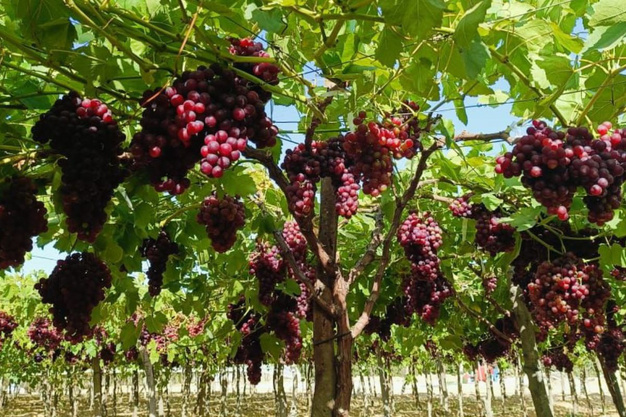
The issues encountered this season with the Flame Seedless variety are a case in point. “The Flame variety really suffered this year due to changing weather conditions, resulting in a high incidence of cracking. The quality just wasn’t up to par. I expect a decline in Flame production next season, and we’ll need to be more cautious in managing it going forward. Growers are adapting by introducing newer varieties such as Ivory, Sweet Globe, and Sweet Celebration, which are gaining ground in the mid-season and late-season markets, with EU supermarkets already planning to expand their product lines around these varieties to fill the gap until Spain and Italy reach their peak harvests,” Elkout explains.
 © Egyptian Growers Organization
Another challenge facing Egyptian producers and exporters is compliance, whether with international laws or the standards of destination markets – requirements that demand unwavering rigor on the part of Egyptian stakeholders. Shortcomings in this area remain persistent in reality, and scrutiny from the international ecosystem is ever-present.
With regard to piracy, Elkout is optimistic. “Piracy has decreased significantly in the past few years. What remains consists mainly of small producers targeting the local market. Egyptian authorities take this issue very seriously and are not sparing any effort to contain this problem. A recent court ruling in Egypt has allowed breeders to have infringing fields removed, which is a huge development. Export markets have also become more difficult and financially risky for infringers to penetrate. I think that piracy will disappear very soon, since it’s not an economically rational choice anymore; it has even become a taboo.”
A similar discipline applies to maximum residue limits. “Most exporters stick strictly to MRLs, because that’s really what separates the export market from the local one. If a container gets intercepted in Europe over an MRL issue, it’s an extremely costly mistake.”
 © Egyptian Growers Organization
A rising crop, a narrowing margin
What Elkout apprehends most is a decline in consumers’ interest in the fruit, further exacerbated by inflationary pressures that are changing their shopping habits. “The volume of grapes we export keeps increasing, but the value of exports isn’t keeping pace. We’ve noticed this season that supermarkets in Europe have been constantly running promotions on grapes; what used to be one promotion per season has become one every other week.”
Pressure on margins sets the tone for Elkout’s outlook for the coming seasons. He expects the favorable geopolitical factors that have helped Egypt this year to fade. “If stability returns to our region, the Middle East, India will reintroduce more volume into the European market, which will impact both demand and prices. Market conditions could, therefore, change rapidly as soon as next season. We saw this when Chilean grapes were redirected to Europe away from the U.S. market due to tariffs, which put pressure on domestic growers. In terms of margins as well, we’re seeing that logistics costs have risen sharply, eating into our earnings. We’re doing everything we can to keep them under control, particularly by managing other costs, but the question remains whether we’ll be able to maintain this pace.”
He concludes on an optimistic note, drawing on two decades of ups and downs: “We’re used to cycles of two or three good seasons followed by a few tough ones. There will certainly be changes in the coming seasons, some of which may be profound, but the future also holds plenty of opportunities for expanding the growing season, geographic market growth, and varietal development.”
For more information:
Louay Elkout
Email: [email protected]

Source: The Plantations International Agroforestry Group of Companies