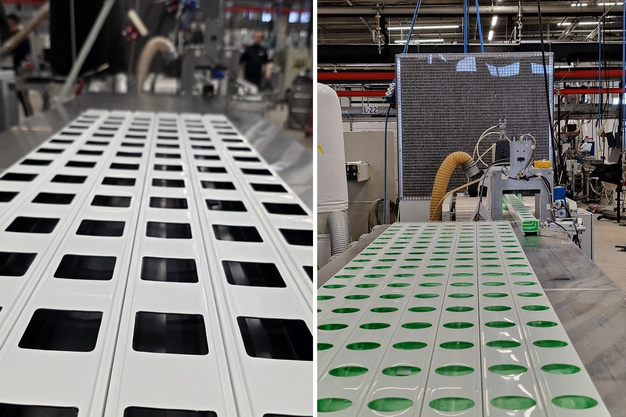
Automation continues to play a big role in greenhouse infrastructure, with manufacturer Primo introducing production technologies designed to reduce labour requirements while improving consistency. According to Janne Makisalo of Primo, one example is the company’s ultrasonic welding process for end covers for the gutters.
“Usually people glue it manually, so for the end customer it takes a lot of time and additional work,” he explains. “We can solve it in around five seconds directly at the production line.”
 © Primo
Instead of applying adhesive by hand, the ultrasonic process briefly melts a thin plastic layer on the end cover before it cools and forms the joint. “The ultrasound melts only the small plastic section. Then attaches it, and it cools down at the same time.”
 © Primo
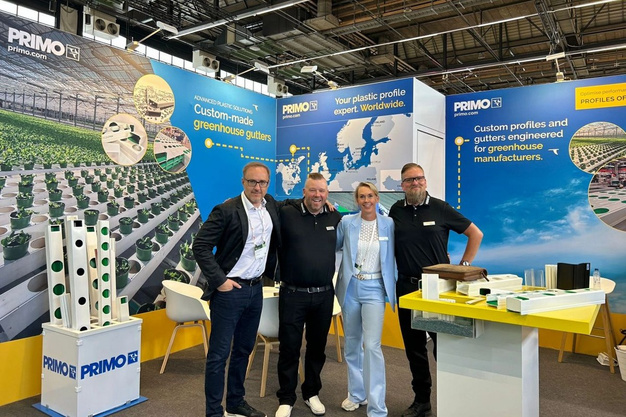
The Inter Primo team at Greentech Amsterdam this year
Factory-made customisation
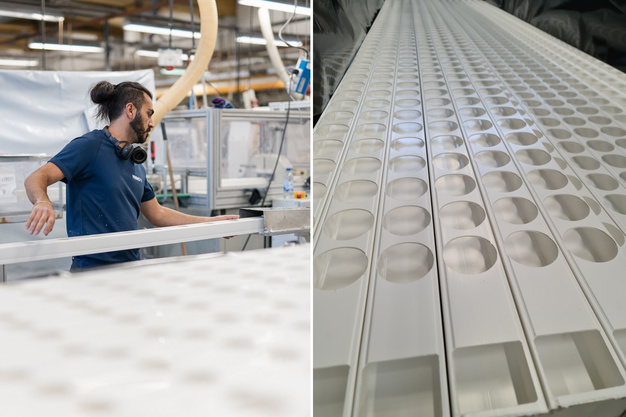
Primo also manufactures customer-specific water inlet openings directly during production, eliminating the need for growers or installers to modify gutters on site.
“We are one of the producers who makes everything directly in line,” Janne shares. “We can produce square or round holes very quickly with robotics directly in line, even close to each other in the same gutter.” The customer can decide exactly the type of holes, the amount of them, and the distances between holes. All gutters are produced just as the end customer wants them.
Additional features, including integrated drip noses, are also formed during manufacturing. “The customer doesn’t need to bend anything or do any holes, attach plates or make modifications.” Our solution is fully ready for use out of the box.
 © Primo
RFID enables crop traceability
One of Primo’s latest developments is the integration of RFID technology into greenhouse gutters. Janne notes that the RFID chip can be installed during production using an automated process as the end cover. “We are the only ones in the world who will attach an RFID chip into the gutter directly in the production process. We program the chip, print the code on it and attach it with air to the gutter in around five seconds.”
The RFID tag enables production data to be linked to individual growing gutters throughout the crop cycle.
“You can learn how much water has been given, how much sunlight there has been and what the temperature has been to optimise the growing process. If there is an issue with the plant, you can track it back through the growing process to see what happened on those days.”
 © Primo
Global supply with local production control
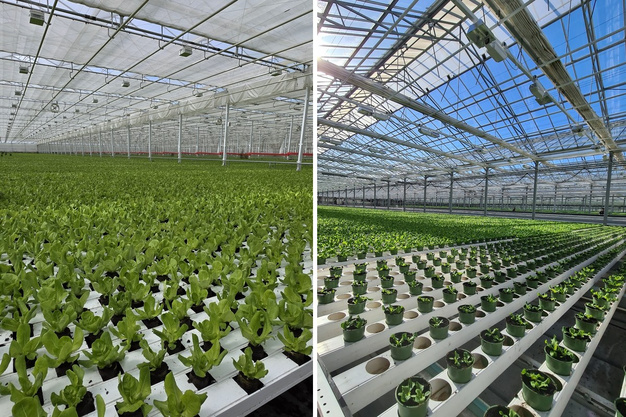
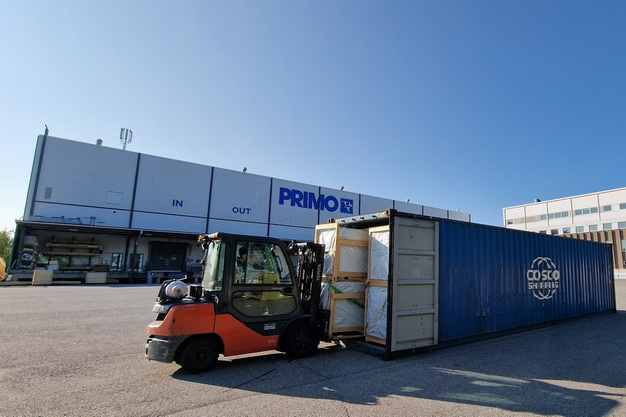
Primo works in big scale together with greenhouse automation companies across Europe, supplying projects worldwide. Project sizes vary considerably, with large greenhouse developments ordering hundreds of kilometres of gutters at one time. Smaller growers and greenhouse owners that don’t have so automated solutions can purchase standard gutters from Primo directly; then the order can be a few thousand pcs.
 © Primo
Although market conditions in Europe remain challenging, he says that the company continues to supply customers internationally and is growing a lot in the greenhouse business. “We transport the gutters all over the world. We have projects from Japan to the United States.”
Primo also controls much of its manufacturing supply chain through its own plastic compounding operation. “We produce and develop the plastic material ourselves. We are only dependent on the raw plastic material.”
The company, headquartered in Copenhagen, Denmark, operates 10 sales and production sites across Europe, China and the USA. Founded in 1959 by the Grunnet family, Primo specializes in custom-designed plastic profile solutions. If you are interested in learning more or have any questions regarding greenhouse gutter solutions, Janne Mäkisalo from Inter Primo would love to discuss the topic further with you!
For more information:
Inter Primo
Janne Mäkisalo, Group Business Developer
[email protected]
+35850 303 1418
www.primo.com

Source: The Plantations International Agroforestry Group of Companies