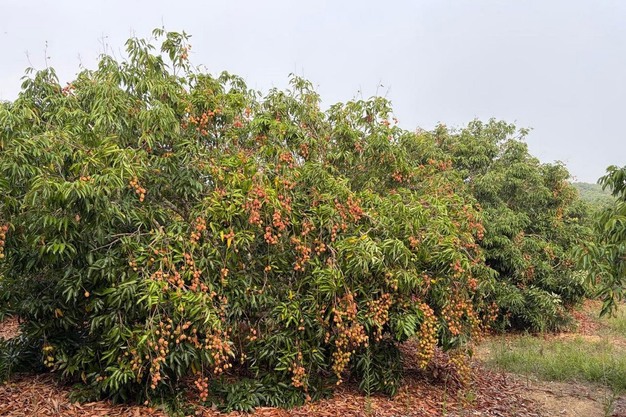
Last week, the Mexican lychee season started in southern Mexico, in the states of Oaxaca, Veracruz and San Luis Potosi. “The crop is looking very good, and we are excited to get going,” says Jose Roggiero with Freshway Produce. The season in this part of Mexico runs from now until mid-June. From there, it moves up north to Sinaloa where lychees are typically harvested between mid-June and mid-July. All in all, it is a short season, lasting eight weeks at most.
It is too early to talk about the northern growing region, but the timing is perfect to discuss the expectations for the growing regions in the south. “Temperatures have been very nice, but recent cloudy weather slowed the ripening of the fruit, especially in Veracruz,” shared Roggiero. As a result, the season started in the first week of May instead of the last week of April.
While the outlook for the season is favorable, lychees are a very sensitive fruit. Warm and sunny weather causes the fruit to ripen at a high pace, and harvesters won’t be able to keep up. Hot weather is the biggest enemy of lychees as they are susceptible to sun damage. “However, if we don’t experience any heat waves, we are looking forward to a very nice season.”
 © Freshway Produce
Proximity to U.S. border
Mexico’s proximity to the U.S. market is a huge advantage. “Within 72 hours of harvest, lychees cross the border in McAllen, TX,” Roggiero said. Harvesting, packing, shipping, and delivery in McAllen all happens within two days. From there, lychees are distributed throughout the U.S. and Canada.
Clamshells and bags
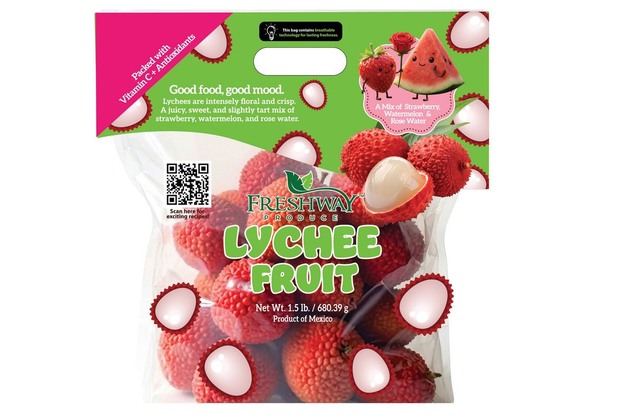
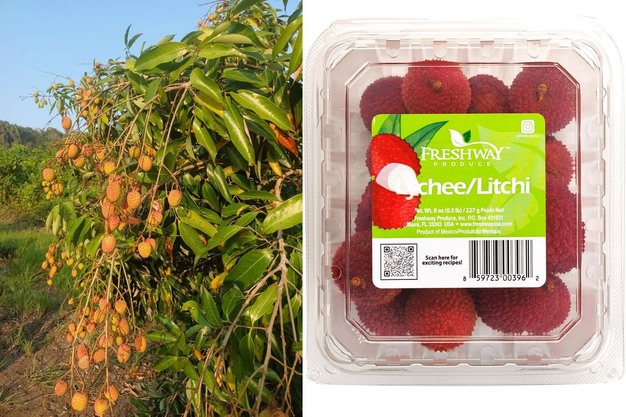
Freshway offers lychees in different sizes of clamshells as well as a bag presentation. “This year, there will be a strong focus on the bag program,” shared Roggiero. The company has an exclusive agreement with PPC Flex for PAZ STAND-UP POUCH bags for lychees. Presentation at store level plays a very important role in driving consumption since lychees are an impulse buy. In addition, the packaging also extends the shelf-life and reduces moisture levels. “In the past three to four years, lychees have gained a lot of traction due to social media, showing their versatility. As a result, consumer awareness has greatly increased, and retailers are taking advantage of that by promoting the fruit during peak season. “Some retailers are promoting lychees for the full eight weeks, from the beginning of the season until the end.” Increased awareness and promotions have resulted in year-over-year growth for the category.
 © Freshway Produce
Demographics
Traditionally, lychees have been most popular among Asian consumers, where the fruit has strong cultural roots. However, this has been changing in recent years and lychees are increasingly being adopted by the mainstream market, especially younger consumers. “Interest is growing across Gen Z and Millennials, as well as some Gen X,” said Roggiero. This is driven by global food trends, exposure through social media, cocktails & mixed beverages, as well as a general curiosity for unique flavors. “This shift reflects lychee’s transition from a niche, ethnic fruit to a more widely recognized and enjoyed option.”
Versatility
Beyond cocktails and mixed beverages, lychees are enjoyed in many different ways. They are often eaten fresh, peeled and chilled, as a simple snack or dessert. In many cultures, lychees are also used in fruit salads, where their floral sweetness pairs well with citrus and tropical fruits. As a dessert, they are popular in sorbets, ice creams, jellies, puddings, and pastries, adding a light and fragrant flavor. Lychees can also be found in beverages like juices, lemonades, iced teas, and smoothies.
 © Freshway Produce
 For more information:
Jose Roggiero
Freshway Produce Inc.
[email protected]
www.freshwayusa.com

Source: The Plantations International Agroforestry Group of Companies