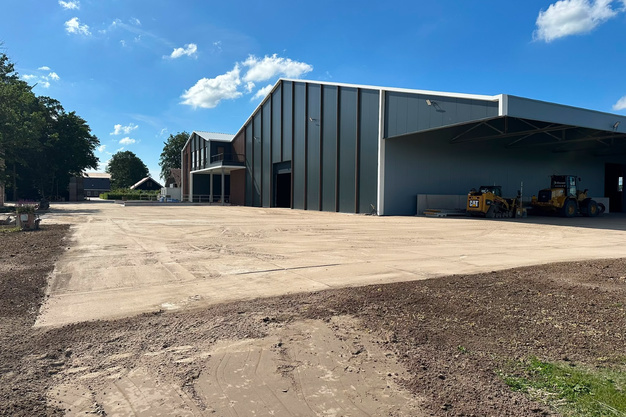
Zonneheerdt has completed the first phase of its new production location. With this expansion, the Dutch company wants to increase its processing capacity for colored vegetables and serve more customers. “I want to keep my regular clients, though, so that’s what we’re focusing on,” says owner Martin Topper.
Zonneheerdt specializes in colored carrots and beets, along with other products like parsnip and parsley root. Its existing buildings were outdated and lacked capacity. The new facility was designed with a strong focus on logistics, from receiving the unwashed vegetables to shipping the washed, packaged end product.
 © Zonneheerdt
Automation increases capacity
The new production line should offer more capacity and flexibility. Zonneheerdt often had to work longer hours or turn down customers. Now, former clients are already reaching out again. “I want to be able to take on business, not turn it down.” Automation should not only help produce more with the same number of staff, but also lighten their workload. It could, theoretically, quadruple capacity.
For now, most of the sorting is still done by hand. An optical sorter is a possible next step, but detecting defects in colored carrots remains tricky. The expansion has its limits, though. A grid capacity shortage means not all of the planned cooling space could be realized. That also complicates further sustainability improvements.
More potential for niche products
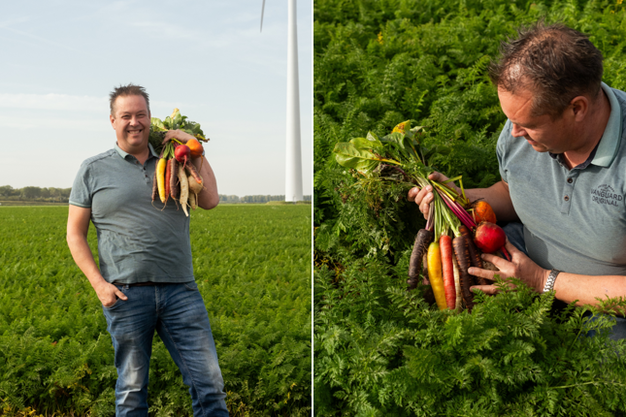
Besides its five-kilogram packaging, Zonneheerdt wants to offer more smaller packs, like 400g, 500g, and 1kg. Demand is rising for mixed packages containing different colored carrots, too. Martin sees opportunities for yellow and purple carrots, particularly in the foodservice industry, because they help businesses stand out.
 © Zonneheerdt
To market its increasing production, Zonneheerdt combines its own crop with shared and contract farming. Martin wants to pre-sell about 90% of the expected colored carrot harvest. “You must grow first and then figure out what to do with it later. Especially with such a niche product; you must know where it’s going,” he says.
Being distinctive with color
Specializing in colored vegetables began after a factory the company cultivated cabbages for moved its production to France. A visit to a food festival gave Topper the idea to start working with colored carrots. Visitors eagerly bought the purple carrots they tasted, but could not find them anywhere else.
People are always looking for distinctive products, but niche products sometimes struggle to maintain space on regular supermarket shelves. Martin, though, sees opportunities for them with smaller buyers and in the organic market.
Zonneheerdt wants to use its new production site to keep growing and develop new products. “We must ensure vegetables aren’t just a side dish. You can do so much more with them,” Martin concludes.
For more information:
Zonneheerdt
Tel: +31 6 533 77 503
[email protected]
www.zonneheerdt.nl
Source: The Plantations International Agroforestry Group of Companies