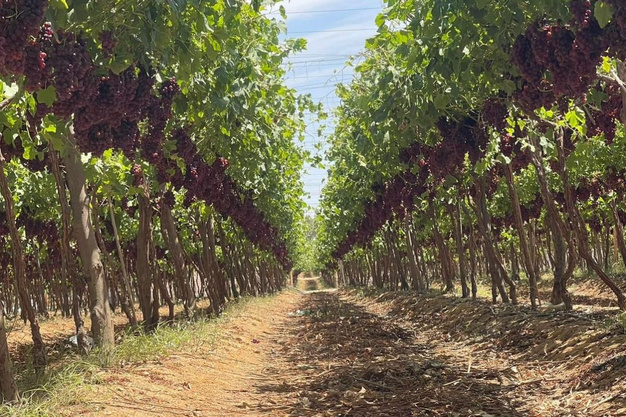
Achieving early maturity has been a major challenge and milestone for Egyptian growers. As difficult as it was from an agronomic standpoint, it proved to be just as rewarding from a commercial standpoint. To achieve early harvests, several varieties are in competition, with good results according to Louay Elkout from the Egyptian Growing Organization.
 © Egygrowers
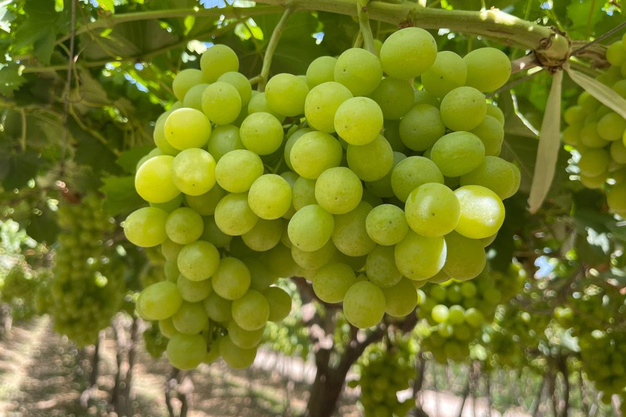
“Many varieties did well this year from Egypt,” Elkout says. “With white seedless grapes, harvest was earlier than the previous year by more than a week in most farms. With early grapes and big demand from markets, the first arrivals had some issues with low brix, but in terms of berry size and firmness, they were suitable for EU and UK markets.”
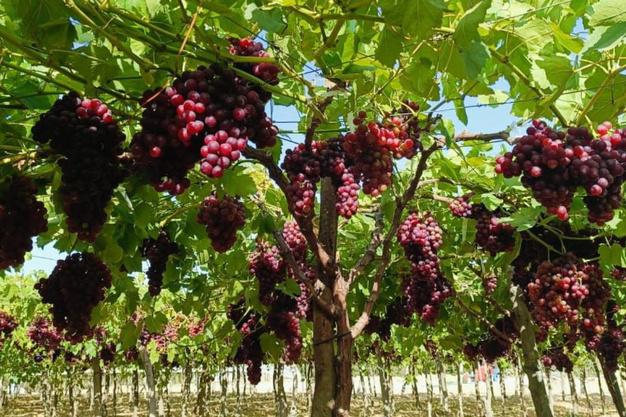
Red grapes told a different story according to the grower: “Red grapes were the opposite of white, as harvest was much later – in some areas it was 10 to 12 days after white started. Most Red Flame Seedless had issues on arrival with splits and cracks, due to extreme weather conditions during sizing and coloring, between very hot days and cold nights. On top of that, the Eid holiday paused the harvest for a week, which caused more problems with quality and quantities.”
 © Egygrowers
Newer varieties gaining ground
Looking at how varieties are performing commercially, Elkout says demand for early grapes remains strong, but growers are increasingly looking beyond Flame Seedless. “We are still having demand for early white and red grapes. If we could overcome the issues with Flame and replace it with new varieties that are as early as Flame, we can still meet the demand from supermarkets.”
Later in the season, the picture shifts further. “For our mid and late season, we see more demand and extended programs with newer varieties such as Ivory, Sweet Globe, and Sweet Sensation. EU supermarkets are looking into doing more programs next year to extend the season until Spain and Italy start supplying in bigger quantities.”
Logistics still weighing on far-east shipments
On current market movement, Elkout notes that European and South African markets remain active for Egyptian exports, while Asian markets continue to be constrained. “At this stage of the season, we are still packing and shipping white and red grapes to the EU, UK, and South Africa. As for the Far East markets, they are still having problems with logistics and transit times, due to the geopolitical conflict in the Middle East. Exporters are not willing to take risks and send grapes that could stay as long as 60 days to reach these markets.”
A tight but expanding window
Egypt’s early-season position between India and Spain remains a defining factor for the industry, though this year brought an unusual twist. “To know exactly if our early markets will close soon due to competition is hard to predict,” Elkout says. “Unfortunately, the Egyptian season is always squeezed between India and Spain. This year is a particular season due to the geopolitical conflict in the Middle East, which also affected the arrival of Indian grapes into the UK and Europe, resulting in more demand for Egyptian grapes.”
Elkout points to a consistent underlying advantage. “Normally, we see more demand for fresh early Egyptian grapes, which arrive on shelves shortly after harvest, compared to Indian grapes, to fill the gap until Spain and Italy start supplying in bigger volumes.”
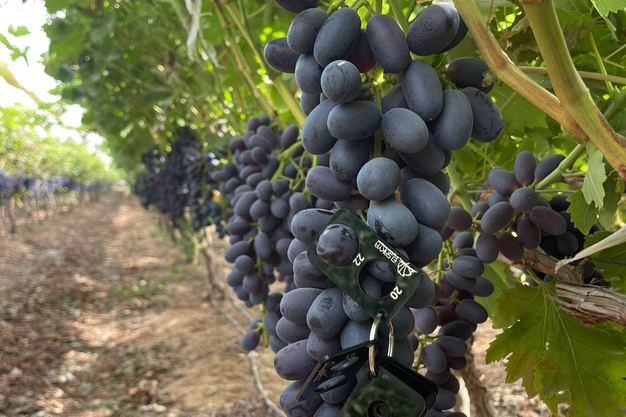
Elkout also points to broader structural challenges shaping the competitive landscape. “When we talk about competition and competitors, some factors are important to consider, like global climate change, which is affecting all countries and reflecting on variety behavior, as well as the ability to change fast and adapt to market needs. Also, cost of production and logistics is a major factor in entering markets and sustaining supply.”
Despite these pressures, the grower remains optimistic about Egypt’s trajectory. “Out of experience as a grower and an exporter, our small window is expanding with new varieties that are better in volume and quality, and can withstand longer logistics transit and storage. With these positive factors, we are still packing and shipping until mid-July to both the UK and EU,” he concludes.
For more information:
Louay Elkout
Egyptian Growing Organization
Tel: +20 100 110 0003
Email: [email protected]

Source: The Plantations International Agroforestry Group of Companies