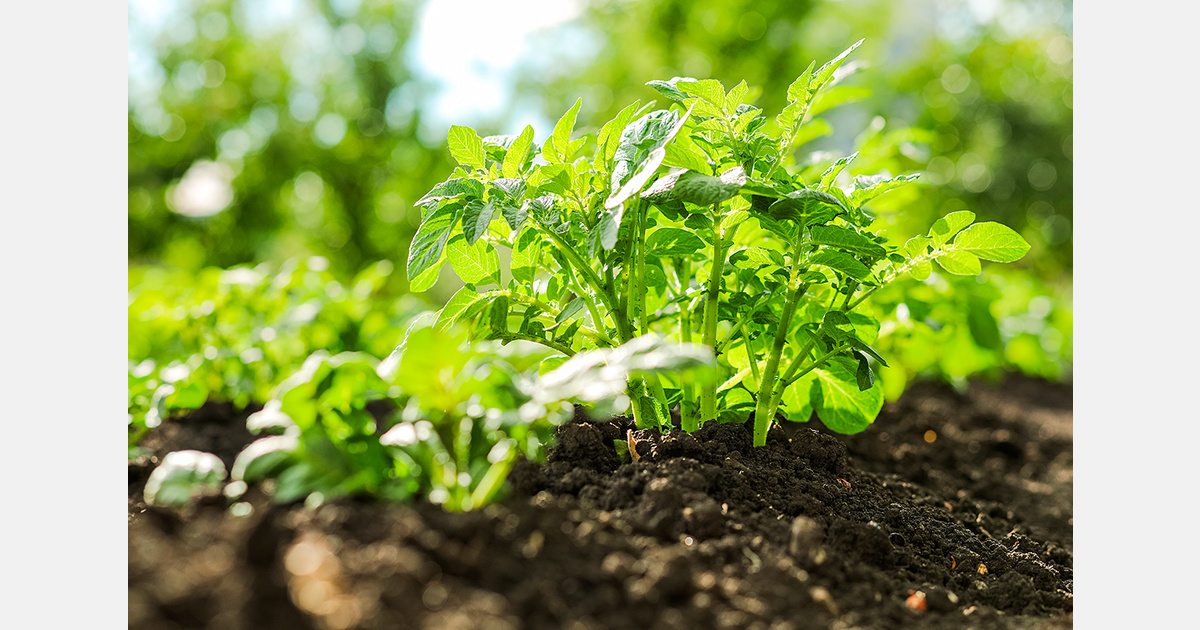
Potatoes have been the main crop at the Mitchell family’s farm in Colorado’s San Luis Valley for more than 80 years. Today, third-generation grower Tyler Mitchell says the operation continues to adapt to drought while responding to changing market conditions.
Mitchell’s family began farming in the valley in the late 1930s and has focused on potatoes ever since. The farm now grows mainly russet potatoes. He attributes the region’s suitability for potato production to its elevation, warm days, cool nights, and low disease pressure. Irrigation from groundwater also allows growers to manage water applications during the season.
Prolonged drought has changed the farm’s crop rotation. Mitchell said potatoes were previously rotated with malt barley, but the operation now includes lower-water crops such as quinoa and winter rye. Cattle are brought in to graze the rye, returning nitrogen to the soil while reducing irrigation requirements.
“We’ve changed our rotation quite a bit,” he said. “We grow winter rye and bring in cattle from neighbors to graze it. That gives us nitrogen back into the soil while using significantly less water.”
Water remains the main challenge for growers in the region.
“We’ve been dealing with historic drought since 2002,” Mitchell said. “Learning to adapt to what could be the new normal has been one of the biggest challenges.”
Mitchell said growers are also dealing with weak potato prices following last year’s large national crop. Many producers have reduced planted area in an effort to balance supply with demand.
“We’re trying to cut back production, so we’re not flooding the market,” he said. “Hopefully that allows prices to recover and helps keep growers in business.”
He added that recent disasters and market assistance announced by the Trump administration have helped specialty crop growers manage financial pressure.
Mitchell, who also serves as chairman of Colorado Potatoes, said industry organisations remain important in representing growers and providing information on policy developments.

Source: The Plantations International Agroforestry Group of Companies