“Life in Dubai has resumed almost normally. The only difference from the period before the start of the clash between the U.S. and Iran is the lack of tourists. However, there is currently no danger for the population,” reports Luca Antonietti, owner of Nova Fruit, a service company for international trade.
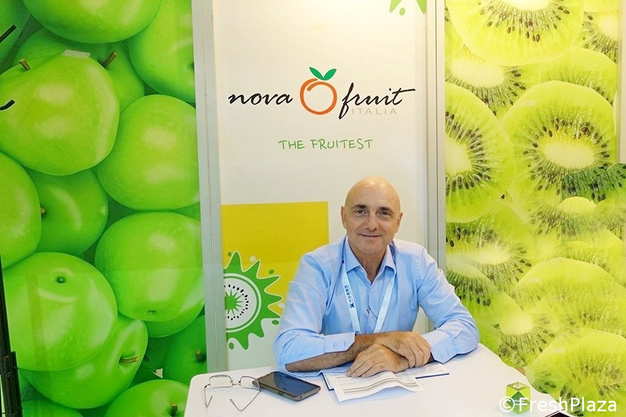 © Cristiano Riciputi | FreshPlaza.comLuca Antonietti
“On the other hand, the fruit and vegetable trade has suffered great setbacks. Compared to before, 80% less fruit and vegetables now transit the country after making additional stopovers and travelling via road. Think of apples and kiwis, which are the two top products in the period that just ended. What was at sea when the war broke out was diverted to India, or to the Khorfakkan port, a small port on the Arabian Sea. It is certainly not a facility that was created to handle large quantities of goods, leading to delays in the order of 30 days and, subsequently, to high costs for transferring the containers via road.”
Apples and kiwis from the Mediterranean were brought to Jeddah, then continued overland to Damman and, from there, distributed in the area. “It is clear, however, that costs skyrocket and it is not always easy to absorb them.”
With the Strait of Hormuz still closed, there are big problems for fruit and vegetables headed to Dubai, the UAE, Bahrain, Qatar, and Kuwait.
Novafruit facilitates exports by container worldwide, from North to South America, the Middle East, Asia and Australasia. The experience it has acquired over several decades has enabled it to gain a precise knowledge of the specific requirements of the different target markets. “The care of the fruit is all-round: we follow the entire harvesting process, storage and stowage in containers, up to delivery at the port of arrival.”
For more information
Nova Fruit
Piazza Brignole, 3/6, 16122
Genoa
+39 (0) 10 5954196
[email protected]
www.novafruit.it

Source: The Plantations International Agroforestry Group of Companies