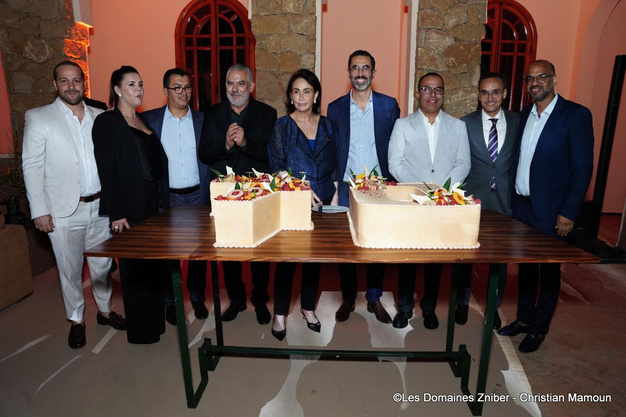
Les Domaines Zniber, the Moroccan prominent grower, packer and exporter, marked its 70th anniversary on 17 September at the Maâssera Brahim Zniber, on the Aït Harzallah estate at the foot of the Middle Atlas, where the group started in 1956. The evening was also the stage for the unveiling of its biggest strategic move in years: all its fruit will now be marketed under one umbrella brand, ZNIBER, with a new signature, “From Soil to Soul”, and a “Triple Good” promise: an agricultural house combining “taste, health and nature.”
 © Youness Bensaid | FreshPlaza.com
Click here to see the photoreport!
From a stony plot to 3400 ha
The celebration opened with a walk through the group’s history. In 1955, the young Ssi Brahim Zniber, the group’s founder, was crossing the El Hajeb region with his father when they stopped in front of a stony piece of land at Aït Harzallah. A “history tunnel” installation recounts how his father looked at it, closed his eyes, and prayed: “My God, You who know what we have been through, let my son have a piece of land like this one.”
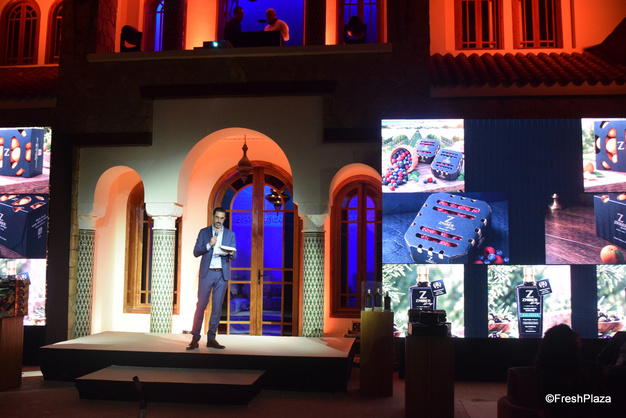
Leyth Zniber, CEO of Les Domaines Zniber, took up the story on stage. “A year later, in 1956, that prayer became reality. The son obtained a loan on his word alone, with no other guarantee, and acquired this stony land, with few means and a whole life to build. That son was my father.”
 © Youness Bensaid | FreshPlaza.com
Leyth Zniber then offered a tribute to those who made this milestone possible: “Around Brahim Zniber, there were women and men: agronomists, engineers, technicians, managers, workers and farm workers, executives and partners, who supported, advised and sometimes contradicted, but who always moved the company forward.” Rita Zniber, president of the group, said: “Brahim loved to build; he loved to undertake, and above all, he looked ahead. If we want to remain faithful to that spirit, we will never turn heritage into immobility.”
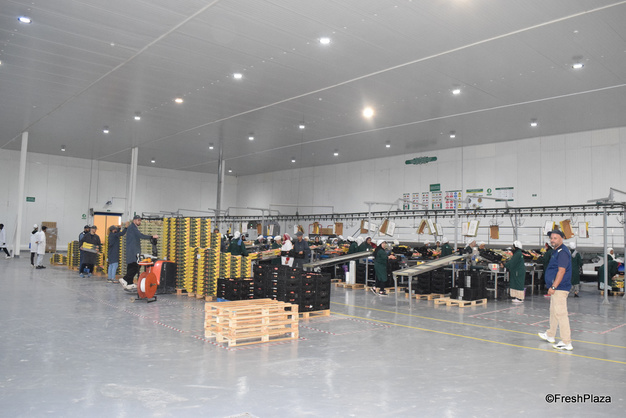
Today, the group farms more than 3,400 hectares across 25 sites, from Berkane to Agadir, employs over 2,600 people and exports 80% of its agricultural output, with a turnover of MAD 500 million. Its portfolio spans Berkane clementines (PGI), 350 hectares of berries, more than 1,300 hectares of stone fruit across 150 varieties, and 1,000 hectares of olive groves supplying its modern Maâssera (Arabic for mill). The group holds BRC, IFS, GlobalG.A.P., SMETA, GRASP, SPRING and LEAF certifications.
“We went from an essentially Moroccan, almost single-crop player to a multi-crop, multi-region company, largely turned towards export,” Leyth Zniber says.
Click here to see the photoreport!
Holding ground under rising pressure
As it marks 70 years, the group faces two substantial challenges: a changing climate that is putting its crops under pressure, and a European market, its main outlet, that is becoming harder to access amid ever-stricter phytosanitary standards and intensifying competition.
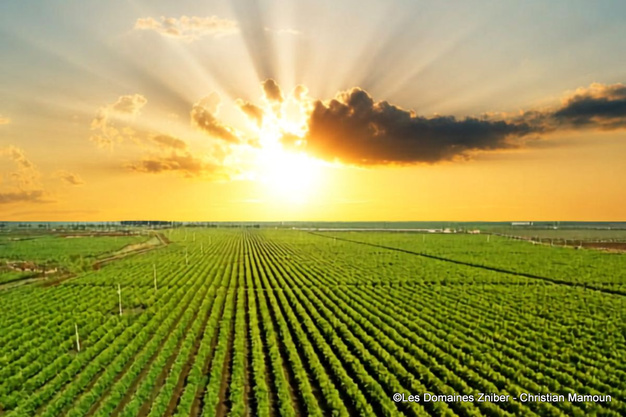
Climate has been a constant test throughout the group’s history. Decades ago, a hailstorm wiped out an entire harvest within minutes, prompting Brahim Zniber to invest in anti-hail protection, among the first in the region. Later, after consecutive years of drought, the water on the Berkane farms turned saline, and large areas of citrus had to be uprooted.
 © Youness Bensaid | FreshPlaza.com
Climate change is now putting the same pressure on the group’s stone fruit. “Climate change is still theoretical for some. We live it fully and very violently in Morocco, with heatwaves, cold spells and hailstorms all in the same season,” Zniber says. The group’s first response is varietal. “On peaches and nectarines, for example, we work with more than a hundred varieties to produce over different periods and identify the varieties best suited to a terroir, a climate and a market.” He does not see varietal development as a cure-all, however. “Variety doesn’t solve everything. With climate change, you have to look at soil, available water, pest pressure, temperature and the value you can produce, all at once.”
Water has become the deciding factor. “It has become a major filter for our decisions. The question is what value we are able to generate per cubic meter of water. We also responded to this problem with consequent investments in greenhouses, rainwater harvesting, reservoirs, probes and hi-tech sensors,” the grower adds.
“Ultimately, we know we shouldn’t defend a crop just because it historically belongs to our portfolio. The day agronomic and economic conditions no longer allow us to grow it properly and sustainably, we must accept to change,” he continues.
 © Youness Bensaid | FreshPlaza.com
Access to Europe, the natural geographic market for Moroccan produce, is also becoming a concern, with ever-stricter phytosanitary standards and intensifying competition. Zniber says, ” Intense competition from emerging producers in Turkey and Egypt and phytosanitary requirements are putting enormous pressure on us to evolve. This is, however, aligned with our vision to produce in closer proximity with natural systems and move faster to adapt.”
For the group, that means changing how it grows. “That’s precisely why we work on soil health, integrated pest management, more targeted treatments, varietal selection and R&D,” he adds. “The aim is to use inputs more and more precisely, to look for alternatives whenever possible and to naturally strengthen the robustness of plants, without falling into an ideological approach that wouldn’t be agronomically realistic.”
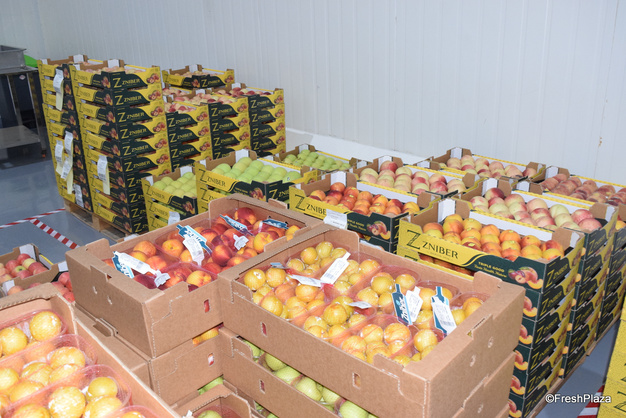
“Commercially, the best way to reduce our vulnerability remains not depending on a single market, and building more stable relationships with customers, based on quality, consistency and the ability to keep our commitments. We will keep reinforcing our position in Europe while widening our reach. We have started exporting to the Middle East and made our first steps in Asia, notably Malaysia and Japan,” he continues.
 © Youness Bensaid | FreshPlaza.com
What’s next for Les Domaines Zniber
For the next phase, the group wants to consolidate before pushing further. “Over the last four years, we have invested nearly 80 million dirhams a year in the company. Now we are putting more emphasis on value creation, brands and proximity to markets,” Zniber says, adding that the company is currently running trials on twenty products.
“For certain products, our partners want to work with us twelve months a year. That leads us to consider, in time, diversifying our production basins beyond Morocco alone,” he continues. As for 2027: “It will be above all a year of consolidation, but also of preparing the next phase of international growth.”
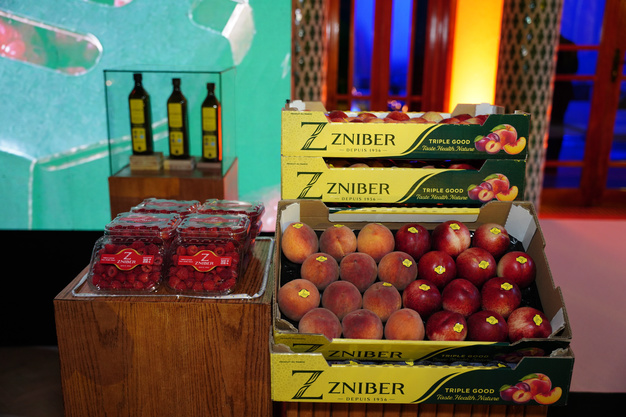
The immediate endeavor as the group enters its eighth decade is the branding, meant to bring the group closer to consumers and to support a B2B2C strategy. “Zniber was one of the first fresh produce brands on the Moroccan market, at a time when branding was rare in this sector. For 70 years, that name has run through this story. We decided to fully claim it and put it at the heart of our identity. We want consumers to rightly recognise our offering, just as our retail partners do,” Zniber says.

 © Youness Bensaid | FreshPlaza.com
The brand comes in two ranges: ZNIBER for everyday quality and ZNIBER HERITAGE for the exceptional. “When terroir, time, know-how and rarity allow us to go even further, this exacting standard will find its most exceptional expression under Zniber Heritage,” he continues.
The grower also calls for better service to the domestic market in Morocco: “We need to better organise the value chains, reduce losses and intermediaries, pay growers better and let the consumer access better-quality products at a fair price. We value our domestic market, as our new ZNIBER and ZNIBER HERITAGE brands are aimed at it.”
Behind it all is a question Leyth Zniber calls simple: “How do we make sure this company is still here in fifty years? That means preserving its reason for being, while accepting to evolve its trades, its products and its methods when the context demands it.”
For more information:
Leyth Zniber
Les Domaines Zniber
Othmane Michbal
Les Domaines Zniber
Email: [email protected]
website www.domaineszniber.com/
Source: The Plantations International Agroforestry Group of Companies