Nine months after heavy rains boosted morale across Morocco’s citrus-growing regions, exporters are heading into the new soft citrus season with renewed water reserves and favorable market opportunities. The Maroc Late oranges campaign just ended, exceeding expectations for quality, though not for volume, giving more reasons for confidence. Soufiane Bendennoune of Citrus Mogador provides an update on the company’s operations on the eve of the Fruit Attraction trade show in Madrid.
 © Citrus Mogador
The United States and the United Kingdom, markets that Bendennoune had pointed to as key markets for Moroccan citrus back in January, remain a structural pillar of the country’s citrus exports rather than a one-off success. He explains, “The U.S. and U.K. markets have long been important for Morocco. Depending on the variety, these two markets can account for between 20 and 30 percent of our export volume. We face competition from other sources in these markets, but Moroccan products continue to enjoy a good reputation there, thanks in particular to their quality, their taste, and the professionalism of the exporters operating in those markets.”
 © Citrus Mogador
This stability stems from a significantly improved hydrological situation this season. The rainfall that blessed the country early in the season was a gift that kept on giving, according to Bendennoune. “Over the past twelve months, we have recorded substantial water inflows thanks to the return of rainfall, which has significantly increased water reserves nationwide. At the same time, authorities have been working for several years to increase storage capacity and develop unconventional water sources, particularly desalination. Moroccan agriculture, and with it, citrus cultivation, benefited greatly from this improvement. “
However, this has not yet translated into a shift in the acreage, according to Bendennoune. The “recovery before expansion” position adopted by Citrus Mogador remains relevant. “In this context, everyone is striving to preserve and strengthen their current production while looking toward the future. It is difficult today to make a definitive statement about the evolution of cultivated areas, but there is hope throughout the sector,” he adds.
 © Citrus Mogador
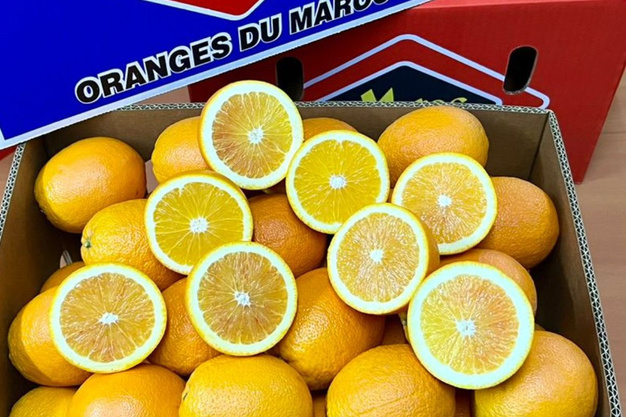
From a commercial standpoint, the Maroc Late campaign concluded as expected. Bendennoune has repeatedly touted Maroc Late as Morocco’s major strength, given the scarcity of competing sources overlapping its seasonality. “In our case, the Maroc Late season went well, thanks in particular to higher yields and better quality this year. We exported the same volume as last year, but under better conditions,” the exporter reports. Demand followed a now-familiar seasonal pattern: “The last three seasons have been quite similar, with peaks in demand in the United States in May/June, followed by peaks in demand in Europe in July/August. The Maroc Late variety remains highly prized for its juiciness, taste, and the texture and color of its juice, which are unmatched by other origins.”
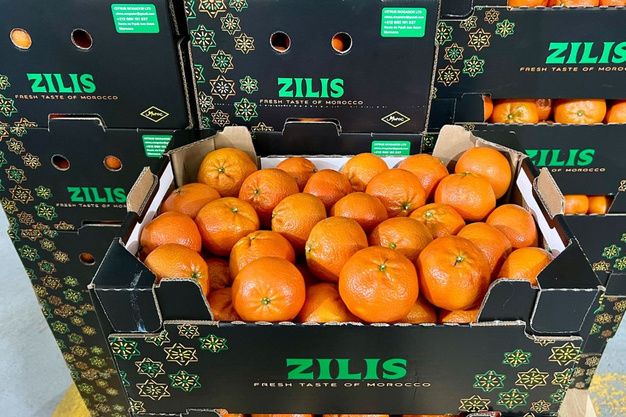
As for the upcoming clementine and mandarin harvests, Bendennoune remains cautious. “It’s always difficult to make accurate predictions when the season hasn’t started yet. At first glance, we should see a decline in clementine production and a slight decline in mandarin production. Of course, this remains to be confirmed.”
 © Citrus Mogador
Bendennoune is heading to the Fruit Attraction trade show in Madrid with its usual posture. “We’re approaching Fruit Attraction, as visitors, with confidence and optimism, as always,” Bendennoune says. The company’s export program will once again be based on its three anchors: clementines, Nadorcott, and Maroc Late. “We are fortunate to have a diverse orchard base, and production spread across different geographic areas, which allows us to offer all varieties of citrus fruits and cover nearly 12 months of the calendar year,” the exporter concludes.
For more information:
Soufiane Bendennoune
Citrus Mogador
Tel: +212 690 191337
Email: [email protected]

Source: The Plantations International Agroforestry Group of Companies