As protected cultivation expands across India, new business models are emerging to address a persistent challenge where many landowners and investors are interested in protected cultivation but lack the technical expertise and operational capacity to operate high-tech farms themselves.
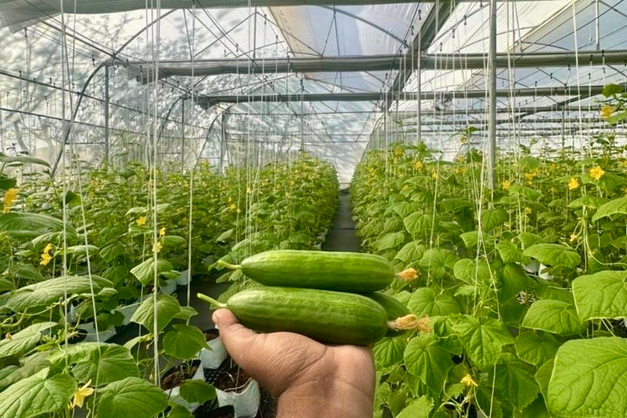
According to Pritpal Singh, CEO of Farmcult, this opportunity led the company to evolve from a hydroponic grower into a provider of turnkey projects and managed farm operations. “I see huge potential in controlled-environment agriculture. We are living in a world where resources are becoming scarce while the population continues to grow. Farmcult initially started as a company growing exotic vegetables using hydroponics, but we soon realised there was an even bigger opportunity in providing end-to-end solutions for protected cultivation.”
 © Farmcult
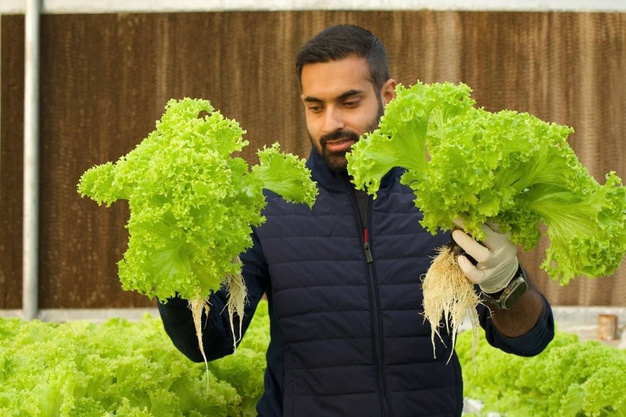
The company now operates through two primary models: turnkey hydroponic farm development and a managed farm platform that allows investors or landowners to participate in protected cultivation without being involved in day-to-day operations.
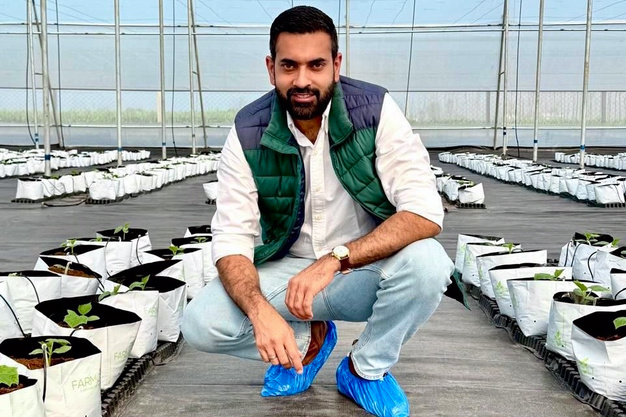
Pritpal explains, “In India, there is a significant amount of agricultural land that is either lying idle or generating limited returns. We transform that land into hydroponic farms capable of generating up to 30% annual returns. At the same time, there are individuals who have land, capital, and an interest in building a sustainable agribusiness, but do not have the time or expertise to manage a high-tech farm. Through our managed farm model, they provide the land and investment while we manage the operation from seed to sale.”
 © Farmcult
Beyond individual projects, Pritpal sees protected cultivation in India entering a new phase of maturity. While adoption in South India has accelerated over the past decade, he notes that North India still lags behind in both technology uptake and scale of operations. “The technology adoption in North India is far lower than in South India. The scale of operation is also considerably smaller, with only a few notable exceptions.”
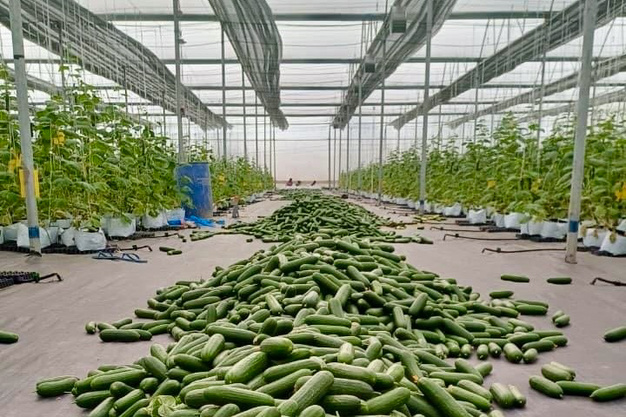
Pritpal believes the industry is moving beyond a period where investment decisions were heavily influenced by government subsidies. “The next three to five years will see demand for protected cultivation shift from a novelty-driven, subsidy-chasing market to one anchored in genuine unit economics. The next wave of growers will treat controlled-environment agriculture as a margin business, not a grant business.”
 © Farmcult
He points to several long-term drivers supporting the sector, including rising demand for residue-free produce, the expansion of quick-commerce, HoReCa and modern retail channels, increasing climate volatility affecting open-field production, and growing concerns over water scarcity. “Hydroponics’ ability to save 80 to 90 percent of water stops being a marketing message and becomes a practical requirement in water-stressed regions,” Pritpal notes.
At the same time, he believes the companies best positioned for long-term success will be those that move beyond infrastructure sales and focus on solving growers’ commercial challenges. “The businesses that survive will not necessarily be the ones with the most sophisticated greenhouses. They will be the ones that solve the two problems growers care about most, reliable yields and reliable buyers.”
 © Farmcult
Despite the opportunities, Pritpal acknowledges that the sector still faces significant obstacles, including high capital costs, long payback periods, power reliability issues, shortages of skilled labour, and the risk of poorly executed projects damaging confidence in the industry.
As he sums up, “There will likely be a quality-driven shakeout. The future belongs to operators who combine strong agronomy, professional management, market access, and sustainable economics.”
For more information:
Pritpal Singh
Farmcult
Tel: +91 7937460001
Email: [email protected]
www.farmcult.com

Source: The Plantations International Agroforestry Group of Companies