Forty per cent stronger than timber, containing no formaldehyde or phenols or any substances flagged or forbidden by the EU, and weighing much less than conventional wooden pallets, the case in favour of press wood pallets has long been decided in their favour in Europe, and specifically Germany, France, and the Netherlands. The first press wood pallets came out of Germany in the late 1970s. “Press wood pallets are widely regarded there as the industry standard in export packaging,” says Michiel van Zyl, director of operations at Aspen Press Wood Pallets. Van Zyl believes the local industry will never go back to wooden pallets once they’ve used these.
First in Africa, they will start manufacturing these pallets in Worcester, Western Cape, “centred within the corridor of South Africa’s fruit basket”, he says, from bio waste which is bonded together with MDI or diphenylmethane diisocyanate, a synthetic organic chemical compound and effective industrial binder and adhesive system. It reacts with the hydroxyl found in wood fibres to form strong, irreversible urethane bonds, completely inert when hardened.
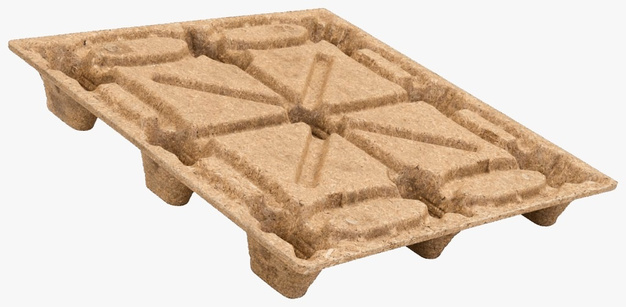 © Aspen Press Wood Pallets“Many South African packhouses and exporters simply aren’t aware of the existence or the advantages of press wood pallets.”
Critical for agricultural export pallets, he remarks, is water resistance: these pallets are fully waterproof under humidity, cold-chain, and fumigation conditions, he says. The high temperatures (200°C) and extreme pressure (800 tonnes) involved in moulding fibres into pallets, he adds, means that press wood pallets are ISPM-15 certified by design and need no fumigation or heat treatment.
“This is one of the core benefits that we are investigating and offering to South African exporters, and exactly the reason why press wood pallets have become the preferred option in Europe.”
He continues: “Many South African packhouses and exporters simply aren’t aware of the existence or the advantages of press wood pallets. It’s to address this knowledge gap for which Aspen Press Wood Pallets was established.”
Aspen Press Wood Pallets supplies interested parties with free samples, along with free transport of those samples in South Africa.
Initially, they’d hoped to be at the operational stage in October this year, he says, but investor negotiations have been slow and hampered by economic uncertainty. “As soon as Aspen Press Wood Pallets is operational, we will be the first manufacturer to apply this technology commercially in South Africa and across the continent, aiming to produce approximately a million pallets a year. Our pallets are designed for shipments to the EU, the UK, Asia, and the Middle East.” And domestic use.
Setting up the manufacturing plant is complicated, he remarks. He explains that the MDI bonding technology and specialised heat press processes require significant startup capital and technical expertise that they’ve had to bring to the project.
 © Aspen Press Wood Pallets
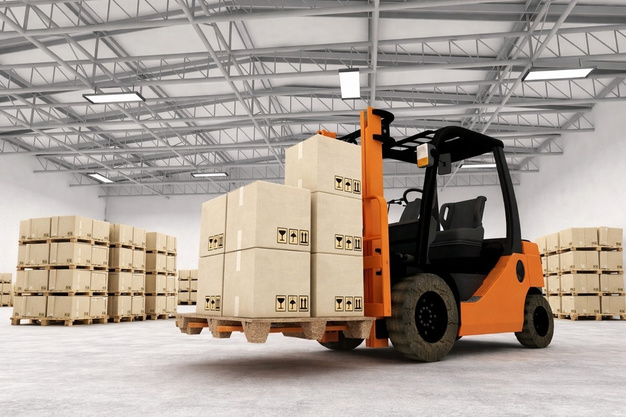
Aspen Press Wood Pallets aims to set up the first African press wood pallets manufacturing plant in Worcester, Western Cape
The strength of press wood pallets
The first question usually asked is: how does its carrying capacity compare to wooden pallets? Independent laboratory testing in the United States has confirmed their in-house testing results that the Aspen pallet has a static strength 50% to 70% greater than the Grocery Manufacturers’ Association-certified pallets used in the trial.
“Typical South African export loads average 800 to 1,200 kg per pallet, well within the safe working load of an Aspen presswood pallet with substantial safety margin,” Van Zyl says. “The APW-1280 carries a supplier-rated dynamic load capacity of 2,000 kg and a static load capacity of 5,000 kg — meaning a fully loaded export pallet represents less than 60% of the dynamic rating and under 25% of the static rating. That margin is what gives packhouses and export logistics operators the confidence to deploy our pallet across their entire cold-chain operation.”
 © Aspen Press Wood Pallets
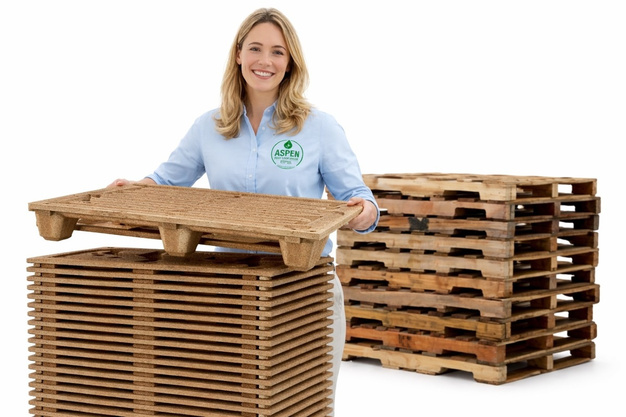
Space-saving pallets require fewer truck trips
He adds: “The environmental credentials are equally compelling: every Aspen presswood pallet is manufactured from recovered wood fibre — sawmill offcuts, shavings, and agricultural residue that would otherwise go to landfill or be burned. No standing timber is felled. The MDI binder is formaldehyde-free, meaning zero toxic off-gassing in enclosed containers or cold stores.”
On trucks, nested stacks of press wood pallets take up a fraction of the space of their hulky counterparts. On a 12 metre interlink truck, the company says, 540 to 560 empty wooden pallets can be made to fit – that number per truck load jumps to 1,800 to 2,000 press wood pallets. Approximately 30 to 35 empty pallets can be stacked.
“Where clients require four trips with a 12 metre interlink to move 2,000 empty wooden pallets, the same number of press wood pallets require a single trip. For large exporters that frequently move pallets between packhouses, depots, and loading points, this represents a significant annual saving over and above the pallet price itself.” Moreover, Van Zyl adds, the pallets are lighter, which means extra product can be shipped.
For more information:
Michiel van Zyl
Aspen Press Wood Pallets
Tel: +27 76 081 5068
Email: [email protected]
https://www.apwp.co.za/

Source: The Plantations International Agroforestry Group of Companies