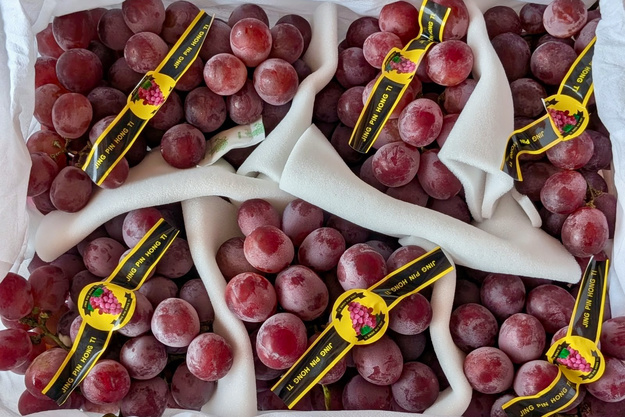
Red Globe continues to drive volumes in India’s imported grape trade, but varieties such as Shine Muscat, Crimson, Autumn and Moon Drop are finding their own customer base. The growing interest in these alternatives reflects a gradual shift in consumer preferences, says Nilesh Mokal of Navi Mumbai-based importer Solviafresh.
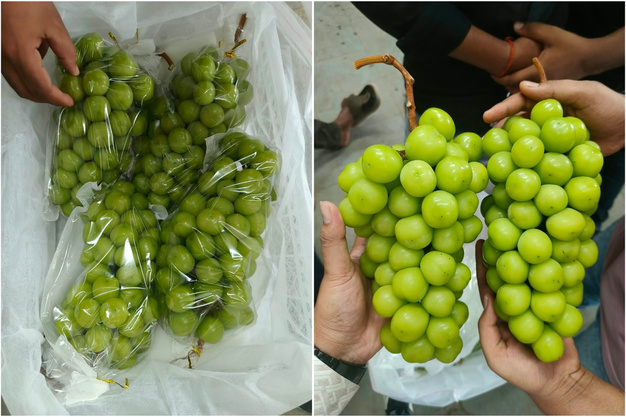
Shine Muscat has been particularly well received. Mokal says demand for the variety is strong, with consignments selling quickly and consumers waiting for more supplies. “Good-quality Shine Muscat is currently selling at around ₹1,700–1,800 per 6.5 kg pack, down from ₹2,000–2,200 a couple of weeks ago. It continues to command a premium of around ₹500–600 over Red Globe.”
 © Solviafresh
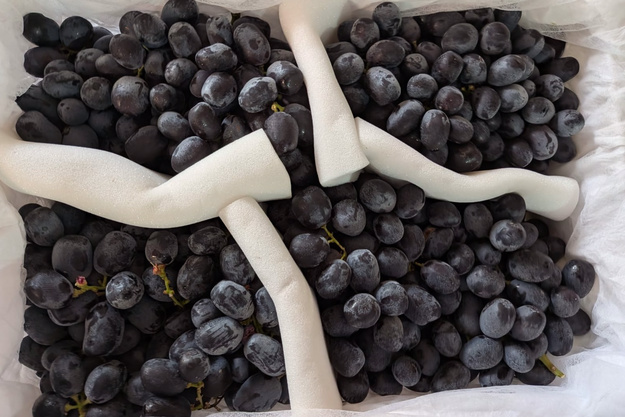
Red Globe, meanwhile, remains a key variety in the general trade, particularly in tier-two and tier-three cities. Once considered an exotic import, it has become a more familiar product for consumers and continues to drive volumes. Among the newer Chinese varieties, Mokal notes that Crimson has found a relatively consistent market, while demand for Autumn and Moon Drop can vary as buyers switch between the two.
The wider varietal choice is helping importers respond to changing consumer preferences, but the market has also come under pressure from a surge in arrivals. “The first shipments, which arrived towards the end of August and in early September, received good returns. A second round of consignments in the first half of October also sold well. However, arrivals increased sharply over the following 7–10 days, slowing the market and putting pressure on prices currently.”
 © Solviafresh
Red Globe has been particularly affected, with prices falling below landed costs in some cases. Mokal attributes the heavy supply partly to the concentration of Chinese imports. He estimates that China now accounts for around 80–90% of India’s imported grape supply, as logistical and supply difficulties in Iran and Afghanistan have encouraged importers to turn to China.
Although the quality of Chinese grapes and post-harvest handling has improved over the years, consistency remains an issue in some consignments, especially concerning differences in pressure, berry size and grading specifications, which can affect how the fruit performs in the market.
 © Solviafresh
Mokal says demand has also been relatively subdued since the Ganesh Chaturthi through Navratri festivals. Traders are hoping for an improvement after Diwali in Week 45, although the start of the domestic grape season could bring additional competition and put further pressure on imported varieties.
“For us, maintaining a broader range of varieties helps sustain the business when the market slows, and prices fluctuate. Meanwhile, Solviafresh is preparing for the arrival of Turkish apples, blueberries and cherries from Peru and Chile in November, ahead of the wedding season.”
For more information:
Nilesh Mokal
Solviafresh
Tel: +91 95 79 942 075
Email: [email protected]

Source: The Plantations International Agroforestry Group of Companies