Mexican exporter R.S. Avocados, which ships avocados to 15 countries, with the Middle East as its main market, has started delivering to Europe by sea freight and is preparing its first ocean shipment to the Gulf. The move comes in response to canceled air routes, rising fuel costs, and prices that “have dropped sharply like we never saw before.”
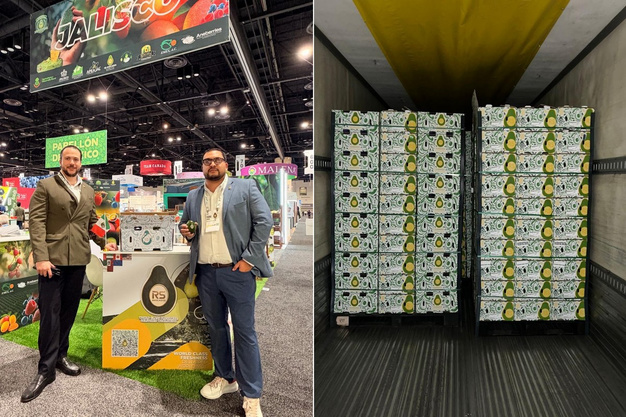 © RS Avocados
“Our main market is the Middle East: Bahrain, Kuwait, the UAE, Dubai, and Saudi Arabia,” says Isaac Soria of R.S. Avocados. The fruit is usually shipped by air, departing from Mexico City, stopping over in Barcelona, and continuing from there to its final destination; however, the ongoing conflict has disrupted that model. “Several routes have been canceled, and market traffic has dropped significantly,” he says. On top of that, the cost of jet fuel “has been taking a heavy toll on air freight rates.”
Faced with this situation, the company is looking for alternatives. For Europe, it already has both air and sea routes in place, the latter via Rotterdam. “We recently started shipping by sea,” says Soria, though he acknowledges that “clients are often unwilling to consider such an alternative.” For the Middle East, the company expects to dispatch its first shipment via a new sea route within the coming weeks.
 © RS Avocados
Soria downplays the certification and documentation challenges that some Mexican exporters cite as barriers to entering the European market. “When someone wants to sell, they find a way to make it happen,” he says, crediting his colleague Alberto Dallal with much of the work involved in opening those channels.
 © RS Avocados The company has been working with avocados for seven years, operating within an agricultural group with a 15-year history that was originally involved in pork production. It has its own production and also buys from local growers. It manages the entire process from harvest through to delivery, and operates year-round.
Diversification is its main safeguard. “We avoid focusing on a single market, so if such a market collapses, we don’t go down with it.” It also gives you alternatives for different sizes. “If we are not able to sell a certain size somewhere, we can sell it somewhere else.”
In the United States, where the company has customers in Los Angeles and New York, prices have fallen sharply. “If Mexico isn’t selling, another country will try to step in, and prices will keep getting cheaper,” he says.
Photo on the right: the Mexican Ambassador to the United Arab Emirates, together with Isaac Soria and Alberto Dallal.
Among the sector’s challenges, Soria mentions the conflicts in Michoacán, tariffs, and the weather. He cites South Korea as an example of a trade barrier, as Mexico pays a tariff of around 30% there while other countries enter duty-free. On the weather side, rainfall is welcome, but “if the rain comes with hail, the fruit can suffer damage and buyers will reject it.”
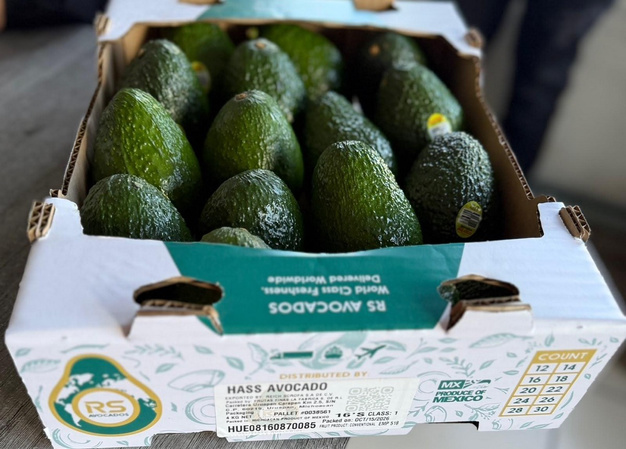 © RS Avocados
The company maintains a presence in the Mexican domestic market and takes part in international trade shows. “If you ask for something, we can get it for you,” is how Soria sums up the company’s motto.
For more information:
Isaac Soria and Alberto Dallal
R.S. Avocados
Mexico
Tel.: +52 442 1090 343
[email protected]
[email protected]
www.rsavocadosllc.com
Source: The Plantations International Agroforestry Group of Companies