The citrus harvest in the Southern Hemisphere is already in its second half. “Initially, sales of clementines were quite good, but due to the heat and the many promotions for stone fruit at affordable prices, demand declined noticeably starting in June. Consequently, prices were adjusted downward. For mandarins, the early varieties Nova and Leanri are now being replaced by the more popular late varieties Nadorcott and Tango. Due to the summer holidays, sales figures in July and August were relatively weaker,” explains Henry Lührs, citrus product manager at COBANA.
 © Cobana
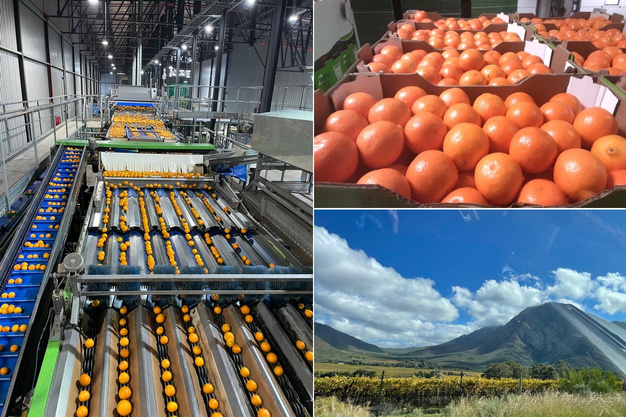
Insights into South African citrus cultivation. Top right: the new mandarin variety Samba.
“The later varieties are more important to us, as they allow us to supply larger grocery retail programs and ensure that no summer fruit gets in the way later on. To ensure a seamless transition between varieties, we’re offering the Samba variety—which also originates from South Africa—for the first time from late June through late July. This seedless variety stands out with its bright orange flesh and a balanced sweet-tart flavor.” In addition, Orri mandarins from South Africa and Peru are also offered, which are primarily found in wholesale markets.
 © Hugo Huijbers | FreshPlaza.com
Henry Lührs and part of the COBANA team at Fruit Attraction 2025
Weaker consumption characterizes the grapefruit and orange market
Grapefruits traditionally mark the start of the citrus export season in the Southern Hemisphere. The first shipments were already available in April, Lührs confirms. “Despite good supply volumes and Brix levels, consumption has been sluggish since the start of the season, so we reduced shipment volumes accordingly starting in mid-June. We’ve observed that inflation-driven reluctance to spend is primarily affecting niche items—which include grapefruits.” Depending on weather conditions and the start of the season in Spain, the grapefruit season will end by early to mid-October.
Sales of oranges also fell short of expectations in the first half of the season, which was partly due to the shorter shelf life toward the end of the Spanish season. For price reasons, many food retailers initially stuck with Spanish and Egyptian oranges, causing the transition to be delayed. “Overall, the quality of Navel and Valencia oranges so far has been quite encouraging. Although the South African Valencias hit the market with a slight delay, we were able to fill that gap with produce from Zimbabwe, among other sources. In general, we’re observing that the market for larger-sized fruit isn’t as fiercely competitive as that for smaller fruit.”
 © Cobana
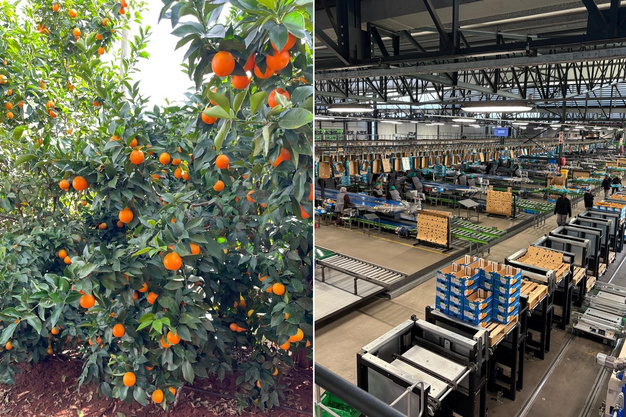
Insights into cultivation and a packing station
A divided lemon season
The European lemon season ended relatively early this year, so the first Eureka lemons from the Southern Hemisphere hit the market as early as April. Prices were at times extremely high at the start of the season, but there have already been several price reductions since the end of June. Lührs: “The harvest estimate in South Africa has also already been revised upward, so we’re facing unusually high supply pressure this year. Nevertheless, we’ve been able to record very good sales volumes so far. The heat, in particular, has noticeably driven up demand for lemons.”
In short, this year’s season presents a mixed picture: “At the start, the product was in high demand with correspondingly high prices, while oversupply and low prices now characterize the current market.” In the longer term, South African growers are now also focusing on cultivating new varieties. “Seedless lemons have been making their way into the sector for many years now and are also enjoying growing popularity here in Germany. However, this is a premium product with lower yields and correspondingly higher market prices.”
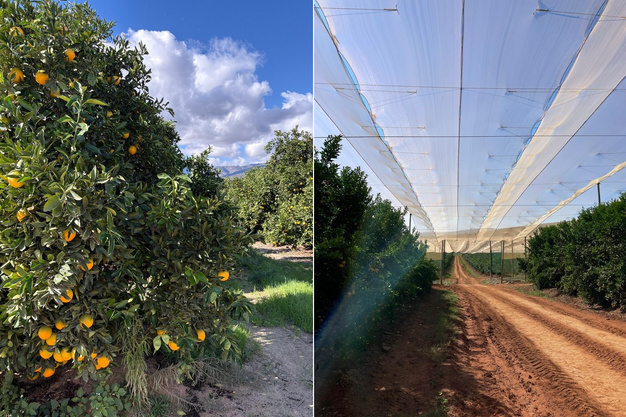 © CobanaIn addition to its main source country, South Africa, COBANA also relies on Latin America for procurement, with contract growers in Uruguay, Argentina, and Chile, among others.
Logistical challenges
Logistics sometimes presents major challenges for the Hamburg-based fruit importer. “In addition to the usual delays, which we factor in to a certain extent, the terminals at the Port of Rotterdam are often overloaded, which can result in associated waiting costs. Ultimately, this means we regularly have to reroute ships via Amsterdam and Antwerp, which in turn involves additional labor and costs. Compared to last year, freight costs have risen anyway, driven by extremely high oil prices,” he concludes.

For more information:
Henry Lührs
Product Manager, Citrus
COBANA GmbH & Co. KG
Tel: +49 40 / 30 30 5-133
[email protected]
www.cobana.com

Source: The Plantations International Agroforestry Group of Companies