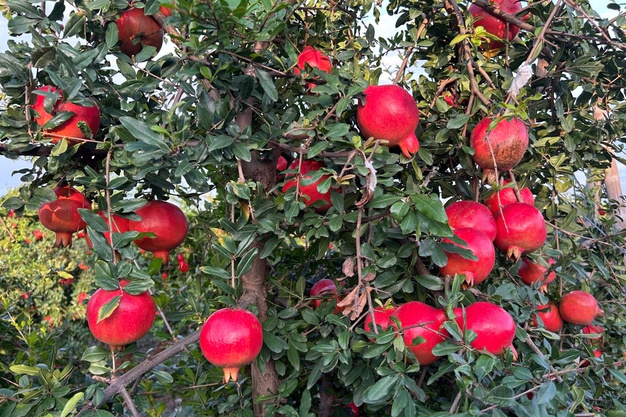
India’s pomegranate harvest is showing signs of improvement from mid-November, giving exporters better prospects for shipments in the first quarter of 2027. After water stress affected fruit size and external appearance in some growing regions earlier in the season, the incoming crop is expected to offer more fruit suitable for export.
“The November harvest looks encouraging after a challenging earlier crop,” says Swapna Jarag of fresh produce exporter Grow India Import Export. “Our discussions with the National Research Centre on Pomegranate (NRCP) and farmers across four major producing states suggest better prospects from mid-November onwards, particularly for size, appearance and export suitability.”
 © Grow India Import Export
Maharashtra remains the leading sourcing region, particularly Solapur and Nashik, with Karnataka also contributing. Gujarat and Rajasthan provide additional seasonal supply.
Exports have been selective in recent months, largely due to limited availability of export-grade fruit and attractive prices in the domestic market. Swapna expects January to March 2027 to offer better shipment opportunities as the harvest improves.
“Europe remains an important destination, particularly the Netherlands, Germany and the UK, while the USA offers further potential during suitable sourcing windows, subject to market-access requirements.”
Domestic prices remain firm. Maharashtra’s wholesale pomegranate price indicator averaged ₹87.75 (US$0.95) per kg during 9-15th November, up 4.6% from the same week last year. At Sangola, the average reached ₹104.04 (US$1.11) per kg, compared with ₹85.63 (US$0.92) a year earlier.
 © Grow India Import Export
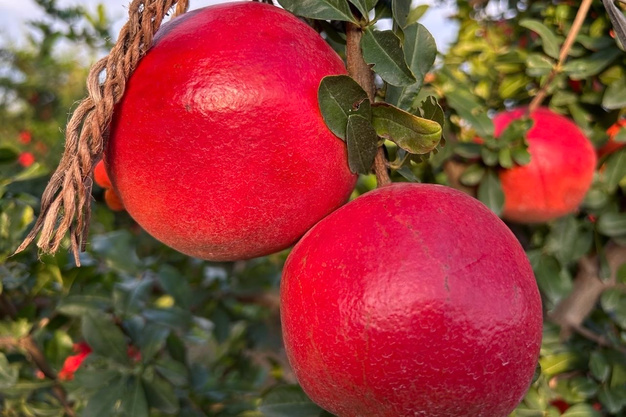
“Premium export-grade fruit is expected to command higher prices, depending on size, appearance, internal quality and destination requirements. This competition from the domestic market continues to influence how much fruit exporters can source.”
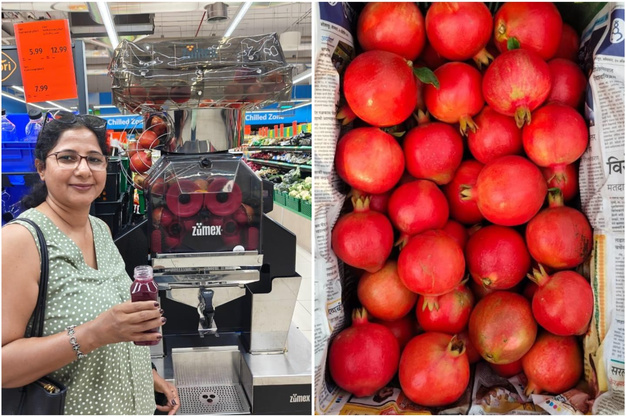
For overseas shipments, meeting residue requirements, careful grading and temperature-controlled sea transportation remain important. Alongside whole fruit, Indian pomegranate arils are attracting interest in European ready-to-eat markets, Swapna says.
“Bhagwa arils are appreciated for their deep-red colour, sweetness and relatively soft seeds. Careful manual extraction helps retain their size and shape while minimising compression, breakage and juice leakage. Indian supplies come in formats including 80- and 100-gram chilled packs, as well as 125-gram frozen pouches, with shelf life depending on the processing method, packaging and storage temperature.”
 © Grow India Import Export
For the 2026/27 season, Swapna sees opportunities in both whole pomegranates and value-added products. “Whole fruit offers scope for larger sea-freight programmes, while fresh and frozen arils serve different retail, food-service and processing requirements. However, securing suitable fruit and maintaining consistent quality will be central to turning buyer interest into regular business,” she concludes.
For more information:
Swapna Jarag
Grow India Import Export
Tel: +91 89 75 760 380
Email: [email protected]
www.growindiagoc.com

Source: The Plantations International Agroforestry Group of Companies