Morocco’s watermelon export campaign has run across highs and lows depending on growing regions. According to Fatima Ezzahra El Khounchafi, marketing director at Atlas Green Generations, the campaign has delivered contrasting results, with Mediterranean competition arriving noticeably earlier than usual this year.
A season of highs and lows across regions
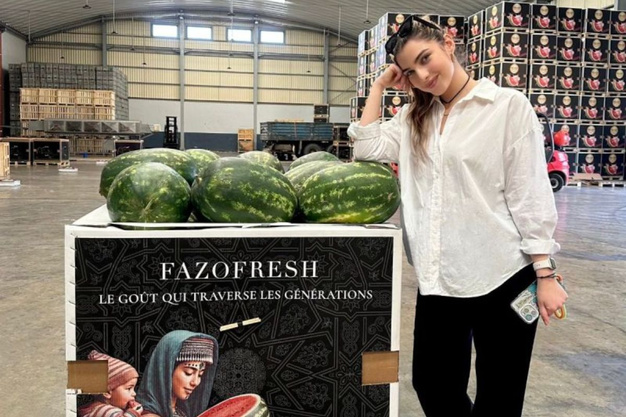
“We worked watermelons throughout the entire season, from mid-April right up to now,” El Khounchafi explains. “We started in Zagora then moved northward through most of the growing regions. It has to be said that Zagora wasn’t at its best this year; we ran into some quality issues, particularly hollow-heart fruit. This has put exporters in a delicate position as Zagora’s harvest opens the Moroccan season. After that, though, Chichaoua, Beni Mellal, Larache and Berkane regions all performed magnificently.”
 © Atlas Green Generation
On pricing dynamics, the exporter points to a pattern that she knows well. “We know the rhythm of this market. In April, when temperatures are still low, prices start modest, but into the first weeks of the campaign, a typically calm competition window for Morocco, we can see prices triple. Once competition from other origins enters the market, prices come back down. The peculiarity of this season is that harvests from Greece, Italy and Spain entered the market very early, as soon as July, and prices dropped very early. That competition is normal every year, but this season it arrived far too early, eating into Moroccan exporters’ margins.”
Overall pricing this season has trailed last year’s levels, El Kounchafi says: “Volumes this season were much bigger due to extraordinary rainfall, further driving prices down. Our buying price was actually good, but the selling price wasn’t, to the point we panicked a bit at the start of the season. We ultimately managed to hold our ground against Mediterranean competing origins thanks to the quality of our fruit, tight control over our purchase price, and high temperatures in Europe favoring watermelon consumption. As a result, we at Atlas Green Generation doubled our export volume compared to the previous season, yet at the expense of lower prices.”
 © Atlas Green Generation
Pushing back on claims of a quality-disrupted season
Several European importers, and even some Moroccan exporters, have described a campaign disrupted by quality problems, with category I fruit reportedly harder to source this year and many exports of category II. El Khounchafi disputes the idea that the issue was widespread.
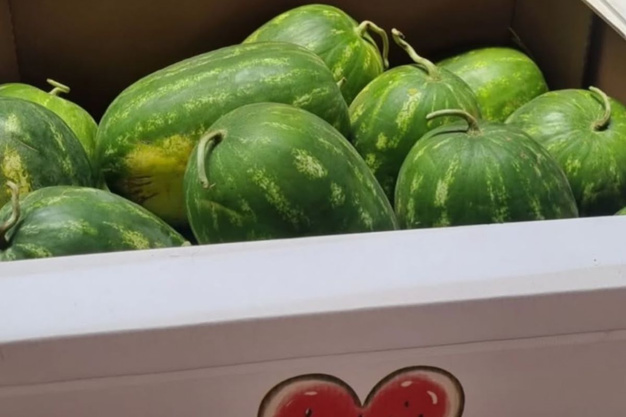
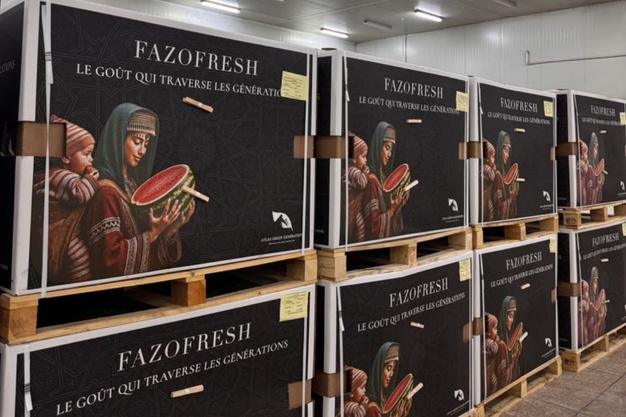
“I don’t think we can say the whole campaign was affected by quality problems. It really depends on how each exporter works. You need to know the tracing of the fruit you’re sourcing, and that work starts months before the season even begins by staying close to the grower, monitoring irrigation, overseeing the harvest, to reduce risk as much as possible. We’re fortunate to work across several regions, and that diversification is a real advantage. If we run into a problem in one location, we don’t consign that fruit and another region simply takes over. All of our exports this season have been strictly first category, and there is no second category coming out of our operation,” the exporter adds.
 © Atlas Green Generation
“We’ve heard talk of some second-category fruit being exported, but frankly that’s not credible, and in any case it wouldn’t be competitive when first category fruit is available at a lower price from Italy or Greece,” she continues.
On Zagora’s crop specifically, El Khounchafi acknowledges a real shift. “Zagora’s quality isn’t what it used to be. In the first three weeks of the season, Zagora is really the only origin in play due to its precocity, and if you wait, you miss the best window of the season. That means you have to be extremely careful with sorting in the field and second sorting in the packing house, and to have teams on-site to protect quality.”
 © Atlas Green GenerationFatima Ezzahra El Khounchafi, marketing director of Atlas Green Generations, in company of her father Essaid El Khounchafi, founder of the company
Holding commitments through the final, most competitive stretch
Looking at the remainder of the campaign, El Khounchafi describes the current period as the toughest window of the season. “We’re now in the most complicated phase of the campaign. Every major origin is present at the same time, and competition is intense. Many Moroccan exporters have already pulled back, though a few of us are still active. Last year we stayed in the market until the end of August, and we expect to do the same this year, even though prices are not encouraging. We still have commitments to honor, and we’d rather continue shipping, even if it costs us some profitability, than walk away from our contracts and historic clients. At this stage, you also have to be extremely careful with loading, because claims become very costly when margins are thin.”
“It hasn’t been an easy season, but it hasn’t been a failed one either,” the exporter concludes.
For more information:
Fatima Ezzahra El Khounchafi
Atlas Green Generations
Email: [email protected]

Source: The Plantations International Agroforestry Group of Companies