Asia’s cocopeat industry is facing an unusual situation this season. While manufacturing activity remains strong across major producing countries such as India and Sri Lanka, exporters are increasingly struggling to move finished products as vessel shortages and high freight costs disrupt shipments to Europe and North America.
“The underlying demand from Europe and North America remains relatively stable,” says Tharun Kumar of integrated coir substrate manufacturer M2Balu Export. “The challenge is not manufacturing capacity, it’s exporting the finished products. Unlike previous periods, when raw material availability was the primary concern, the current market is being shaped far more by logistics constraints than manufacturing capability.”
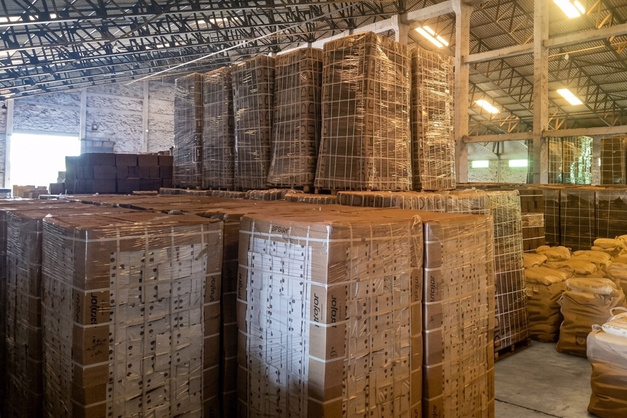
According to Tharun, inventories are building across manufacturing facilities in both India and Sri Lanka as exporters struggle to move finished products to overseas markets. “Rather than demand weakening, we’re seeing a disconnect between production capability and export execution.”
 © M2Balu Export
The disruption first became noticeable in Sri Lanka during June, where several industry participants experienced vessel constraints weeks before similar disruptions became widespread across South Indian ports from July onwards. “What initially appeared to be a shortage of containers has since evolved into a broader logistics challenge involving reduced vessel capacity, rolled bookings and increasingly unpredictable sailing schedules,” Tharun notes.
“Based on discussions with freight forwarders, Customs House Agents and shipping lines, one of the key contributing factors has been the redeployment of vessels to the trans-Pacific trade, where demand between China and the United States has increased significantly. Combined with the traditional July-August peak shipping season, the shift has tightened vessel space on routes connecting India and Sri Lanka with Europe and North America,” he explains.
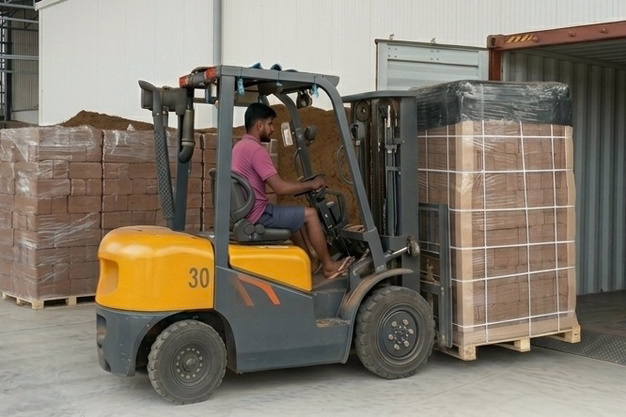
The result has been an exceptional increase in freight costs. “Freight rates that would normally rise by USD 400-500 per container during this period have increased by around USD 3,000-4,000 on some trade lanes. Freight quotations have also become far more volatile, with rates often remaining valid only for short periods, making shipment planning increasingly difficult for both exporters and overseas buyers.”
 © M2Balu Export
Despite this, product prices have moved in the opposite direction. “Many smaller manufacturers with limited warehouse capacity have reportedly reduced selling prices by around USD 50-60 per metric tonne to free up warehouse space, maintain production continuity and support cash flow, as continuous production cannot easily be stopped. It’s an unusual market where logistics costs are rising sharply while product prices are softening.”
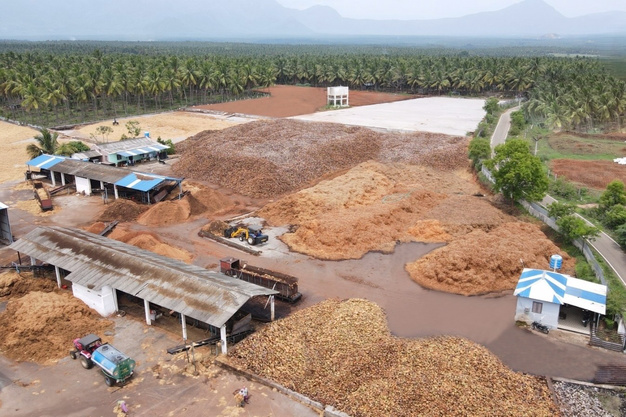
Raw material availability has also presented a mixed picture this season. Tharun observes that while the effects of El Niño have resulted in smaller coconut husks and lower yields of fibre and cocopeat per coconut, the weaker Southwest Monsoon across South India has created longer natural drying periods, allowing manufacturers to process cocopeat more consistently into grow bags, compressed blocks and other horticultural substrates. “This has led production activity to remain relatively strong despite the changes in raw material characteristics.”
 © M2Balu Export
Looking ahead, he expects logistics to remain the defining challenge over the coming weeks. “If vessel capacity remains constrained through the peak shipping season, pressure on inventories, warehouse capacity, cash flow and pricing is likely to continue.” He adds that weather will also be an important factor to monitor. “If the Southwest Monsoon strengthens, natural drying activity could slow, reducing processing volumes. That could reduce processing volumes and may help stabilise current product prices despite the ongoing logistics challenges.”
Tharun also points to another factor that could influence the market. “With favourable peat harvesting conditions reported in North America and parts of Europe, some substrate manufacturers may choose to temporarily increase the proportion of peat in their growing media if imported cocopeat remains burdened by exceptionally high freight costs. However, this is likely to represent a short-term response to logistics economics rather than a long-term shift away from coir.”
Despite the current disruption, Tharun remains confident in the sector’s long-term outlook. “We’ve seen logistics disruptions before, but this situation is unusual because production remains active while finished goods are struggling to move. The challenge right now is not making cocopeat, it’s getting it onto a vessel.”
For more information:
Tharun Kumar
M2Balu Export
Tel: +91 90 92 429 900
Email: [email protected]
www.m2baluexport.com

Source: The Plantations International Agroforestry Group of Companies