Senegal’s mango export season is underway, with harvesting having kicked off in early June across the country’s main production zones. Makhou Dioup of Notto AI shared an on-the-ground update on how the campaign is shaping up.
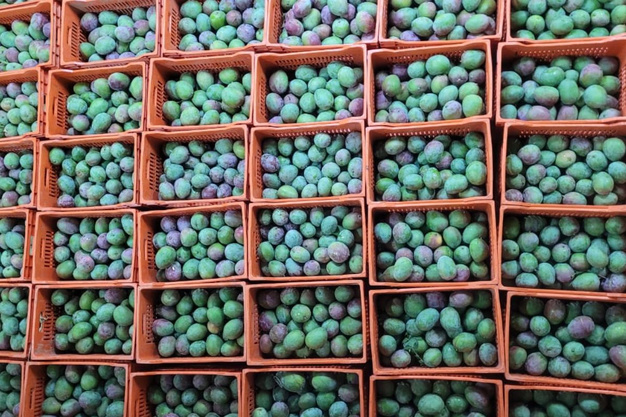
According to Diop, the early season encountered difficulties, largely due to irrigation gaps and delayed rainfall. “The difficulties this year in general are the non-irrigated orchards, and at the same time the rain has not yet settled in across the Niayes zone. Because of that, at the start of the campaign we had very slow ripening and small calibers in non-irrigated farms,” he explains.
 © NottoAI
Quality issues have also emerged in parts of the growing region. “The other difficulty I’ve observed in the Niayes zone is that a part of the production, up to one third, had spots,” Dioup notes.
Despite the early-season setbacks, Diop remains optimistic about overall output. “After seeing the early results, we are confident we will see large volumes this year,” he says. On sizing, he reports that “the dominant calibers this year are 9 and 10.”
On the phytosanitary front, Diop reports a clean sheet so far this season. “Up to now there are no notifications about Senegalese mangoes. The DPV (Directorate of Plant Protection) has taken many measures, including a decision to ban night work after 6 PM to avoid the presence of fruit flies in shipments,” he explains.
Sanitation efforts across the orchards appear to be paying off, he adds. “This year the orchards are very clean, with sanitation, training on good practices, installation of traps, and awareness-raising on the flies. This year Senegal is really doing well against fruit flies and avoiding interceptions.”
For more information:
Makhou Diop
Notto AI
Tel: +221 77 382 17 71
Email: [email protected]
Source: The Plantations International Agroforestry Group of Companies