Nationwide protests against the presence of Africans from the rest of the continent, whether documented or not, are keeping many South Africans home today. Adherents to populist organisations are congregating “to close all spaza shops and clean up” neighbourhoods of “all Foreign Nationals to make space for South Africans”.
Extremist groups had set today as the deadline for ‘undocumented’ foreigners to leave the country, but in practice, all African foreigners are open to attack as xenophobia is normalised. After years of a laissez-faire attitude to the well-known existence of thousands of ‘illegal immigrants’, while setting near-impossible hoops for earnest seekers of work permits and residence permits, the South African government is now scrambling to deport thousands of people either through the Beit Bridge border post (mostly Zimbabweans and Malawians), Komati post into Mozambique, and OR Tambo Airport (Ghanaians, Nigerians).
For decades, resentment towards other Africans has sporadically bubbled over into attacks as economic and political refugees from across the continent are blamed for high unemployment and crime, often a convenient scapegoat employed by populist politicians such as former president Zuma’s new political party.
Concerns about the drug trade play a large role in residents’ anger against foreign nationals; a current commission of enquiry has laid open the close relationship between corrupt top police officers and drug gangs.
It is no coincidence that increasingly anti-foreigner marches have taken root in KwaZulu-Natal, flashpoint of the 2021 civil unrest. Zulu nationalism (and possible secessionist ambitions) is strongly linked to the new political party created by disgraced former president Zuma, no longer welcome in the ANC.
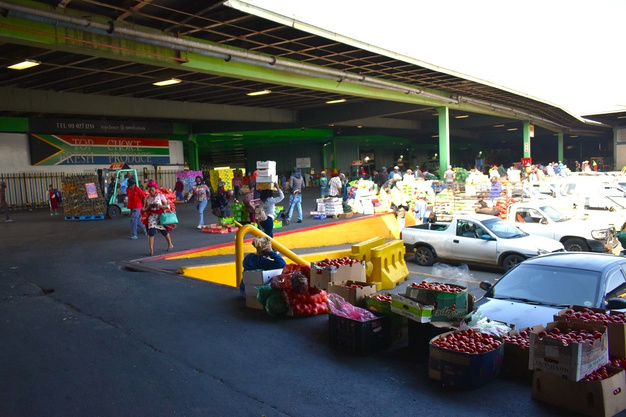 © Carolize Jansen | FreshPlaza.com Johannesburg fresh produce market
“By 8 o’clock this morning, most agents at the Joburg fresh produce market had gone home,” says a market floor trader. “Most farmers and transporters are concerned for the safety of employees and vehicles, and they’ve all decided to avoid being on the road today.”
Many of the buyers at the market are not South African, and account for much of the trading volumes.
“Making the country ungovernable” is a common threat, a tried and tested manoeuvre from the anti-apartheid playbook and under the ANC government adopted by citizens whose needs and requirements are ignored by a self-absorbed ruling party.

Source: The Plantations International Agroforestry Group of Companies