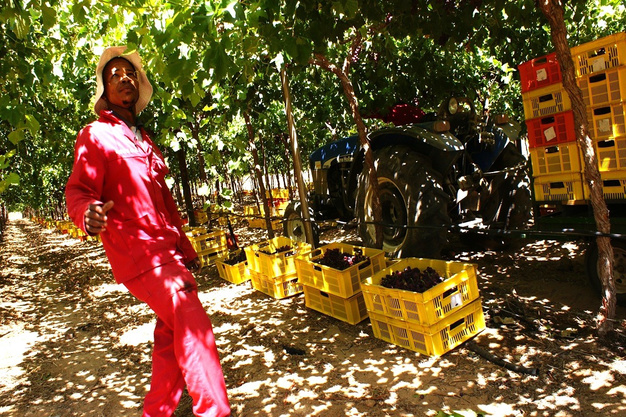
The seven deaths of table grape pickers in Kakamas, Northern Cape, due to heat exhaustion in January 2023 have led to an internationally funded project in the area. South Africa’s national heat health action guidelines highlight the vulnerability of agricultural workers because of the physical nature of their work, often outdoors in direct sunlight, says Celeste Madondo of the Foundation for Professional Development. The NGO trains medical professionals, although for their new AHRISA project, the definition of frontline responders will be extended to include communities, schools, early childhood development centres and, in Kakamas, to farm owners and farm workers.
“It will be our first intervention specifically focused on addressing the effects of heat in an agricultural setting,” Madondo explains.
Approximately ten deaths per year are officially recognised as heat stroke deaths in South Africa, but this figure might well be an underestimation. “From a climate perspective, the Northern Cape is high in terms of priority, and through AHRISA, we are planning to work with farm owners and farm workers in the Kakamas area until 2028,” she says, noting that the events of 2023 underscored the importance of protecting communities and outdoor workers from the health effects of extreme heat.
The 31st United Nations Climate Change Conference (COP31) ends today, continuing the urgent discussions on the future of human health on a warming planet: across South Africa, various maximum heat records have already been surpassed this summer, and the number of heat deaths will probably climb in coming years.
 © Carolize Jansen | FreshPlaza.com
“Heat health evidence is growing in South Africa”
“In 2020, the National Department of Health developed heat-health action guidelines to strengthen the health sector’s preparedness and response to extreme heat. The Foundation for Professional Development works alongside the health sector to support the implementation of these guidelines, helping to bridge the gap between national policy and action on the ground,” she says.
The national heat action guidelines list the subsections of the population particularly vulnerable to heat exhaustion, among them outdoor workers, especially on farms, who are three times more vulnerable.
Other at-risk groups are pregnant women, infants and young children as well as the elderly. Madondo, who previously researched maternal and neonatal health, says that the data clearly shows that extreme heat events have an outsized impact on pregnant women: their existing vulnerability may be exacerbated if they are outdoor workers, often developing gestational diabetes with no previous history of diabetes. Escalating heat exposure poses a major threat to maternal and neonatal health.
“Heat health evidence is growing in South Africa,” she remarks, “and I have to tell you, it’s going to get hotter in January, February and March.”
Kakamas heat project: shift to proactive responses
Unlike the usual courses run by the Foundation for Professional Development, their aim in Kakamas is to capacitate non-clinicians like farmers and to develop a toolkit facilitating a shift from reactive to proactive responses. “From the literature, we know that hydration breaks work, and we’ve seen what works in other countries. We encourage that workers get a fifteen-minute break every hour. If it results in them only working six hours a day, the output will still be much better. We know that after that fifteen minutes in the shade, people come back stronger.”
She continues that outdoor workers could be given increased protection against direct sunlight through exterior shaded areas and having a source of cool water close by, or arranging for drinks to be brought to employees. She emphasizes that workers need to be encouraged to drink before they feel thirsty. The mandatory hydration breaks during the 2026 World Cup – a novel feature in the history of the tournament – gladdened her heart: it is the way we’ll have to adjust to a warming planet.
 © Niet Potentieel
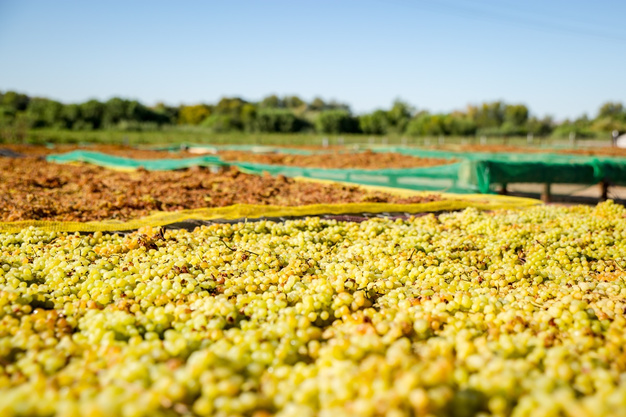
Raisins drying in the sun in the Northern Cape
“The AHRISA project, funded by the Rockefeller Foundation, will co-design heat interventions with target populations and in the Northern Cape there is still a lot of indigenous knowledge that may be useful.”
Madondo observes that in the Northern Cape adaptations to the heat have for years been part of daily life: some schools start earlier than schools elsewhere in the country, while on some farms, grape picking is done at night by the aid of headlamps. However, some activities, such as raking over the raisin grapes spread out on large cement slabs to dry, by necessity take place in the heat of the day.
“‘The workers are used to the heat’ – that’s what a lot of people tell you. So why’s it a problem now? It is a big problem because It’s hotter than it used to be, and just because the impact of heat is invisible, people think they’re unaffected. Unlike floods, that may be why people don’t take it that seriously, even though it’s deadly.”
Professor Caradee Wright leads the Climate Change and Health Research Programme of the South African Medical Research Council. She points out that bodies can only thermoregulate up to a certain level and that chronic exposure to high temperatures can have long-term effects. “The human body,” she says, “can’t cope with very high continuous temperatures.”
No more guessing: what constitutes a dangerous temperature?
In order to remove guesswork, Prof Wright is part of a team involving the South African Weather Service that is developing temperature-mortality thresholds for the whole country. Acclimatization to very high heat among the population does exist, Prof Wright notes, and because humidity levels differ profoundly from the coast versus inland and many microclimates, each district needs its own threshold to save lives during extreme heat events.
Last year, the Department of Employment and Labour promulgated the Physical Agents Regulations within the Occupational Health and Safety Act to manage the risks of exposure to possibly harmful physical agents in the workplace. Regarding heat stress, the Regulations state: “Where the employee’s exposure is at or above the Occupational Exposure Limit for heat stress [set at 30°C for an hour], the employers must, as a minimum, implement alternative working methods to reduce exposure to heat stress [and] limit the duration and magnitude of exposure to heat stress.” The Regulations further stipulate provision of sufficient amounts of water in the place of work and appropriate personal protective clothing.
Has there been an increase in heat-related deaths in South Africa? “It’s very difficult to say,” Prof Wright says. “We typically only get ten or so deaths officially by heat stroke per year, and that’s likely a gross underestimation. Heat stroke is not at the forefront of doctors’ minds.”
They’ve done a historical analysis of non-optimal temperatures – extreme cold and extreme heat – over thirty years and its correlation with mortality, and found 3.4% of deaths could be attributed to non-optimal temperatures.
“Only 0.4% were from extreme heat because more people typically do die from cold than from heat, but we’re in a warming climate, and we now understand the relationship between heat and mortality. The number of deaths because of heat is expected to rise in the future.”
For more information: Celeste Madondo
Foundation for Professional Development
Email: [email protected]
https://ahrisa.fpdsiu.co.za/
https://www.foundation.co.za/
 Prof Caradee Wright
South African Medical Research Council: Environment and Health Research Unit
Email: [email protected]
https://www.climatehealthsurveillance.org/

Source: The Plantations International Agroforestry Group of Companies