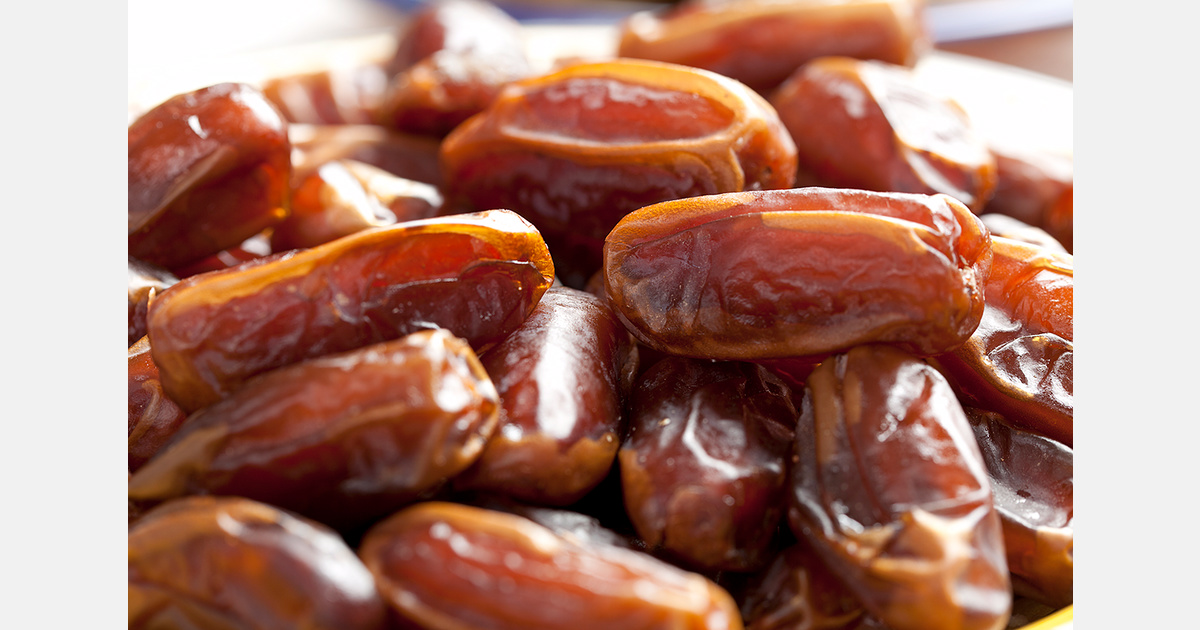
Iran produces more than 1.9 million tons of dates annually and ranks among the top four date-producing countries in the world, according to Karim Zolfaghari, Head of the Center for Development of Mechanization and Agricultural Industries at the Ministry of Agriculture, speaking on the occasion of National Date Day.
Zolfaghari says: “The future of Iran’s date industry depends on moving beyond raw selling and developing the production chain, and processing and complementary industries can be the link connecting producers to domestic and international markets.”
He describes dates as one of the strategic and export products of the agricultural sector and adds: “Strengthening Iran’s presence in target markets requires improving quality, appropriate packaging, standardization, and producing products suited to the needs and tastes of consumers in these markets.”
Currently, 654 date processing and complementary units hold operating licenses from the Ministry of Agriculture Jihad, with a combined nominal capacity of more than 820,000 tons. Products already coming out of these units include date paste and syrup, liquid sugar, chocolate and combined products, compote, lavashak, vinegar, and alcohol.
Zolfaghari says: “Dates are not just a raw agricultural product and can become the raw material for a wide range of industries.”
On the economic potential of the sector, Zolfaghari states: “Moving toward processing and producing diverse products can significantly increase the economic value of this product,” noting that dates carry significant capacity for foreign exchange earning, employment creation, and development of food industries.
Among the priorities Zolfaghari identifies for the sector are the development and completion of export infrastructure, support for knowledge-based companies and startups, creation of specialized towns and export terminals in production hubs, and reconstruction and renovation of worn-out processing units.
Major date production in Iran is concentrated in the provinces of Kerman, Sistan-Baluchestan, Hormozgan, Khuzestan, Bushehr, and Fars. Domestically, around 70 per cent of the harvest is consumed inside the country, with demand rising sharply during Ramadan. The remaining share, roughly 350,000 tons, is exported each year to markets including India, Iraq, Pakistan, Turkey, Russia, and countries in East Asia and the European Union, generating approximately $400 million in revenue.
Zolfaghari says: “Dates can turn from a traditional agricultural product into the axis of development of food, pharmaceutical, and new products, and investment in processing, technology, and market-making, while increasing the income of palm growers, creates sustainable employment and enhances Iran’s position in the global date trade.”

Source: The Plantations International Agroforestry Group of Companies