“A lot has changed since our retail entry at the end of November in 2024. We had built the farm and successfully completed our first harvest, but operating a vertical farm commercially is very different from simply proving that the technology works. We were really at the beginning of the learning curve,” says Gamze Çapkınoğlu, co-founder of SkyCrops, an Istanbul-based vertical farm.
“‘How to operate a farm consistently ‘ was the main focus over the past two years,” Gamze says. The team has been learning how to improve growing recipes, increase product quality, understand shelf life, manage different crops in the same facility, and most importantly, better understand the market. Growing over 20 varieties, whilst harvesting year-round, SkyCrops has developed B2B and B2C sales channels. “Our Good Agricultural Practices (GAP) certificate shows that our production follows defined standards for food safety, traceability and responsible farming. In Türkiye, bodies authorized by the Ministry of Agriculture and Forestry check and certify compliance .
 © SkyCrops
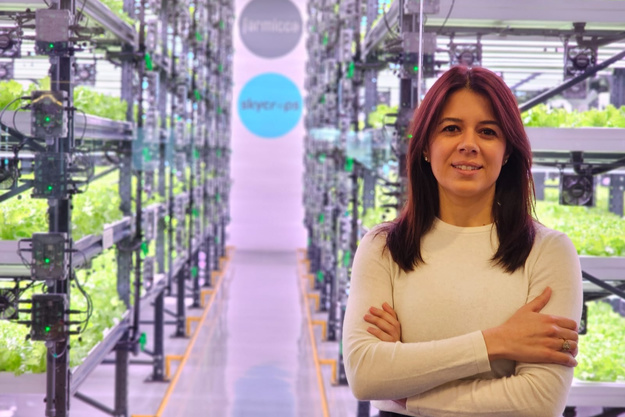
Gamze Çapkınoğlu
Omer and Gamze Çapkınoğlu started exploring the fruits of vertical farming in 2023 and began building their self-funded farm that same year. The investment was broadly within the range the couple expected when starting, but operating the farm made it much clearer where additional investment actually creates value. “That experience is extremely important for our planned facilities. Now, we know much better where to invest, where to simplify, and where technology actually improves the economics. And what to leave out of the farm.”
“Operationally, we’ve learned that small details matter tremendously. The smallest change in the growing environment, nutrients, or harvesting time affects your entire quality, yield, or shelf life. Commercially, the biggest takeaway is that you can’t build a business around the technology. It has to be built around the customer.”
Direct consumer feedback
The 500m2 Istanbul farm has eight floors and grows many crop varieties, including different types of lettuce, rocket, basil, parsley, dill, kale, spinach, chives, cress, sorrel, and several specialty varieties. By matching production with demand, the farm hopes to reach full capacity by next year as the market develops. While lettuce remains the backbone of the business, Gamze wants to grow herbs and specialty greens to further differentiate itself from conventional agriculture.
Besides serving the B2B market through restaurants and supermarkets, Gamze proudly highlights SkyCrops’ ‘hybrid model’, which includes direct-to-consumer sales. “Retail gives us scale and visibility, while direct-to-consumer sales provide us valuable feedback such as buying decisions, and why they decide to keep buying or stop. For a new category like vertical farming, that information is extremely valuable to us.”
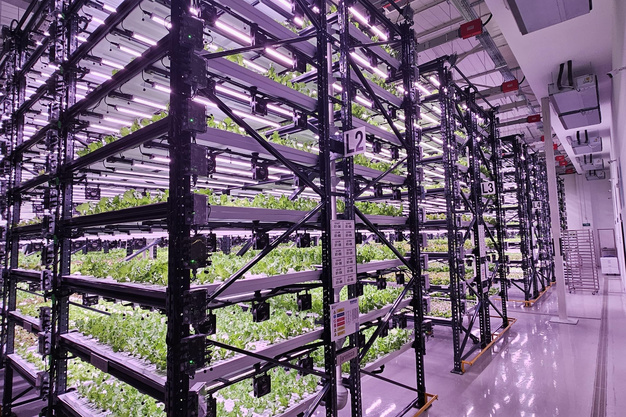 © SkyCropsInside the facility
Is there demand for vertically farmed produce in Turkey? “Yes, there definitely is. However, we learned that interest doesn’t automatically translate into demand… People are very interested when they hear the story of pesticide-free production, the sustainability aspect, and full control over crops. Yet, the product has to taste good, arrive fresh, be convenient, and justify the price. Our current challenge is converting that interest into a regular purchasing habit. Consumer education is still very new in Turkiye. Yet, often, once people have ‘experienced’ the product, particularly the freshness, taste, and shelf life, that conversation is much easier to have.”
Salads are common in Turkish cuisine, which makes Istanbul a perfect ‘playground’ for practice. However, the only challenge is consumer education. As vertical farming is still relatively new in Türkiye, “thus, part of our job is explaining why the product is different and why producing near consumers creates value.”
In winter, lettuce is more common than tomatoes and cucumbers due to seasonality. As a result, prices drop in summer because local supply of lettuce, tomatoes, and cucumbers increases. “When comparing prices, I think it is important to compare the whole product proposition, with all the benefits of CEA produce. Learning that the fastest-growing crop isn’t necessarily the most valuable crop was insightful,” Gamze laughs. Through loyalty programs, the team is getting first-hand feedback from customers.
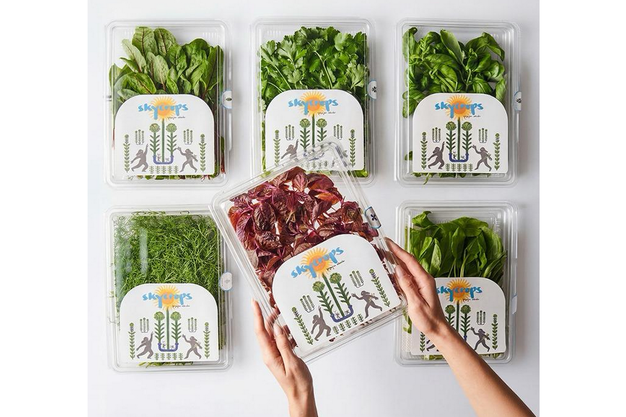 © SkyCropsSkyCrops’ product line
Labor is expensive, but key
While energy and labor are both fighting for the top spot, labor is winning. To maintain stable production and product quality, a trained workforce is key, as Gamze notes. Before standardizing all processes, workers are trained to increase production and become more efficient on the farm. Energy comes second, followed by costs such as packaging, logistics, raw materials, and maintenance.
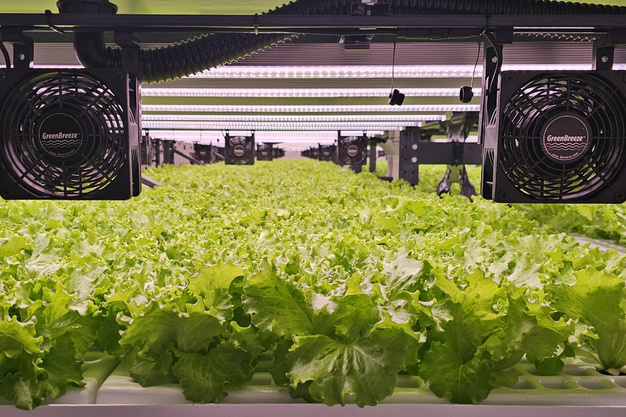
“As we scale, our main focus is to reduce labor per product unit to improve our cost structure. Vertical farming isn’t fully automated as some might put out there. Seeding, transplanting, crop inspection, harvesting, quality control, and packaging still require people. And I think human observation remains extremely important. Sensors give you data, but experienced growers can often see changes in a plant before they show up in the data. Our goal isn’t automation for automation’s sake, but we will automate where it improves consistency, efficiency, or traceability.”
 © SkyCrops
Building a network of farms
Gamze explains that SkyCrops is developing a farming model that can be replicated anywhere across Türkiye. The founders agree that locating multiple similar-sized farms across the country has more potential than transporting produce across the country. “We have already started working on the next stage of that model, including new facilities and partnerships. “We’re already working on the next stage of this model; new facilities and partnerships are on the way.” When asked, Gamze said the next farm will also be in Istanbul, alongside Farmicca.
Over the next five years, SkyCrops aims to build a network of commercial production facilities near Türkiye’s major cities. This will show how CEA can become a commercially viable part of the country’s food-production infrastructure. “At the same time, we want to expand beyond leafy greens. Our goal is not simply to grow more plants indoors. It is to build a more local, predictable and resilient way of producing food.”
Present at the Vertical Farming World Congress 2026
Both founders, Omer and Gamze Çapkınoğlu, will be present at the Vertical Farming World Congress in London on 7 and 8 October, next week. Omer will be part of the panel discussion on Wednesday, 8 October, named “What’s new? What’s coming?” For those interested in joining, the Vertical Farming World Congress takes place on 6 and 7 October 2026 at the Bloomsbury Ballroom in Central London. More information is available in the event program and on the registration page.
VerticalFarmDaily readers can register with a 10% discount on the concession rate by entering the code VFDAILY10 during registration.
FoodBev Media has let us know that if financial constraints are making it difficult to attend, please get in touch. Discounted rates are available for smaller-scale operators, and they may also be able to help on a discretionary basis.
 © SkyCrops
For more information:
SkyCrops
Gamze Çapkınoğlu, co-founder
[email protected]
www.skycrops.farm
Source: The Plantations International Agroforestry Group of Companies