California’s grape season is advanced. It seems that commodities in many regions are pushed forward because of El Niño. In Peru, blueberries and grapes are advanced, Mexico’s crops were advanced, and the same is happening in California. “As of this week, California’s grape harvest is close to nine million boxes ahead compared to the same week last year,” says Ira Greenstein with Direct Source Marketing.
Despite the significance of this number, it hasn’t impacted the market negatively. “Due to Mexico’s extremely early finish in June, the U.S. market needed the volume.” However, because California has shipped so much fruit so early in the season, a challenging scenario is expected towards the end of the calendar year.
Typically, California ships table grapes until the end of December, but many growers are projecting to finish the season by Thanksgiving. While some growers will store their best fruit to carry into December, a shortage is anticipated.
The good news is that Peru’s grape season will also start early. Some growers in the northern part of the country have already started harvesting and where most of Piura normally starts in October, this year the region expects to start harvest in mid to late September.
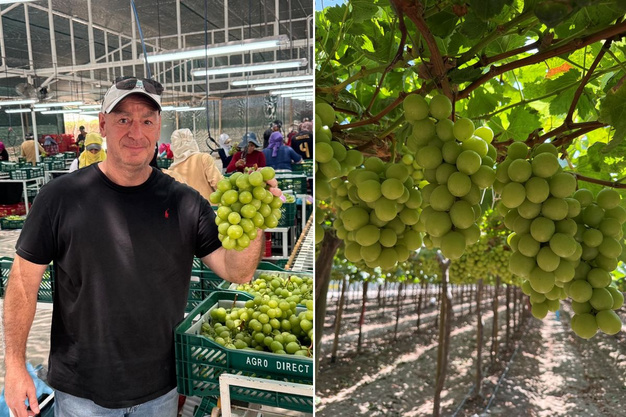 © Direct Source Marketing
Left: Ira Greenstein
Different December transition
“In the Piura region however, there is concern about the impact of El Niño rains and warm weather impacting sugar levels of the fruit,” mentioned Greenstein. Peruvian growers want to avoid the anticipated October and November rains and will be harvesting their fruit as early as possible. “Since California will still be in full swing when Peru starts up, the country will mainly focus on shipping to Europe.” Additionally, Peru is subject to an increased tariff to the U.S., being forced to pay 12.5 percent instead of last year’s 10 percent. This results in Europe and other global markets being more attractive markets to ship to. “All in all, California’s early finish combined with Peru’s early start and focus on Europe are pointing to a very different transition in December,” Greenstein said.
In the past, the U.S. used to import table grapes from Brazil in November and December. However, that won’t be an option this year due to a 37.5 percent tariff. Brazil has a strong domestic market for green seedless grapes, so they will either keep their green grapes in the country or send them to Europe to avoid the tariff.
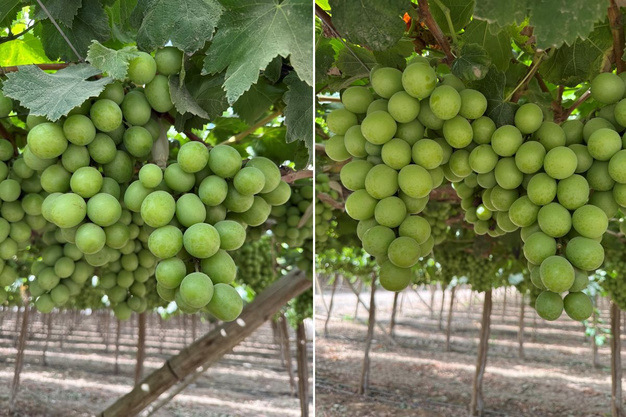 © Direct Source Marketing
Pricing to improve
What will all this mean for California? Right now, the grape season is peaking. There is plenty of supply, but business is weak because of summer vacations. In addition, average daily temperatures of 105F over the past 10 days will have an impact on the quality of the fruit. “It’s the dog days of August.” However, with prices now being at the lowest levels they’ve been all season, there are plenty of promotional opportunities for high-quality grapes. Greenstein expects that by the end of September into October, supplies of fresh packed grapes from California will diminish as growers start putting their very best fruit away into storage to cover the back end of the season and spot market prices will tick higher. “From then on, we can expect a demand-exceed supply scenario until imports can completely fill the pipeline in December and January.”
 For more information:
Ira Greenstein
Direct Source Marketing
Tel: +1 (914) 241-4434
[email protected]
www.directsourcemktg.com

Source: The Plantations International Agroforestry Group of Companies