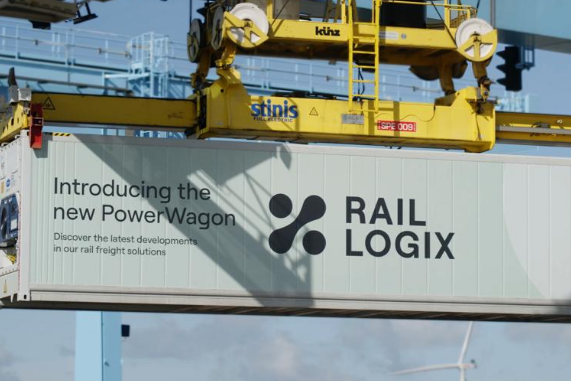
Of all the reef containers arriving at the Port of Rotterdam in the Netherlands, around 98% are then transported by truck. According to Chris Reidsma, that can be done more efficiently and sustainably. His company, Raillogix, focuses on refrigerated rail transport as an alternative.
Raillogix is part of the Rail Innovators Group and offers integrated rail solutions from logistical design to carriage hire. The emphasis is increasingly shifting toward refrigerated produce transport.
 © Raillogix
The technology behind the Cooltrain
At the core of this strategy lies the so-called Cooltrain. This system powers reefer containers using energy generated from the train’s motion, which is stored in a battery. “We can, thus, provide fully fuel-free refrigerated transport,” says Chris. That means lower costs, less maintenance, and significantly fewer CO₂ emissions. You can monitor the system, which operates independently of the locomotive and power supply system, in real time.
A growing network in Europe
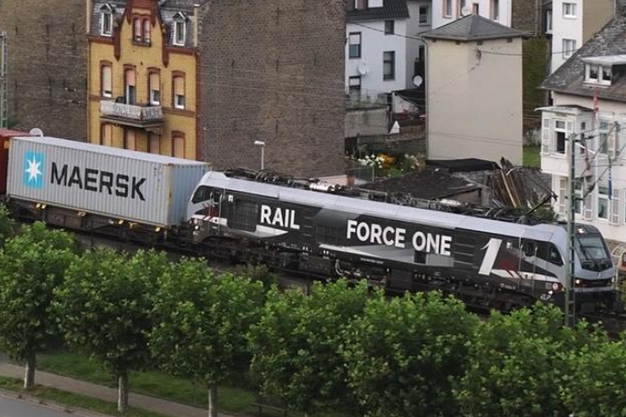
Raillogix is building a European network with hubs in Rotterdam, Antwerp (Belgium), and northern Germany. From those locations, connections are being developed to key markets. “We concentrate on reliability, scalability, and speed.” New corridors and optimizing existing routes should make rail transport a more attractive alternative to road transport.
Rail and road each have their advantages. “Over short distances, rail is sometimes pricier, but over long distances it quickly becomes competitive,” explains Chris. While trucks are flexible, trains are predictable. “Trains run on schedules. That requires planning, but it provides certainty.” That is especially beneficial for large volumes, because rail transport bypasses road transport’s waiting times and inefficiencies.
 © Raillogix
Sustainability as a business case
Sustainability is becoming an increasingly important factor. A single train can replace dozens of trucks and uses less energy per ton-kilometer. “Retailers want to make their supply chains more sustainable. Then, rail is a logical choice,” Chris points out.
Also, practical drawbacks, like reefer units using diesel generators, are eliminated. Raillogix uses digital systems to provide real-time insights into transport, capacity, and arrival times. Customers can reserve capacity in advance, enabling them to plan their logistics more effectively.
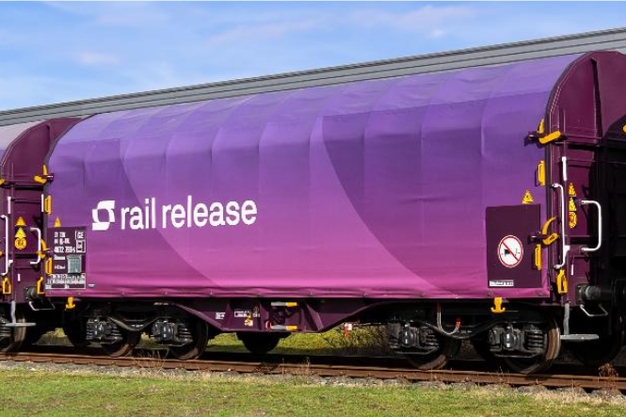
Reidsma says the biggest challenge does not lie in the technology, but in people’s perception. “Many shippers still find rail daunting,” he says, “even though it’s reliable in practice.” Rail requires a different way of working: less last-minute, more planning. “The market must still get used to that.”
 © Raillogix
Looking to 2030: 20% by rail
Raillogix expects that by 2030, around 20% of fresh produce streams will be transported by train. The European Commission wants to increase rail transport by 30%. “It’s not about replacing trucks, it’s about the right mode of transport for large volumes. And it’s no longer a question of if it will shift, but when,” Chris concludes.
For more information:
Raillogix
Waalhaven Oostzijde 83K
3087 BM Rotterdam
Tel: +31 (0) 102 916 300
[email protected]
www.raillogix.com

Source: The Plantations International Agroforestry Group of Companies