For its lime supply, North America is heavily dependent on imports that are valued at $1.1 billion. Mexico is and will continue to be the main supplier of limes to the U.S. and Canada throughout all 52 weeks of the year. But what is the role of other South American countries of origin?
Mexico’s supply impacted by weather
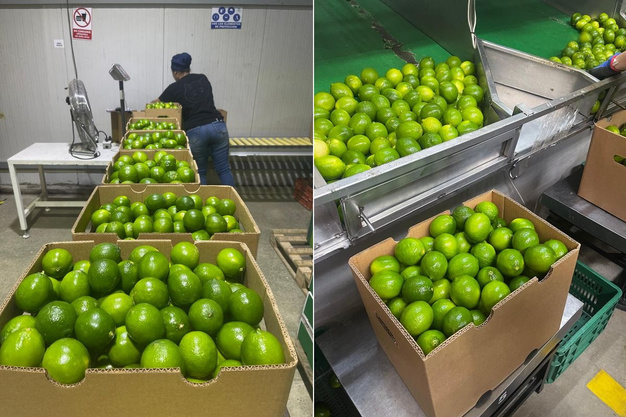
“In January, the year started with stable supply and a strong active market in Mexico, which resulted in generally favorable price levels,” says Mauricio Lopez with Go Fresh Produce. In February however, a slight contraction in demand was observed while supply remained stable. This caused market prices to decrease by approximately 20 to 25 percent without ever placing the market under pressure. In March, the situation improved and both supply and demand showed stability, resulting in a balanced market overall with medium-high prices in all sizes.
However, in April and May, supply from Mexico decreased significantly due to climatic factors. About 90 to 100 days earlier, heavy rainfall in the main production areas impacted flower retention during the growth stage while, conversely, unusually high temperatures affected fruit sizing on the trees. This reduction in volume led to a positive price reaction of approximately 30+ percent compared to March. During April and May, sales prices reached $70-$80 for a 40 lb. format and $25-$30 for a 10 lb. format.
Climatologic conditions also impacted sizing of the fruit. Towards the end of May in particular, a considerable shortage of larger fruit (sizes 110/150/175) was observed. At the same time, the availability of medium and smaller size fruit (200/230/250) increased. Weather conditions also had impact on the external peel, resulting in an increase in the volume of fruit discarded during the selection process. For June, a more balanced size distribution is expected overall, along with an increase in total volumes putting some pressure on the market nowadays.
When looking back at the first five months of the year, the market was balanced in February only. During all other months, demand exceeded supply. This also explains the elevated price levels.
 © Go Fresh Produce
Colombia is excellent alternative
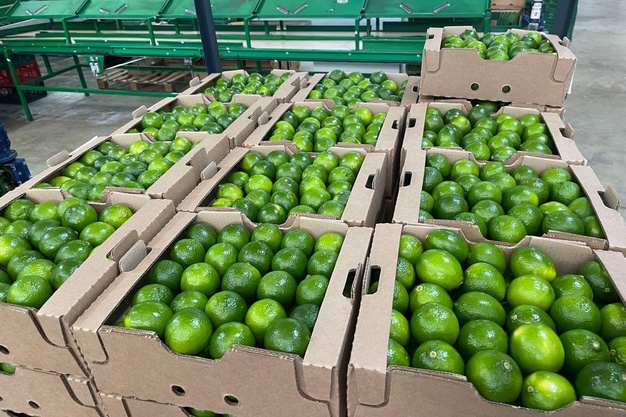
In addition to Mexico, Colombia is a supplier of limes to North America. The country continues to increase its presence by positioning itself as a serious, consistent, and reliable alternative. Lime supply from Colombia during the first quarter of 2026 was very stable and the country was able to increase its export volume with 20 to 25 percent compared to the same period in 2025. However, starting in the second half of April and continuing through May, high temperatures had an impact on supply. Nevertheless, the size curve has remained stable with a good combination of sizes in the shipments dispatched from origin.
The North American market accepts Colombian fruit of good quality at a very competitive price, about 15–20 percent lower than Mexico. This increased Colombia’s competitiveness during the January–May period, especially when supplies from Mexico were reduced. “As a result, Colombia has become an excellent alternative for importers and the market in general.”
 © Go Fresh Produce
Peru’s quality is improving
Peru shows a considerable increase in export volume to the U.S. market with a growth rate of 60 percent. Although the quality of arrivals as well as the size curve have been more stable this year, the country remains an origin that’s in a learning and improvement curve. “Nevertheless, it is very likely to become the third preferred alternative in the near future,” commented Lopez. It is important to continue monitoring Peru’s growth and evaluate the country’s role in the North American market, especially during the January–May harvest period.
Honduras and Guatemala are stable suppliers
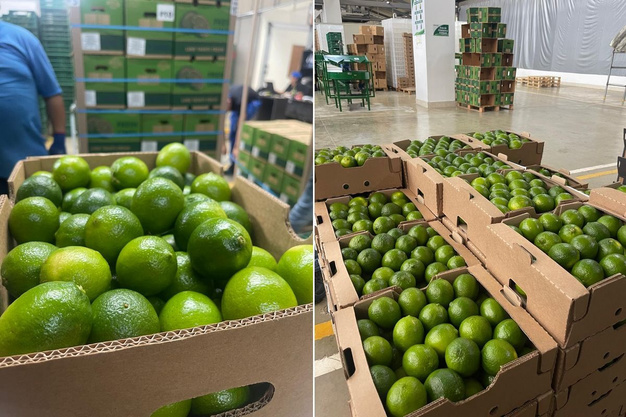
Both Honduras and Guatemala maintain stable volumes within a moderate range, and the North American market continues to absorb their fruit consistently. They are not origins that generate distortions or significant changes in the market in any of the main sales regions. The quality and sizing of limes from both countries is stable and their pricing remains within the same range as Colombia’s pricing.
 © Go Fresh Produce
World Cup may improve demand
Despite relatively low temperatures in the eastern part of the United States and in Canada, demand has remained very stable. “The market has absorbed demand well, showing a strong and consistent performance,” Lopez said. In the coming weeks, demand could be reduced as schools are out for summer. However, a decrease may be offset by a considerable temperature increase that may drive demand in June and July. The FIFA World Cup is also expected to strengthen demand for limes. With North America being the host continent of the World Cup, the number of foreign visitors will increase significantly. This will result in increases demand for foodservice and beverages, the main drivers of lime consumption.
Pricing has started to come down
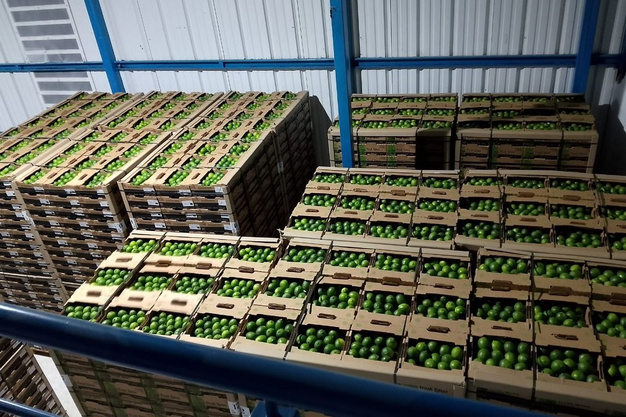
Now that the impact of weather conditions on supply and demand has been explained, the question is how pricing has been influenced. During the January through March time frame, sales prices averaged between US $2.50 and $2.77 per kilogram. Subsequently, in April and May, prices increased to a range between $3.20 and $3.90/kg. At the beginning of June, however, prices for week 22 showed a significant contraction, declining to an average range of $1.50 to $1.80/kg.
 © Go Fresh Produce
 For more information:
Mauricio Lopez N.
Go Fresh Produce
Tel: +1 647 530 0327
[email protected]
www.gofreshproduce.com

Source: The Plantations International Agroforestry Group of Companies