A research team in Japan has developed a genome-edited Japanese muskmelon that can remain fresh for more than one month after harvest, compared with a typical shelf life of about one week. The technology also allows ripening to be controlled, with the melon expected to reach the market as early as 2029.
The National Agriculture and Food Research Organization (NARO), University of Tsukuba professor Hiroshi Ezura, and Sanatech Life Science Co. targeted genes involved in ethylene production, which drives postharvest ripening. Using genome editing, the team suppressed these genes, resulting in almost no ethylene production. The rind remained green and the flesh firm more than one month after harvest.
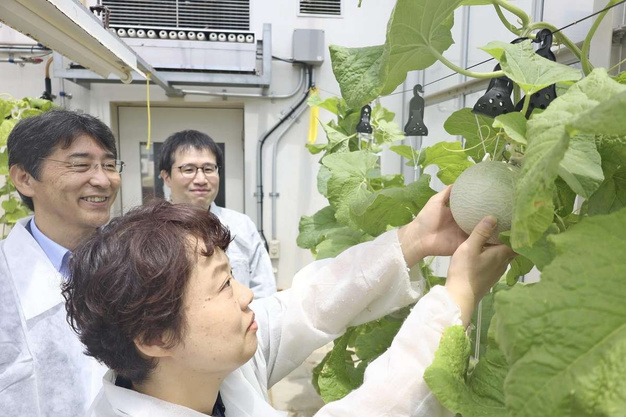 © Agriculture and Food Research Organization
When exposed to ethylene for one to seven days after harvest, the melons reached full ripeness three days later. The technology could allow growers to adjust shipping schedules and use sea freight, reducing reliance on air freight for exports.
Japanese melons are exported to markets including Hong Kong and Singapore, while U.S. exports have remained limited. Although exports to the U.S. were permitted in 2021, producers have relied on air freight. In fiscal 2025, Ibaraki Prefecture’s U.S. melon exports were worth about US$4,700.
NARO’s Dr. Ryozo Imai said the technology does not affect sugar content, juice volume, or texture. “We can deliver melons to the market in a fresher condition. The extended shelf life also reduces the risk of waste,” he said.
Following government registration and trial cultivation, the melons could go on sale in about three years. The technology may later be applied to other melon varieties.
Genome editing targets specific genes, allowing development within one to a few years, compared with several years to decades for conventional breeding. In Japan, the Consumer Affairs Agency considers genome-edited products comparable to those developed through conventional selective breeding for safety purposes.
Source: The Plantations International Agroforestry Group of Companies