India’s fresh green chilli export season kicks off this month, with the first shipments of G4 Gauri variety expected from Maharashtra’s Aurangabad and Gujarat’s Jafrabad belts, says Prasad Chavan of exporter Acres EXIM. “From May onward, that’s where most of the export‑bound G4 volumes will be coming from. The crop is moving mainly to Dubai, Saudi Arabia, Oman, and Qatar, with a separate, larger‑volume channel feeding Bangladesh once its government opens imports around June–July.
Alongside G4 Gauri, other varieties such as Teja 4, Sitara, and Shark One are also part of the export stream, though buyers in the Gulf tend to treat G4 as the benchmark, Prasad notes. “About 60% of the chillies go to Bangladesh and 40% to the Gulf in the Aurangabad–Jafrabad window, with the season being tightly tied to geography. “After August, volumes shift to Maharashtra’s Nandurbar, then later to the state of Uttar Pradesh, as monsoon‑linked crops in the north come into play.”
 © ACRES Exim
“Air‑freight costs remain the main pressure point for now, as earlier, rates to Dubai were around USD 1.27 per kg; now we’re seeing USD 1.49-1.54 per kg amid constant daily fluctuations. So exporters are being cautious with big consignments, even though demand is steady,” he adds.
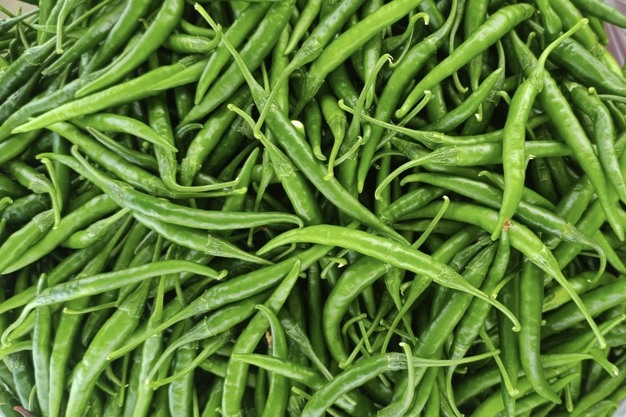
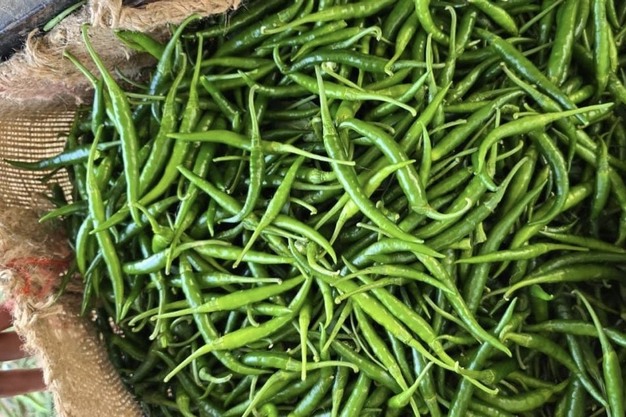
Quality is where Indian chillies often hold an edge: “The preferred G4 pods are 2–3 inches long, deep green, and relatively straight, with a shelf life of about two to three weeks under cold‑chain conditions. At packing, anything too dark, too short, too long, or already reddish is removed at both the farm and cold‑store levels. The selected batches are packed into standard 3.8 kg export boxes, while the Bangladesh trade still relies on 50 to 60 kg jute bags, accepting a rougher ride in exchange for lower logistics cost and shorter transit through Bhomra land port.”
 © ACRES Exim
Pakistan remains the main competitor, but on price rather than consistent quality, Prasad mentions. “There is a quality difference, but the bigger gap is in price. But for buyers who specifically want Indian‑grown chillies to cater to the Indian diaspora abroad, there’s a willingness to pay a bit more.”
Over the next few weeks, with the first sea shipments and air consignments making their way, Chavan expects volumes to climb gradually. “Exports will pick up, but how fast depends on how freight and payment terms are settled. The season looks good, as long as the rains don’t hit the flower set too hard and the pricing at destination stays in the comfort zone.”
For more information:
Prasad Chavan
ACRES Exim
Tel: +91 78 75 145 854
Email: [email protected]

Source: The Plantations International Agroforestry Group of Companies