Belgian apples will gain access to the Chinese market thanks to a new phytosanitary export protocol between the FASFC and the Chinese customs authority GACC. FASFC chief Christine Romeyns called the agreement an important step for the Belgian fruit sector, while Agriculture Minister David Clarinval described it as a historic agreement that opens up new opportunities in the vast Chinese market. However, BFV’s Marc Evrard said it is important to keep expectations realistic.
“It is positive that another market is opening up, but that does not automatically mean you can suddenly send all apples to China,” Marc says. “You have to look very carefully at which varieties suit local tastes and how to build such a market step by step.”
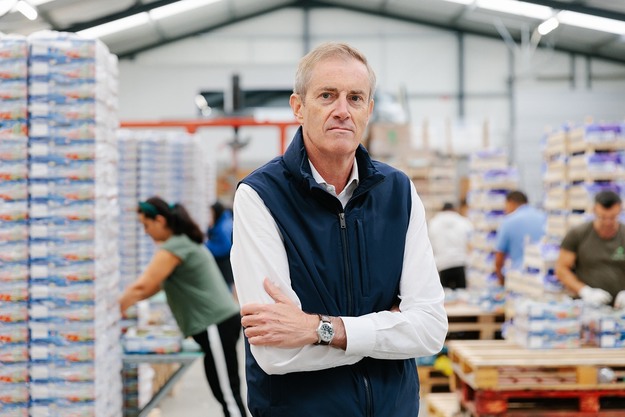 © BFV
© BFV
In theory, Belgian exporters could begin shipping apples to China from next season. “The procedure is that, in the run-up to the new season, orchards are inspected by the Chinese competent authorities. They come on site to check whether everything meets the requirements. Once they give their approval, it is published on their local website, and exports can effectively begin from that moment.”
Not every apple is suitable
According to Marc, freer trade is generally a positive development. “Let me start by saying that I believe it is important to have trade flows for fruits and vegetables that are as open as possible, without too many obstacles. Then, when opportunities arise due to market conditions, for example because a certain region produces less or demand increases, you can respond much faster and create new opportunities. The more markets Europe has access to, the better that is overall for the sector.”
Still, he cautions that market access is only the first step. “Potentially, China is a tremendously large market, but just because the Chinese market is open does not mean you can simply send any variety there and expect it to succeed. It is really important to respond to the taste preferences of the local market. Some varieties, such as Gala, have potential there, while others, like Jonagold or Elstar, are less obvious choices. Every market has its own preferences, and you need to understand those well before exporting.”
According to Marc, developing an export market requires time, knowledge, and guidance. “We have seen this in the past with our pear exports to China. We spent years working on promotion, marketing campaigns, and training to familiarise consumers with the product. We have also gone through a similar process with apples in India. In the beginning, you test different varieties, and over time you discover which ones gain traction. You then build further on that foundation.”
Changed sector
Marc emphasises that the Belgian apple sector today looks very different from ten years ago, when the process of gaining market access to China first began. “Apple acreage in Belgium declined sharply during that period, and a large part was replaced by pear production. Today, we mainly produce apples for the domestic market, with additional exports to India and parts of Africa, among others.”
“At the same time, logistical challenges have also increased. You can no longer rely on completely stable transport chains. Ships can be delayed or unexpectedly change routes, which immediately affects the quality of fresh produce. This makes international trade more complex today than in the past. That is why it is important to realise that a new market like China is not a universal solution. It is certainly an opportunity, but not a guarantee of structural change. In some cases, other markets are even more strategically important, such as Japan for pears, which has also been under discussion for some time.”
Pioneering
In addition, Marc notes that the global fruit market is evolving significantly. “You can see that products such as blueberries and mangoes have grown tremendously worldwide. Consumers are increasingly choosing new categories, while traditional products like apples and pears are coming under greater pressure.” According to Marc, it therefore remains essential to continue developing new export opportunities. “Gaining access to new markets is important, but ultimately you also need to have the right products and market them properly.”
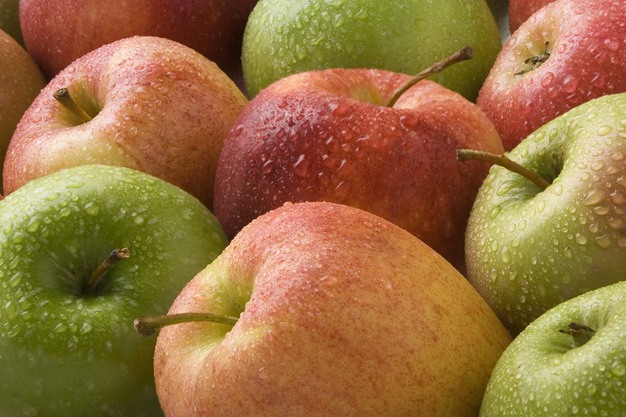 © Dreamstime
When asked whether access to the Chinese apple market could encourage Belgian growers and traders to focus more on certain varieties for export, he remains cautious. “It requires pioneering work that not everyone is willing to undertake. People often wait for someone else to take the first step and then follow. In the past, BFV was the first to actively introduce pears in China. That was initially met with some scepticism, but later you saw other parties follow once the market showed potential.”
“Over the years, you also built a strong reputation,” he continues. “If you ask for BelOrta or BFV in China, not everyone will know what you mean, but if you mention our brand ‘Truval’, there is immediate recognition. We have developed a strong international quality image, and that naturally helps when expanding into new markets. Trust and recognisability play an important role in this.”
Long-term commitment
And he believes the same process will first have to take place in China. “People are now very quick to say this will create a major breakthrough for export opportunities, but it is important to understand the challenges involved in launching a new product in a new market. Especially today, with all the climatic and logistical uncertainties, you have to make sure a quality product actually reaches its destination in good condition.”
That is why Marc advocates a nuanced view of the recent market opening. “It is important to keep expectations realistic. There is sometimes a great deal of enthusiasm, including from government agencies, but in practice things are often more complex. Perhaps there should be a little more consultation with the industry in that regard. These kinds of processes require time, consistency, and a long-term vision.”
For more information:
Marc Evrard 
Belgian Fruit Valley
+32 1169 3411
[email protected]
www.bfv.be
Source: The Plantations International Agroforestry Group of Companies